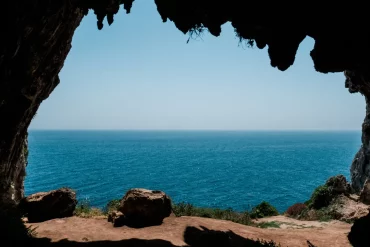
Looking for a small village in the Capo di Leuca, away from the crowds but just a few minutes from the sea? This guide takes you to Tiggiano, the town of Sant’Ippazio and the pestanaca: the Palazzo Baronale with its garden and its wood, the churches of the centre, the January festival, Torre Nasparo overlooking the Strait of Otranto, the clifftop path and swimming at Marina Serra, with practical tips and local curiosities.
In short
Tiggiano, “Tiscianu” in dialect, is a municipality of about 2,800 inhabitants in the Capo di Leuca (Lecce), between Tricase, Alessano and Corsano, about 14 km from Santa Maria di Leuca and 56 km from Lecce. The centre is dominated by the Palazzo Baronale Serafini-Sauli, now the town hall, with a large garden and a wood of Mediterranean scrub. The patron saint is Sant’Ippazio, celebrated around 19 January with the fair and the pestanaca, the yellow and purple carrot of Tiggiano. The municipality has a short stretch of high, rocky coast with Torre Nasparo, with no direct access to the sea: for a swim you go to Marina Serra, 5 km away. The best months are May, June and September, and January for the festival.
What is Tiggiano?
Tiggiano is a village of southern Salento on the Adriatic side, in the hinterland of the Capo di Leuca, on a territory of just 7.5 km² that rises from the sea to about 140 metres. It is a quiet town of low houses, Baroque churches and a large noble palace, surrounded by olive groves, dry-stone walls and pajare. To the east the serra slopes down to the coast, where the 16th-century Torre Nasparo stands; part of the territory lies within the Parco Naturale Regionale Costa Otranto – Santa Maria di Leuca e Bosco di Tricase.
You can walk around Tiggiano in no time: the heart of the town is the Palazzo Baronale, with its high crenellated walls, and around it are the Chiesa di Sant’Ippazio, the little church of the Assunta and the old oratory of San Michele. Behind the palace lies a surprise that few people know about: a garden of citrus and fruit trees and a wood of pines, oaks and holm oaks, open to the public.
It is not a seaside town, but the sea is very close: in five minutes by car you are at Torre Nasparo, high above the Strait of Otranto, and in less than ten at Marina Serra. This is Salento for those who love authentic villages, farming traditions and walks between countryside and cliffs. In this guide you will find how to get there, what to see, where to swim and how to plan your day, including the surrounding area.
Curiosities and atmosphere
There are several theories about the origin of the name: it may come from the Latin personal name Tegius or Tibius, or from the Roman family of the Tedii, with the suffix -ano indicating belonging; some also link it to the god Janus, shown on the town’s coat of arms. Documented history begins with a deed of 1270. In the 14th century the fief passed to the Arcella family of Otranto, who built a fortified courtyard with towers and crenellated walls, and after many other lords, in 1640, it was sold to the physician and philosopher Angelo Serafini of Morciano. The Serafini, later Serafini-Sauli, ruled Tiggiano as barons until 1806 and turned the old fortress into the palace you see today.
Tiggiano is bound to a saint who came from the East: Sant’Ippazio, bishop of Gangra, in Asia Minor, who died a martyr around 345. His cult probably reached southern Italy with the Basilian monks, and here his relics are kept in the mother church. He is considered the protector of male virility and is invoked against hernia: that is why his symbol is the pestanaca, a long yellow and purple carrot harvested precisely in January, for his feast. An old proverb says “te Santu Pati, e fave chiantati”: on Sant’Ippazio’s day you sow the broad beans. Among the residents of Tiggiano is also the British actress Helen Mirren, who has her home here and has said she lives here many months a year. You will find news and places on the website of the municipality of Tiggiano.
Where it is and how to reach it
Tiggiano lies in southern Salento, in the Capo di Leuca, between Tricase to the north, Alessano to the west and Corsano to the south; to the east its territory reaches the Adriatic coast, facing the Strait of Otranto. The centre of Tricase is 4 km away, Marina Serra 5 km, Santa Maria di Leuca about 14 km and Lecce about 56 km.
By car: from Lecce take the SS16 to Maglie and then the SS275 towards Santa Maria di Leuca, exiting for Tiggiano: about an hour without traffic. Tiggiano is connected to Tricase and Corsano by the SP81 and to Alessano by the SP80; the SP186 runs down from the town to the Otranto-Leuca coast road. Leave the car in the streets around the centre and explore on foot.
By public transport: national trains arrive in Lecce; from there the FS Sud Est regional trains to Gagliano del Capo stop at Tiggiano station, less than a kilometre from the centre: check timetables and any replacement buses. In summer the “Salento in Bus” lines connect many places on the coast: check the routes and timetables for the current year before you set off. The most convenient airport is Brindisi, about 100 km away, just over an hour and a half by car.
What to do and what to see
You can discover Tiggiano in half a day, but it deserves more if you add the coast: the palace and its wood, the churches of the centre, the museum of rural life and then, a few minutes away, Torre Nasparo and the Park’s trails by the sea. Here are the experiences not to miss.
1. The Palazzo Baronale Serafini-Sauli (30-45 minutes)
It is the symbolic monument of Tiggiano. It was built in the mid-17th century by Angelo Serafini, who became lord of the town in 1640, incorporating a 16th-century towered block with machicolations and arrow slits, and was then enlarged several times. The façade is plain, with a small bell gable and a decorated balcony bearing an inscription of 1716: from here, the municipality says, the barons addressed the population, and the entrance gate originally stood beneath the balcony. Inside there are two large courtyards; on the upper floor, with nineteen rooms, are the ballroom with the family chapel and a hall with lunettes frescoed with scenes of chivalric life. Since 1985 the palace has belonged to the municipality and houses the town hall.
2. The palace garden and wood (1 hour)
Behind the palace lies a garden of about 6,750 m², divided into four parts by avenues, with fruit and citrus trees. From the garden you enter the wood, of about two hectares: the municipality describes it as a true museum of Mediterranean scrub, with tall pines, oaks and holm oaks and an undergrowth fragrant with thyme, sage, mint and rosemary. Along the paths there are benches and panels on the flora and fauna. In summer it is an oasis of shade, perfect for a walk in the hot hours; check the opening times on site.
3. The Chiesa di Sant’Ippazio (30 minutes)
The mother church, dedicated to the patron saint, looks mid-18th century, but it stands on the site of an older church from the late 16th century. The façade has a portal decorated with the date 1758 and, at the top, a mixtilinear crowning of 1791 with the statue of the saint in a niche. The interior, with a nave and two aisles, preserves 16th-century works, such as the baptismal font with little cherub heads, the fresco of Sant’Eligio on a pillar and the painting of the Madonna di Costantinopoli, the altar of Sant’Ippazio with the canvas of 1626, the 18th-century wooden statue of the saint, the older half-bust and the altar of the Blessed Alessandro Sauli. The church was restored in 2011-2012. Visit it outside service times.
4. The church of the Assunta and the oratory of San Michele (30 minutes)
A few steps away is the church of the Madonna Assunta, seat of a confraternity, built in the 17th century: the Baroque façade has a portal with a medallion of the Virgin between two kneeling cherubs and a mixtilinear rose window; inside there is a Lecce stone altar with the painting of the Assunta and an 18th-century pipe organ on a painted and gilded choir loft. Older still is the oratory of San Michele Arcangelo, between Via Garibaldi and Via Cavour, built before 1590 by the Arcella family: on the architrave you can still read the Latin inscription of Giacomo Arcella, and on the single altar there is a 16th-century fresco of the Archangel slaying the dragon. Also worth a look is the chapel of the Immacolata, known as the Calvario, from 1872, with scenes of the Passion painted on the outside.
5. The museum of rural life (45 minutes)
On the ground floor of the Palazzo Baronale, around the courtyard, the municipality set up in 2008 a museum devoted to the rural life of Tiggiano: one part recreates the home of a local family in the mid-19th century, the other the workshops of the old trades, with large photographs and video interviews with the elderly. It is small but tells well the world from which the festival of Sant’Ippazio and the pestanaca were born. According to the municipality’s website, visits are by appointment, Monday to Thursday from 9 to 11: call before you go.
6. Torre Nasparo and the clifftop path (1-2 hours)
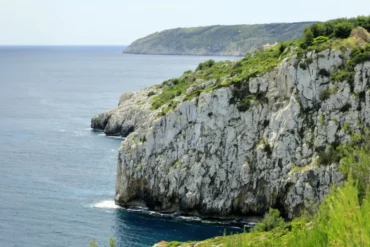
3 km from the town, on the Otranto-Leuca coast road, stands Torre Nasparo, built in 1565 on a rocky spur 129 metres above the sea to watch for pirates: from here the view reaches as far as Capo d’Otranto, and the tower communicated with Torre Palane to the north and Torre Specchia Grande to the south. Today the upper part has largely collapsed, but the truncated-cone base, 11 metres wide, is still imposing; it belongs to the State and is entrusted to the municipality, and there is a car park nearby. From the tower starts the Sentiero Grotta del Soffio, a Park trail of about 800 metres (half an hour one way) that runs down along the cliffs, through Mediterranean scrub, sea caves and terraced olive groves, to Marina di Corsano. From the opposite side comes the Sentiero del Nemico, which climbs in about 45 minutes from Marina Serra. You will find the trail sheets on the website Sentieri nel Parco; for the history of these towers read our guide to the Salento coastal towers.
7. The Bosco Le Chiuse and the countryside of the serra (1-2 hours)
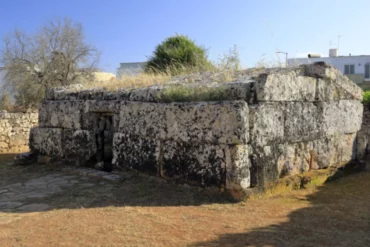
On the slopes of the serra that run down towards the sea, between Tiggiano and Tricase, lies the Bosco Le Chiuse, a small holm oak wood that, where the ground is steeper, gives way to the Valonia oak and the terebinth; rare plants such as Leuca alyssum and the Apulian bellflower grow on the rocks. All around is the landscape of the most authentic Capo di Leuca: outcropping rocks, small fields enclosed by dry-stone walls, pajare among olive trees, figs and scrub. Two short Park trails, the Tratturo Luci and the Strada Vicinale Maria, follow old drovers’ tracks between the walls: they are easy routes, also suitable for mountain bikes. Respect private property and cultivated fields.
Salento Prime holiday homes: pick your dates and see at once which are free.
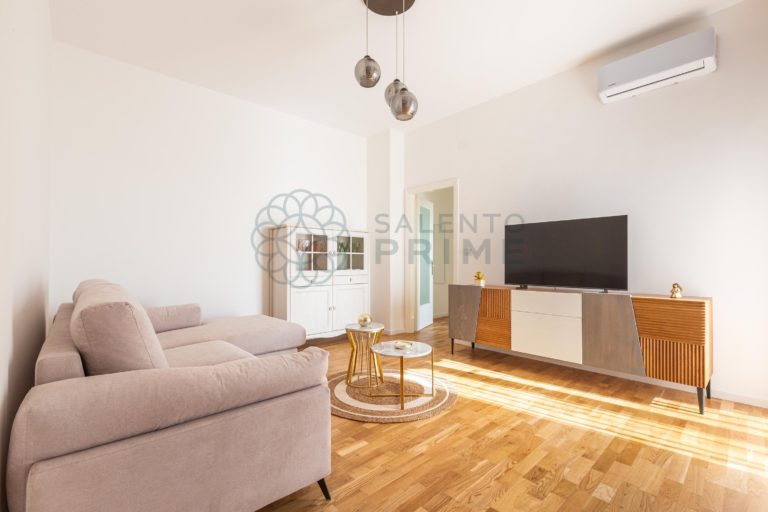 Casa Amalia – Center of Tricasesleeps 4
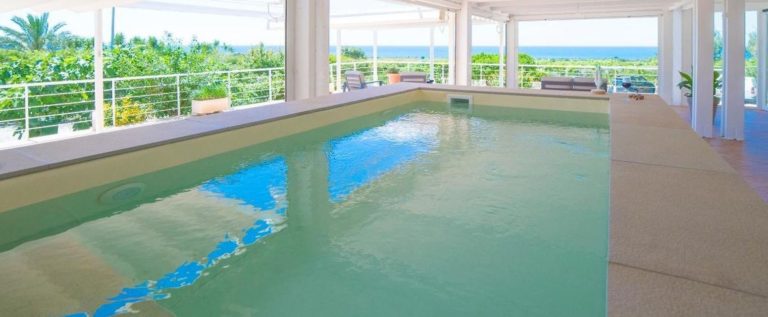 LE SECCHE SUITE & HOUSE – 2sleeps 4 · pool
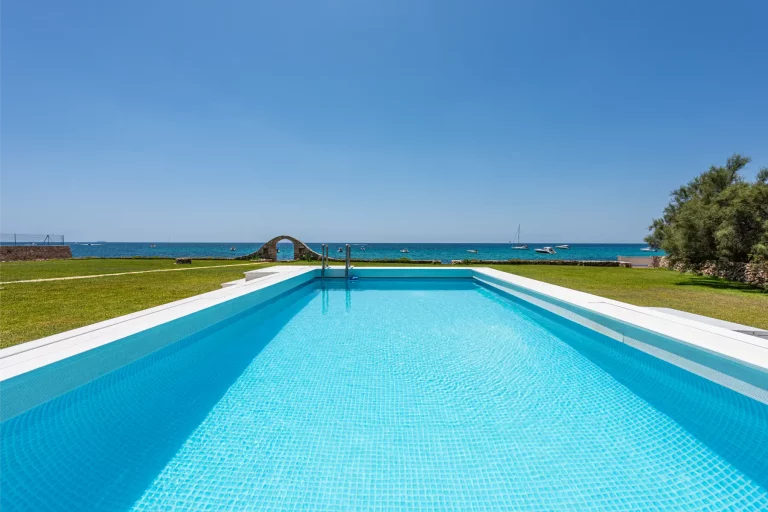 Villa Luxury 73sleeps 12 · pool
The sea at Tiggiano and who it suits
Tiggiano has a short stretch of Adriatic coast, around Torre Nasparo: it is a high, rocky coast, beautiful to look at and to walk along, but with no direct access to the sea. For a swim you go to the nearby seaside villages. The closest is Marina Serra, 5 km and less than ten minutes away, famous for the natural pool below Torre Palane: note that since 13 February 2026, after a collapse of the cliff, the pool has been closed to swimming by an order of the Coast Guard, and the municipality of Tricase plans to reopen it only after safety works. Before you go, check whether the ban is still in force; outside the prohibited areas you swim from the rocks. 7 km away are Tricase Porto, with its fishing harbour, and Marina di Novaglie, with swimming from the low rocks around the little harbour.
Tiggiano is perfect for those looking for a quiet, authentic base in the Capo di Leuca, for those who love traditions, villages and walks between countryside and cliffs, and for those who want to alternate between the Adriatic sea, a few minutes away, and the Ionian, less than half an hour away. It is less suited to those who want the sea on their doorstep or nightlife: for that there are Santa Maria di Leuca and the seaside villages along the coast.
Free beach and facilities
Along this stretch of Adriatic coast there are no long sandy beaches: at Marina Serra and Novaglie you swim freely from the rocks, where permitted, in deep and crystal-clear water. With small children, the sandy beaches of the Ionian coast, such as Pescoluse, about 17 km away, are more convenient. In town you will find bars and a few places to eat; for more choice there is Tricase, 4 km away, and the seaside villages in summer.
For swimming from the rocks bring water shoes, a small umbrella and water: there is little shade and in summer the rock gets very hot.
Tiggiano vs other villages of the Capo di Leuca
In the Capo di Leuca the towns are very close to each other. Here is a practical comparison to help you choose:
Tiggiano vs Tricase
- Tiggiano: a small, quiet town, with the palace, the wood and the countryside close at hand
- Tricase: a larger town, with more shops and services, the harbour and Marina Serra
Tiggiano vs Alessano
- Tiggiano: smaller and more intimate, with the palace wood and Torre Nasparo a few minutes away
- Alessano: the old town with its Renaissance palazzi, the Chiesa Madre that was once a cathedral and the places of don Tonino Bello
Tiggiano vs Santa Maria di Leuca
- Tiggiano: village life, farming traditions and the countryside, with the sea a few minutes away
- Leuca: the lighthouse, the de Finibus Terrae sanctuary, the seafront, the boats to the caves and all the services of a seaside resort
When to choose Tiggiano: if you are looking for an authentic, quiet village, you like traditions and walks and want a convenient base between Tricase, Marina Serra and Leuca.
When to choose somewhere else: if you want to step out of the door and be on the beach, look at the seaside villages along the coast, from Tricase Porto to Santa Maria di Leuca.
Practical tips
Explore the town in the morning or late afternoon: in summer it is hot in the middle of the day and the churches may be closed. To enter a church, dress appropriately and respect services. The Palazzo Baronale is the town hall: for the museum of rural life it is best to book, and for the garden and the wood check the opening times on site.
Torre Nasparo and the Sentiero Grotta del Soffio are entirely in the sun: go early in the morning or towards sunset, with closed shoes, water and a hat. The path runs along the cliffs: when the sea is rough or the wind strong, keep away from the edge. If you want to swim at Marina Serra, first check the news from the municipality of Tricase and the Coast Guard and respect signs, barriers and buoys; do not collect sea urchins, in Puglia it is forbidden until 30 June 2029.
Useful practical information
| 📍 Where | Tiggiano (Lecce), in the Capo di Leuca, 4 km from Tricase, 5 km from Marina Serra, 14 km from Santa Maria di Leuca and 56 km from Lecce |
|---|---|
| 🚗 Parking | In the streets around the centre, which you can explore on foot; there is a car park near Torre Nasparo |
| ♿ Access | Flat centre; unpaved paths in the wood; rocky clifftop path, not suitable for pushchairs |
| 🏖 Beach | No access to the sea from Tiggiano’s coast; swimming from the rocks at Marina Serra and Novaglie; sand on the Ionian coast, about 17 km away |
| 🌊 Sea | Deep and crystal clear; Marina Serra’s natural pool closed to swimming since 13 February 2026, check before you go |
| 👟 What to bring | Comfortable or hiking shoes for the path, suitable clothing for churches, water shoes and a mask for swimming |
| 🍴 Food | Bars and a few places to eat in town; more choice in Tricase and the seaside villages in summer |
| 📅 Best time | May, June and September; around 19 January for the festival of Sant’Ippazio |
When to go and how much time to plan
January: the month of the festival of Sant’Ippazio, the “farmers’ New Year” of Salento, with the fair, the procession with the great banner and freshly harvested pestanache. It is cool, but this is when Tiggiano is at its liveliest.
April and May: the ideal time for the town, the palace wood and the Park’s trails, with mild temperatures, green countryside and the scrub in bloom.
June: the sea is already pleasant and the days are very long: mornings in town or at Torre Nasparo, afternoons on the rocks.
July and August: the hottest and liveliest time, with the seaside villages full. Explore the centre early in the morning or in the evening, seek shade in the palace wood and, for a swim, arrive early.
September: in our opinion the best month. The sea is still warm, there are fewer people and the light on the cliffs of Torre Nasparo is beautiful.
October and the winter months: quiet days, perfect for walking among olive groves and dry-stone walls. During sea storms the sight of the sea from the tower is impressive, to be watched from a distance.
Events and festivals (indicative dates, check them every year on the website of the municipality of Tiggiano and on SalentoMe):
- Festival of Sant’Ippazio, “Santu Pati”: around 19 January, with the market fair in the morning, the procession with the banner and, usually the day before, the pestanaca food festival
- Feast of the patronage of Sant’Ippazio: 17 June
How much time to allow: half a day is enough for the town, the palace and the wood; a full day if you add Torre Nasparo, the clifftop path and a swim at Marina Serra or Novaglie. With three or four days you can combine Tricase, Alessano, the Ciolo and Santa Maria di Leuca. A typical day:
- 8:00: Torre Nasparo and the Sentiero Grotta del Soffio, before the heat
- 10:30: a swim from the rocks at Marina Serra, outside the prohibited areas, or at Novaglie
- 13:30: lunch in Tiggiano or Tricase
- 16:30: a walk in the shade in the garden and wood of the Palazzo Baronale
- 18:00: the Chiesa di Sant’Ippazio, the Assunta and the oratory of San Michele
- 20:30: dinner in Tricase or in one of the seaside villages
Surroundings and extra ideas
Tiggiano is at the heart of the Capo di Leuca: in a few minutes you reach the Adriatic coast and the other inland villages and, in less than half an hour, the Ionian sea. Distances and driving times are indicative.
Marina Serra (5 km, 9 minutes): the natural pool below Torre Palane, the little harbour and the Sentiero del Nemico that climbs up to Torre Nasparo. Read our guide to Marina Serra.
Tricase (4 km, 5 minutes): the nearest town, with its historic centre, shops and places to go out. Discover the best things to do and beaches in Tricase.
Tricase Porto (7 km, 12 minutes): the fishermen’s harbour, the boats and swimming along the coast. Read our guide to Tricase Porto.
Alessano (4 km, 6 minutes): the Chiesa Madre that was once a cathedral, the Renaissance palazzi and the tomb of don Tonino Bello. Read our guide to Alessano.
Corsano and Marina di Novaglie (2-7 km, 2-10 minutes): the neighbouring town, with the Torre Specchia Grande on the hill, and its coast, where the Sentiero Grotta del Soffio comes out; a little further south, Novaglie with its little harbour carved into the rock and the Sentiero delle Cipolliane.
Gagliano del Capo and the Ciolo (7-9 km, 10-13 minutes): the gorge below the bridge of the coast road and the small pebble cove. Read our guide to Gagliano del Capo.
Santa Maria di Leuca (14 km, 20 minutes): the lighthouse, the de Finibus Terrae sanctuary, the seafront with its nineteenth-century villas and the boats to the caves.
Pescoluse and the Ionian coast (17 km, 24 minutes): the white sandy beaches and the shallow sea of the Maldives of Salento, ideal with small children.
Local tip
If you can, plan your trip around 19 January: the festival of Sant’Ippazio is one of the most genuine moments of Salento in winter. In the morning wander among the fair stalls and look for pestanache, the yellow and purple carrots sold here precisely for the festival; in the afternoon wait for the procession and the moment when the bearers raise the great banner in a single movement, which according to tradition brings the town a prosperous year and a good harvest.
In summer, on the other hand, start the day at Torre Nasparo: at first light the sun rises from the sea in front of the tower, the cliffs turn pink and it is still cool on the path. Head back to the town in the hot hours and take refuge in the shade of the holm oaks in the palace wood, a green corner that many visitors don’t know is right on their doorstep.
FAQ
Where is Tiggiano?
In the Capo di Leuca, in the province of Lecce, between Tricase, Alessano and Corsano, a few kilometres from the Adriatic coast. Santa Maria di Leuca is about 14 km away, Lecce 56 km.
What to see in Tiggiano?
The Palazzo Baronale Serafini-Sauli with its garden and wood, the Chiesa di Sant’Ippazio, the church of the Assunta, the oratory of San Michele, the museum of rural life and, on the coast, Torre Nasparo with the clifftop path.
When is Sant’Ippazio celebrated in Tiggiano?
Around 19 January, the day on which, according to tradition, the saint’s relics arrived in Tiggiano, with the market fair, the procession with the banner and the pestanaca food festival. The programme changes every year: check it on the municipality’s website.
What is the pestanaca?
It is the traditional carrot of Tiggiano, long and yellow and purple in colour, also called the carrot of Sant’Ippazio. It is harvested in winter and sold above all during the patron saint’s festival, in January.
Is Tiggiano on the sea?
The municipality has a short stretch of high, rocky coast around Torre Nasparo, with no direct access to the sea. For a swim you go to Marina Serra, 5 km away, or to Tricase Porto and Marina di Novaglie, about 7 km away.
Can you swim in the natural pool at Marina Serra?
Since 13 February 2026 the pool has been closed to swimming by an order of the Coast Guard, after a collapse of the cliff. Before you go, check whether the ban is still in force and, on site, respect signs and buoys.
Can you visit Torre Nasparo?
The tower can be seen freely from outside, next to the Otranto-Leuca coast road, 3 km from the town, with a car park nearby. From here starts the Sentiero Grotta del Soffio, which runs down along the cliffs to Marina di Corsano.
How do you get to Tiggiano without a car?
By train: from Lecce the FS Sud Est regional trains to Gagliano del Capo stop at Tiggiano station, less than a kilometre from the centre. Check timetables and any replacement buses before you set off.
Where to stay near Tiggiano?
3 km away, in the centre of Tricase, there is Salento Prime’s Casa Amalia, a renovated apartment for 4 guests, a few minutes from Marina Serra. On the coast of Marina di Corsano there is also Villa Azzurra / Villa Panorama, for up to 7 guests.
Conclusion
Tiggiano is the Capo di Leuca of small villages: a baronial palace with a secret wood behind it, Baroque churches, a winter festival that smells of the countryside and, five minutes away, a 16th-century tower overlooking the Strait of Otranto. Give it at least half a day, at a relaxed pace, and combine the town with a swim at Marina Serra or a walk along the clifftop path.
If you want to stay nearby, three kilometres away, in the centre of Tricase, you will find our Casa Amalia: 100 m² renovated in 2024, for 4 guests, a few minutes from the sea at Marina Serra and Tricase Porto. You will find our houses in the area on the page holiday homes in Tricase.
Discover the available accommodations with Salento Prime. To best organize your base and transfers, contact us here or start a chat on WHATSAPP.
Cover photo: Lupiae, CC BY-SA 3.0, via Wikimedia Commons, cropped