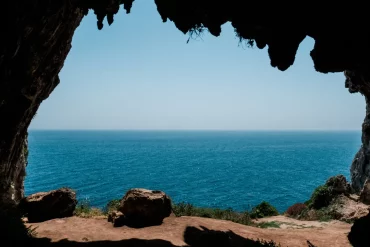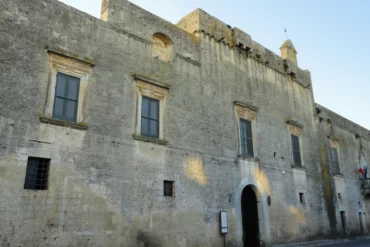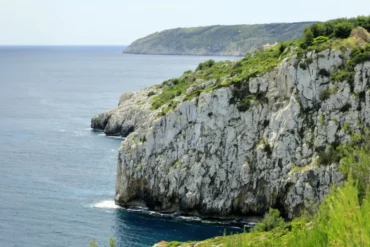
Looking for a village in the Capo di Leuca where you can touch history with your own hands, just minutes from the sea? This guide takes you to Patù, the town born from the ruins of ancient Vereto: the mysterious Centopietre and the church of San Giovanni Battista, the hill of the Messapian city, the old town with the Chiesa Madre and Palazzo Romano, the countryside of olive trees and pajare, and its two seaside villages, San Gregorio and Felloniche, with practical tips and local curiosities.
In short
Patù, “Pàtu” in dialect, is a small municipality of about 1,650 inhabitants at the southern tip of the Capo di Leuca (Lecce), 6 km from Santa Maria di Leuca and 64 km from Lecce. It is famous for the Centopietre, a funerary monument built with large stone blocks taken from the ancient Messapian city of Vereto, which stood on the nearby hill, and for the church of San Giovanni Battista, one of the oldest in Salento. Its territory reaches the Ionian Sea with Marina di San Gregorio and Felloniche, 5-6 km from the town. The best months are May, June and September.
What is Patù?
Patù is a village in southern Salento lying on a tuff slope 124 metres above the sea, between Morciano di Leuca, Castrignano del Capo and the Ionian. According to tradition it was founded in 924 by the survivors of Vereto, the Messapian and later Roman city destroyed by the Saracens, whose remains can still be seen today on the hill next to the town. The whole municipal territory is protected for its landscape of Mediterranean scrub, olive trees and pajare; the town is one of the Borghi Autentici d’Italia and has had city status since 2004.
Patù is a small, quiet town that you can walk around in no time: the square with the Chiesa Madre di San Michele Arcangelo and Palazzo Romano, the lanes of the centre, the last tower of the 15th-century castle and, just beyond the houses, the open space where the Centopietre and the church of San Giovanni have faced each other for centuries. Above the town rises the hill of Vereto, where archaeologists returned to dig in 2026.
It is not a seaside town, but the sea is very close: in seven minutes you are down at the bay of San Gregorio, which was the port of Vereto, and in nine at the sandy beach of Felloniche. This is Salento for those who love archaeology, stories and legends, the countryside and silence. In this guide you will find how to get there, what to see, where to swim and how to plan your day, including the surroundings.
Curiosities and atmosphere
There are two theories about the origin of the name. The first derives it from the Greek “pathos”, suffering, in memory of the grief of the people of Vereto, the city destroyed by the Saracens from which the town was born; the second from Verduro Pato, the keeper of the granaries of the lords of Vereto. The most famous legend of Patù is also linked to the ruins of Vereto: tradition tells of a great battle between Christians and Saracens, fought on 24 June 877 on the plain of Campo Re, at the foot of the hill, and won by the Christians. In memory of the victory, the church of San Giovanni Battista, the saint whose feast falls precisely on 24 June, and the Centopietre, the tomb of the knight Geminiano, a messenger of peace killed by the Saracens shortly before the battle, are said to have been built. It is a story handed down for centuries, but scholars still debate the dates of the two monuments.
Patù is also the home town of Liborio Romano (1793-1867), one of the most debated figures of the Risorgimento: the last Minister of the Interior of King Francesco II of Bourbon, in 1860 he persuaded the king to leave Naples without a fight and on 7 September welcomed Garibaldi into the city. He was born and died in Patù and lived in the family palazzo on the main square. The town’s coat of arms shows a cat holding a fish in its teeth on a gold field, and since 2011 the singer-songwriter Vinicio Capossela has been an honorary citizen, as noted by the municipality of Patù.
Where it is and how to reach it
Patù lies in southern Salento, inland from the Ionian coast of the Capo di Leuca, between Morciano di Leuca to the west, Castrignano del Capo and its hamlet Giuliano to the north and east, and the sea to the south. Marina di San Gregorio is about 5 km away, Felloniche 6 km, Santa Maria di Leuca about 6 km and Lecce 64 km.
By car: from Lecce take the dual carriageway towards Gallipoli, the SS101, and then the main road to Santa Maria di Leuca, exiting at Patù-San Gregorio: just over an hour without traffic. Alternatively, head down from Maglie towards Leuca and continue through Alessano, Barbarano and Giuliano. In the centre the streets are narrow: leave the car in the surrounding streets and explore on foot.
By public transport: national trains arrive in Lecce; from there the FS Sud Est (Ferrovie del Sud Est) regional trains on the line to Gagliano del Capo stop at Morciano-Barbarano-Castrignano-Giuliano station, about 3 km from Patù: check timetables and any replacement buses. In summer the “Salento in Bus” lines connect many places on the coast, including San Gregorio: check the routes and timetables for the current year before you set off. The most convenient airport is Brindisi, about 113 km away.
What to do and what to see
You can discover Patù in a morning, but it deserves a whole day: the Centopietre and San Giovanni, the hill of Vereto, the old town with the museum and, in the afternoon, a swim at one of its seaside villages. Here are the experiences not to miss.
1. The Centopietre (30 minutes)
The Centopietre are the symbol of Patù: a rectangular building 7.20 metres long, 5.50 wide and 2.60 high, made of large squared blocks of limestone, about a hundred originally, hence the name, and covered by a gabled roof of large stone slabs. The blocks come from the ruins of Vereto: on the inner architrave you can still make out triglyphs and dentils, decorations from an older building. Inside, an architrave supported by columns divides the space in two, and on the walls there are traces of frescoes of Eastern-style saints, a sign that in the Middle Ages the monument was used as a church; damp has almost erased them. Tradition considers it the tomb of Geminiano, from the 9th century; at the beginning of the 20th century it was thought instead to be a prehistoric monument, a theory few follow today. In 1873 it was declared a national monument, and it has been nominated several times in the “I Luoghi del Cuore” census of the FAI. The area is fenced: check on site or with the municipality when it is open.
2. The church of San Giovanni Battista (30 minutes)
Opposite the Centopietre stands the church of San Giovanni Battista, one of the oldest examples of Romanesque architecture in Salento. Scholars disagree on when it was built, with theories ranging from the 6th to the 12th century: the municipality dates it to the 10th century. Here too large blocks taken from Vereto were used. The façade is simple, with a two-light mullioned window above the portal; the interior has three naves divided by pillars, the apse has a large rose window, and little remains of the old frescoes, including a Saint John. To the left of the entrance there is a Roman base with a Latin inscription, dedicated by two parents to their dead son. For a long time the church was also the town’s cemetery; today it is used for celebrations and cultural events: check on site whether it is open.
3. The hill of Vereto and the Madonna di Vereto (1-2 hours)
About 500 metres from the town, on the road to San Gregorio, a climb on the right leads up the hill of Vereto, 155 metres above the sea. Here stood a Messapian city already known in the 5th century BC, surrounded by walls more than 4 km long, which traded with Greece and had its port in the bay of San Gregorio. In Roman times it became a municipium, and it was destroyed by the Saracens in the 9th century. Today, among olive trees, scrub and paths, you can see stretches of the Messapian walls, rural buildings and caves, and from the top the view reaches as far as the sea of Leuca. On the highest point, where scholars place the acropolis, stands the little church of the Madonna di Vereto, from the early 17th century, now privately owned. In 2026 the Università di Napoli L’Orientale carried out the first systematic excavation campaign there, with over a thousand visitors to the dig: among the finds is a small female head in stone from the Hellenistic period. The park is managed by a local association, which at certain times organises guided tours: ask the municipality before you go.
4. The Chiesa Madre di San Michele Arcangelo (30 minutes)
In the heart of the town, in Via Giuseppe Romano, is the Chiesa Madre dedicated to San Michele Arcangelo, built in 1564 to a design by the architect Francesco Centolanze of Nardò. The late-Renaissance façade, in Lecce stone, has a rose window above the portal, which bears the Latin phrase “Terribilis est locus iste”: it comes from the Bible and, rather than “this place is terrible”, it means “this place inspires awe”. The single-nave interior has four side altars, a wooden statue of San Michele and an organ from 1723, above the entrance. The bell tower, from 1940, houses five bells: the oldest dates from 1752.
5. Palazzo Romano and the Museo Archeologico di Vereto (1 hour)
On the same square stands Palazzo Romano, built in the first decades of the 19th century by Alessandro Romano, Liborio’s father: a neoclassical palazzo with a courtyard, a portico with columns and a circular hall covered by a dome with an iron and glass lantern. In front of it is the family’s private chapel. Part of the palazzo belongs to the municipality and houses the Museo Archeologico di Vereto, which tells more than two thousand years of history, from the Messapians to the Roman era, with Messapian inscriptions, grave goods and everyday objects found in the area. Since 2026 the museum has had new management: check opening days and times before you go.
6. The old town, the Torre del Fortino and the crypt of Sant’Elia (1 hour)
The centre of Patù is compact and you can walk around it in no time. In Via Silvio Pellico stands the Torre del Fortino, the last of the four corner towers of the castle built in the first half of the 15th century: the castle, surrounded by a moat, was where the population took refuge during pirate raids, and it has been completely destroyed. Outside the town, instead, is the crypt of Sant’Elia, carved into the rock by Basilian monks between the 8th and 9th centuries, with faint traces of frescoes and Greek inscriptions: it lies within the grounds of a former shoe factory and can only be visited during special openings, like the one organised in summer 2026.
7. The countryside of olive trees and pajare (half a day)
Patù’s territory is small but entirely protected: between the town, the hill of Vereto and the sea you walk among olive groves, dry-stone walls, Mediterranean scrub and pajare, the farmers’ old dry-stone huts. In spring thyme, myrtle, several wild orchids and the Leuca alyssum, a plant typical of this corner of Salento, come into flower. A lovely walk links the town, Vereto and the way down to San Gregorio; keen walkers can also follow part of the last stage of the Cammino di don Tonino, which runs down from Alessano to Leuca passing near Patù. Bring water and a hat: in summer there is no shade.
Salento Prime holiday homes: pick your dates and see at once which are free.
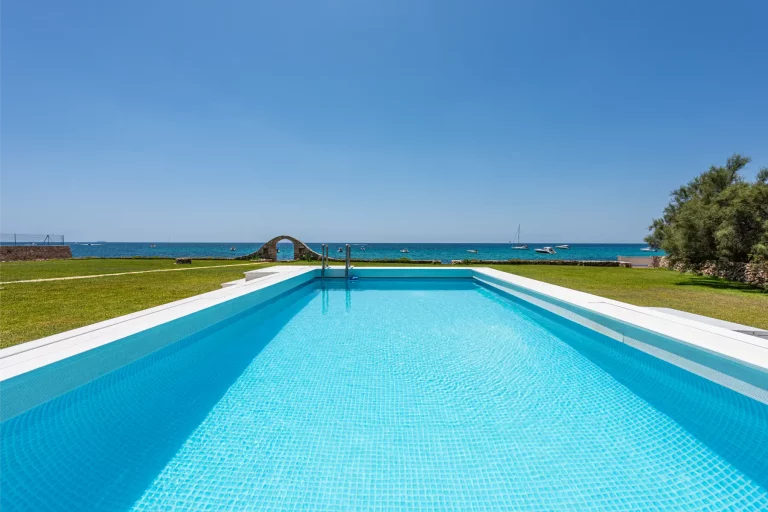 Villa Luxury 73sleeps 12 · pool
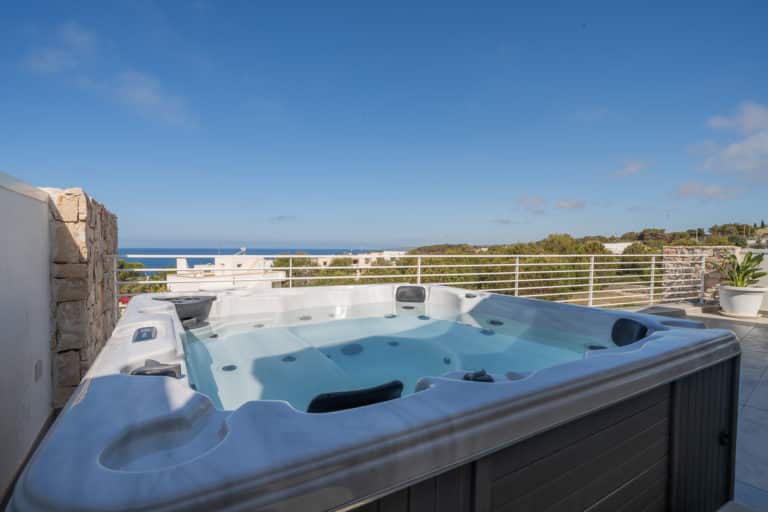 Penthouse Venere su 2 piani – Leucasleeps 2
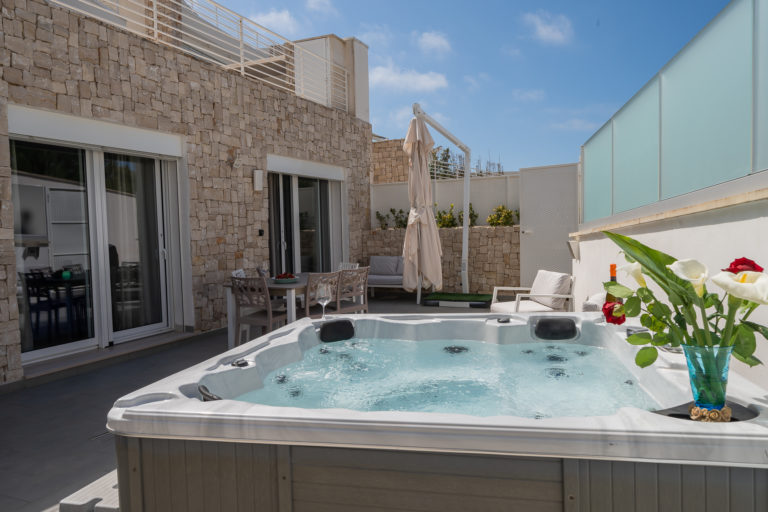 Grand Paradise Minerva – Leucasleeps 2
The sea at Patù and who it suits
Patù looks out over the Ionian Sea for about 3 km, with two very different seaside villages. Marina di San Gregorio, 5 km from the town, is a small inlet of low rocks with a little jetty and a bay of large pebbles: it was the port of Vereto, and the remains of the ancient Messapian landing place, with the walls and the submerged pier, can still be seen a few metres down. The water is clear and an intense blue, perfect for snorkelling. Read our guide to Marina di San Gregorio.
Marina di Felloniche, 6 km away, shared between Patù and Castrignano del Capo, is instead a sandy bay enclosed by low rocks, with shallow water for a few metres and a protected Posidonia meadow in front: it is the easiest choice with children. Read our guide to Marina di Felloniche. The sea between Capo San Gregorio and Punta Ristola is part of the European Natura 2000 network for its Posidonia meadows, and in 2024 and 2025 the two seaside villages were awarded the Blue Flag.
Patù is perfect for those who love archaeology, ancient churches and legends, for walkers and for anyone looking for a quiet base a few minutes from Leuca and the Ionian beaches. It is less suited to those who want the sea on their doorstep or nightlife: for that there are the seaside villages and the seafront of Santa Maria di Leuca.
Free beach and facilities
At San Gregorio you can swim freely from the rocks and from the small stretches of sand and pebbles near the jetty; at Felloniche free beach alternates with beach clubs: check on site which stretches are free. In summer the municipality licenses kiosks for boat hire and boat trips (in 2026 at San Gregorio and Felloniche), and in the seaside villages there are bars, restaurants and pizzerias, open mainly in the warm season. In Patù itself you will find bars, a few places to eat and the pharmacy; for more choice there is Santa Maria di Leuca.
For San Gregorio bring water shoes, a mask and water; for Felloniche a beach umbrella and sunscreen.
Patù vs other villages of the Capo di Leuca
In the Capo di Leuca the towns are very close to each other. Here is a practical comparison to help you choose:
Patù vs Alessano
- Patù: a tiny town, with very ancient monuments, the archaeology of Vereto and the sea a few minutes away
- Alessano: a larger village, with Renaissance palazzi, the Chiesa Madre that was once a cathedral and the places of don Tonino Bello. Read our guide to Alessano
Patù vs Gagliano del Capo
- Patù: facing the Ionian, with the shallow water of Felloniche and the rocks of San Gregorio
- Gagliano: on the Adriatic, with high cliffs and the Ciolo gorge
Patù vs Santa Maria di Leuca
- Patù: history, countryside and silence, with Leuca ten minutes away
- Leuca: the lighthouse, the de Finibus Terrae sanctuary, the seafront with its nineteenth-century villas, the harbour with the boats to the caves and every service
When to choose Patù: if you love ancient places and stories, want to walk among olive trees and pajare and are looking for a quiet base between two different seaside villages, a few minutes from Leuca.
When to choose somewhere else: if you want to step out of the house and be on the beach, choose the seaside villages directly, Felloniche or San Gregorio, or the long sandy beaches of Pescoluse, less than 9 km away.
Practical tips
The Centopietre, San Giovanni and the Chiesa Madre are a few steps from one another: visit them in the morning or late afternoon, when the light on the stone is at its best and it is less hot. To enter the church, dress appropriately and respect services. Opening hours of the monuments, museum and crypt change with the seasons: ask the municipality before you go.
To climb up to Vereto you need comfortable closed shoes: the paths are unpaved, between dry-stone walls and scrub, and in summer there is no shade. Respect the fenced excavation areas and do not pick up fragments or stones: they are protected archaeological finds.
Useful practical information
| 📍 Where | Patù (Lecce), in the Capo di Leuca, 5 km from Marina di San Gregorio, 6 km from Santa Maria di Leuca and 64 km from Lecce |
|---|---|
| 🚗 Parking | In the streets around the centre, which you explore on foot; at the seaside villages along the roads, in August arrive early |
| ♿ Access | Centopietre and San Giovanni on the flat; at Vereto uphill unpaved paths |
| 🏖 Beach | No sea in the town: sand at Felloniche, rocks and pebbles at San Gregorio, 5-6 km away |
| 🌊 Sea | Clear Ionian Sea: shallow at Felloniche, deeper and ideal for snorkelling at San Gregorio |
| 👟 What to bring | Closed shoes and water for Vereto, suitable clothes for the churches, water shoes for San Gregorio |
| 🍴 Food | Bars and a few places to eat in town; in summer restaurants at the seaside villages; more choice in Leuca |
| 📅 Best time | May, June and September; 24 June for the Fiera di San Giovanni |
When to go and how much time to plan
April and May: the ideal time for Vereto and the countryside, with mild temperatures, the scrub in bloom and wild orchids. Swimming is for those who don’t mind cool water.
June: the sea is already pleasant and the days are very long. On Corpus Domini Sunday, between late May and June, the town’s streets are covered with a carpet of flowers, and on 24 June there is the fair of San Giovanni Battista.
July and August: the liveliest time, with the seaside villages full and the summer festivals. It is hot: explore the town early in the morning or in the evening and, for swimming, arrive early to find parking.
September: in our opinion the best month. The sea is still warm, there are fewer people and on 29 September the town celebrates San Michele Arcangelo.
October: still mild days, perfect for walking among the olive trees and climbing up to Vereto.
November to March: Patù is quiet and lives like an everyday town, ideal for a cultural visit; check monument openings in advance.
Events and festivals (indicative dates, check them every year on the Patù municipality website and on SalentoMe):
- Corpus Domini infiorata (flower carpet) in Patù: between late May and June, with a carpet of flowers about 250 metres long through the town’s streets
- San Giovanni Battista fair in Patù: 24 June
- Sagra della sciuscella, the carob festival, in Patù: August
- Feast of San Gregorio at the seaside village: August, with the saint’s procession
- Feast of San Michele Arcangelo in Patù: 29 September
How much time to allow: half a day is enough for the Centopietre, San Giovanni and the centre; a full day if you add Vereto, the museum and a swim in the sea. With three or four days you can combine Santa Maria di Leuca, Torre Vado, the Ciolo and the nearby villages. A typical day:
- 8:30: walk on the hill of Vereto, before the heat
- 10:30: the Centopietre and the church of San Giovanni Battista
- 11:30: the Chiesa Madre, Palazzo Romano and the Museo di Vereto, if open
- 13:30: lunch in Patù or San Gregorio
- 16:00: swimming and snorkelling at San Gregorio, or on the sand at Felloniche
- 19:30: sunset over San Gregorio’s little harbour
- 21:00: dinner at the seaside villages or a stroll along the seafront of Santa Maria di Leuca
Surroundings and extra ideas
Patù is at the heart of the Capo di Leuca: in a few minutes you reach the Ionian seaside villages, Santa Maria di Leuca, the Adriatic coast and the other inland villages. Distances and driving times are approximate.
Marina di San Gregorio (5 km, 7 minutes): Patù’s seaside village, with the little jetty, the low rocks and the remains of Vereto’s Messapian port underwater. Read our guide to Marina di San Gregorio.
Marina di Felloniche (6 km, 9 minutes): the sandy bay with shallow water and Posidonia, ideal with children. Read our guide to Marina di Felloniche.
Santa Maria di Leuca (6 km, 10 minutes): the lighthouse, the de Finibus Terrae sanctuary, the seafront with its nineteenth-century villas and the boats to the caves. Read the guide to Santa Maria di Leuca.
Torre Vado (7 km, 11 minutes): the little harbour with the 16th-century coastal tower and freshwater springs among the rocks. Read our guide to Torre Vado.
Gagliano del Capo and the Ciolo (4-7 km, 7-12 minutes): the town on the other side of the Capo and the Ciolo gorge, with the bridge and the little bay on the Adriatic. Read our guide to Gagliano del Capo.
Alessano (7 km, 10 minutes): the village of Renaissance palazzi, of the Chiesa Madre that was once a cathedral and of the tomb of don Tonino Bello. Read our guide to Alessano.
Pescoluse and the Ionian coast (9 km, 13 minutes): the long white sandy beaches and the shallow sea of the Maldives of Salento, ideal with small children.
Local tip
Start the day by climbing up to Vereto while the light is still soft: from the hill you see Patù at your feet and the sea in the distance, and you understand why the Messapians chose this very spot, between the countryside and the port of San Gregorio.
On the way down, stop at the Centopietre and San Giovanni: look closely at the large stone blocks, look for the carved triglyphs on the inner architrave and try to imagine the city they were taken from. It is the same stone, reused for centuries.
In the afternoon go down to the sea for a swim and stay at San Gregorio until sunset: from the little harbour, which was Vereto’s landing place, the sun sets over the Ionian and closes the circle of the day.
FAQ
Where is Patù?
In the Capo di Leuca, in the province of Lecce, inland from the Ionian coast, between Morciano di Leuca and Castrignano del Capo. Santa Maria di Leuca is about 6 km away, Lecce 64 km.
What to see in Patù?
The Centopietre, the church of San Giovanni Battista, the hill of Vereto with the little church of the Madonna di Vereto, the Chiesa Madre di San Michele Arcangelo, Palazzo Romano with the Museo Archeologico di Vereto and the Torre del Fortino, the last remnant of the castle.
What are the Centopietre?
A rectangular funerary monument built with about a hundred large stone blocks taken from ancient Vereto. Tradition links it to Geminiano, a messenger killed by the Saracens in the 9th century, but scholars still debate its date. In the Middle Ages it was used as a church and it preserves traces of frescoes; it has been a national monument since 1873.
Can you visit the Centopietre?
Yes, they are in the town, opposite the church of San Giovanni Battista, in a fenced area. Opening hours change: check on site or with the municipality before you go.
What is Vereto and what can you see today?
It was a Messapian, then Roman, city on the hill next to Patù, destroyed by the Saracens in the 9th century. Today you can see stretches of the walls, rural buildings, caves and the little church of the Madonna di Vereto on the ancient acropolis; since 2026 the Università di Napoli L’Orientale has been carrying out new excavations there.
Is Patù on the sea?
Yes: its territory reaches the Ionian with Marina di San Gregorio, 5 km away, with low rocks and the remains of the ancient port, and Marina di Felloniche, 6 km away, with a sandy bay and shallow water.
How do you get to Patù without a car?
By train: from Lecce the FS Sud Est regional trains to Gagliano del Capo stop at Morciano-Barbarano-Castrignano-Giuliano station, about 3 km from the town. In summer the Salento in Bus lines reach San Gregorio: check the year’s timetables and routes.
When is the best time to go?
May, June and September, when it is less hot for walking at Vereto and the sea is already, or still, pleasant. On 24 June there is the fair of San Giovanni Battista, on 29 September the feast of San Michele Arcangelo.
Where to stay near Patù?
On the sea at Marina di Felloniche, 8 minutes from Patù, there is Salento Prime’s Villa Luxury 73, for up to 12 guests, with a heated pool, garden and sea view. Santa Maria di Leuca, ten minutes away, is also a convenient base.
Conclusion
Patù is the Capo di Leuca of ancient stories: the Centopietre and San Giovanni, which have faced each other for centuries, the hill of Vereto where archaeologists keep digging, a square with the Chiesa Madre and the palazzo of Liborio Romano and, a few minutes away, two different seaside villages, the rocks of San Gregorio and the sand of Felloniche. Give it at least a day, at an easy pace, between the hill, the town and the sea.
If you want to stay nearby, on the sea at Marina di Felloniche, 8 minutes from Patù, you will find our Villa Luxury 73: up to 12 guests, a heated pool, a hot tub and a large garden overlooking the sea. You will find our houses in the area on the page holiday homes in Santa Maria di Leuca.
Discover the available accommodations with Salento Prime. To best organize your base and transfers, contact us here or start a chat on WHATSAPP.
Cover photo: Falk2, CC BY-SA 4.0, via Wikimedia Commons, cropped