Looking for clear sea, a small, quiet harbour and a piece of ancient history a few minutes from Santa Maria di Leuca? This guide takes you to Marina di San Gregorio, the seaside village of Patù also known as Torre San Gregorio, on the Ionian coast of the Capo di Leuca: swimming from the rocks, the remains of the Messapian harbour of Vereto that you can see with a mask, the pebble bay, the sunset over the little harbour and everything there is to see nearby, with practical tips and local curiosities.
In short
Marina di San Gregorio, or Torre San Gregorio, is the seaside village of Patù (Lecce) on the Ionian coast of the Capo di Leuca, 5 km from Santa Maria di Leuca. It is a small village of holiday homes around a cove with a little jetty, on a coast of low rocks that are easy to reach, with a short stretch of sand and pebbles and, next to it, a wilder bay of large pebbles. This was the harbour of the Messapian city of Vereto: its breakwater can still be seen underwater. The best months are June and September.
What is Marina di San Gregorio?
Marina di San Gregorio is a seaside hamlet of Patù, on Salento’s Ionian coast, between Torre Vado to the west and Marina di Felloniche to the east, on the coast road that leads to Santa Maria di Leuca. It takes its name from a sixteenth-century watchtower that no longer exists. It is a secluded spot, with deep-blue sea, ideal for snorkelling and diving, and with the remains of a landing place used for more than two thousand years.
San Gregorio is a handful of white houses, little villas and dry-stone walls looking out over a small cove, at the far southern end of the Ionian coast. In the 2001 census it had 129 inhabitants; in summer the holiday homes fill up, but the village stays a quiet place. Behind it the countryside is dotted with pajare, the farmers’ dry-stone buildings, along the road that climbs towards the hill of Vereto.
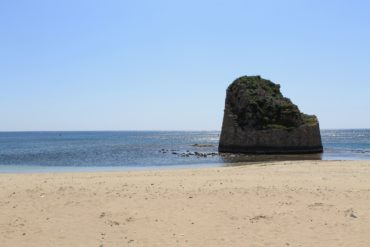
This is not the place for long sandy beaches: here you swim from the low rocks around the jetty or from the stones of the bay next door, in crystal-clear water where the remains of the ancient harbour turn every swim with a mask into a small exploration. This is the Salento for those who love swimming, looking at the seabed and enjoying the sunset in peace. In this guide you will find how to get there, where to swim, what to see and how to plan your day, nearby too.
Curiosities and atmosphere
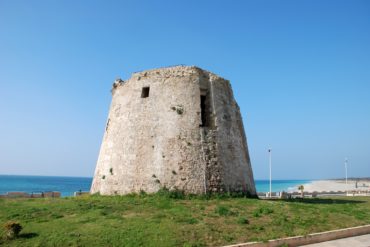
The village takes its name from its watchtower, which was originally called San Ligorio. Like the other towers on the Salento coast, it was built in the sixteenth century as a defence against pirate raids; damaged in a serious attack, it was later demolished, and a private house stands on its site today. The history of this bay, however, goes back much further: San Gregorio was the port of call of the Messapian city of Vereto, which stood on the hill near Patù and traded with Greece and Magna Graecia. The remains of the landing place, a cistern, a spring, quays and walls of squared blocks from the second century BC, were first investigated in 1971; underwater, a rubble breakwater survives and still shelters the basin from the southern winds.
In 2026 the Università di Napoli L’Orientale began the first systematic excavation campaigns at Vereto, with the DiscoVereto project, and between late August and early October it extended them to the harbour of San Gregorio. The place is also much loved by the people of Salento: Marina di San Gregorio has been nominated in nine editions of the FAI’s «I Luoghi del Cuore» (Places of the Heart) census, from 2003 to 2022, to protect the coast from projects that would turn it into beach clubs. Near the landing place there is also the Grotta dei Tarantini, on private property and closed to visitors, with carvings of crosses, of lateen-sailed boats and the date 1768.
Where it is and how to reach it
Marina di San Gregorio is on the Ionian coast of the Capo di Leuca, in the municipality of Patù, between Torre Vado to the west and Marina di Felloniche to the east. The town of Patù is about 5 km inland, Santa Maria di Leuca 5 km away, Gallipoli 43 km and Lecce about 72 km. The coast road runs along the sea, leading west to Torre Vado, Posto Vecchio and Pescoluse and east to Felloniche and Santa Maria di Leuca.
By car: from Lecce take the SS101 to Gallipoli and then the SS274 towards Santa Maria di Leuca, leaving at the Patù – San Gregorio exit: about an hour and a quarter without traffic. In the village there are few parking spaces near the jetty, and some of them are paid: check the zones on the spot and in August arrive early in the morning.
By public transport: national trains arrive in Lecce; from there the FS Sud Est (Ferrovie del Sud Est) line to Gagliano del Capo stops at Morciano-Barbarano station, about 8 km away: check the timetables and any replacement buses. In summer «Salento in Bus» line 108, Lecce – Gallipoli – Santa Maria di Leuca, also stops at San Gregorio, at the public gardens (in 2026 from 13 June to 13 September): check this year’s routes and timetables before you set off. The most convenient airport is Brindisi, about two hours away by car.
What to do and what to see
San Gregorio is about the sea and history: a swim and snorkelling above the ancient harbour in the morning, the stones of Vereto and Patù or a boat trip towards Leuca in the afternoon, and the sunset over the little harbour in the evening. Here are the experiences not to miss.
1. Swimming from the rocks by the jetty (2-3 hours)
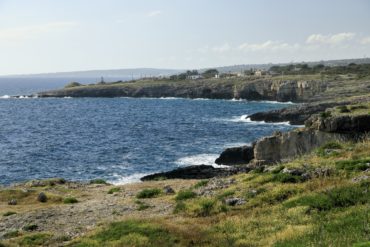
Around the cove the coast is low and rocky, with flat rocks from which you can get into the water easily and, near the jetty, a small stretch of sand and pebbles. The water is clear and a deep, intense blue: with a mask and fins you see fish, sea urchins and a rocky seabed that is still untouched. On days when the sea is calm it is one of the most pleasant swims in the Capo di Leuca.
2. The underwater Messapian harbour (1 hour)
This is what makes San Gregorio truly special. The bay preserves the outer breakwater of the ancient harbour of Vereto, a long rubble mound that still shelters the cove from the southern winds today; according to the Regione Puglia it lies about 7 metres deep. On land the staircase and the well remain, from which flowed the fresh water that made this port of call so valuable to ships. Do look with a mask, but don’t touch anything or take anything away: these are protected archaeological remains.
3. The viewpoint and the pebble bay (30 minutes)
From the round terrace above the sea you can see both the cove with the jetty and the wilder bay on the right, with a small beach of large pebbles. If you are looking for a more natural, quiet corner, go down there: bring reef shoes, because the stones are big and walking on them barefoot is not comfortable.
4. Sunset over the little harbour (1 hour)
In the evening the jetty and the rocks are the best place to watch the sun set towards Torre Vado and the Ionian coast. The light turns warm on the stone and on the sea: after sunset, stay for dinner in one of the places to eat in San Gregorio.
5. By boat to Punta Ristola and the Leuca caves (half a day)
In summer the municipality of Patù allocates spaces at San Gregorio and Felloniche for boat hire and excursion kiosks (in 2026 from 1 July to 31 August). Heading east, the coast soon brings you to Punta Ristola, at the tip of Santa Maria di Leuca, and to the sea caves of Leuca. Choose a day when the sea is calm and check operators, times and conditions on the spot. Read our guide to the Leuca caves.
6. Vereto and the Madonna di Vereto (1-2 hours)
On the hill of Vereto, 155 metres above sea level and about 5 km from San Gregorio, stood the Messapian city whose harbour was this bay. It became a Roman municipium and was destroyed by the Saracens in the ninth century; according to tradition, the survivors founded Patù in 924. On the ancient acropolis stands the little church of the Madonna di Vereto, from the early seventeenth century, next to the archaeological area where excavations resumed in 2026; on the hill there are still stretches of the Messapian walls, rural buildings and caves. Among the finds of the first campaign is a small female head in stone from the Hellenistic period.
7. Patù: the Centopietre and the Vereto Museum (2 hours)
In Patù, 5 km from the sea, is the Centopietre, a ninth-century funerary monument built from about a hundred large stone blocks taken from Vereto: tradition links it to Geminiano, a messenger of peace killed by the Saracens shortly before the battle of Campo Re on 24 June 877. Inside, fourteenth-century frescoes survive; it has been a national monument since 1873. Next to it is the church of San Giovanni Battista, from the tenth and eleventh centuries, also built with materials from Vereto. In the town, in Palazzo Romano, the Vereto Archaeological Museum tells more than two thousand years of history, from the Messapians to the Roman era: check the opening days and times.
Sea, rocks and who it suits
The sea at San Gregorio is clear and a deep, intense blue, with unspoilt seabeds to explore with a mask and fins. The coast is low and almost entirely rocky, but easy to reach: flat rocks, a short stretch of sand and pebbles near the jetty and the bay of large pebbles next door. The sea between Capo San Gregorio and Punta Ristola is part of the European Natura 2000 network, as the site «Posidonieto Capo San Gregorio – Punta Ristola», for its Posidonia seagrass meadows. According to the Regione Puglia, the bay stays fairly sheltered even when the sirocco blows; in heavy seas, however, the rocks become dangerous.
It is perfect for those who love snorkelling and diving, for strong swimmers, for couples and for anyone looking for a quiet Salento with a touch of history. It is less suited to people dreaming of a long sandy beach, which they will find a few minutes away in the bay of Felloniche or on the beaches of Pescoluse, and to those who find it hard to walk on rocks.
Free beach and facilities
In San Gregorio you can swim freely from the rocks, from the small stretch of sand and pebbles near the jetty and from the pebble bay; check on the spot for any licensed beach services. In the village there are a few bars, restaurants and pizzerias and a small supermarket; for more choice there are Torre Vado and Santa Maria di Leuca, a few minutes away.
Bring reef shoes, a small umbrella and water: there is no shade on the rocks and in the middle of the day the rock is scorching.
San Gregorio vs other seaside villages of the Capo di Leuca
Along this coast the villages are very close to each other. Here is a practical comparison to help you choose:
San Gregorio vs Felloniche
- San Gregorio: low rocks, the jetty, the underwater Messapian harbour and the sunset over the little harbour
- Felloniche: a sandy bay, 2 km towards Leuca, in an even smaller village
San Gregorio vs Torre Vado
- San Gregorio: a smaller, quieter village, with the sea close at hand
- Torre Vado: the tourist harbour with its sixteenth-century tower, the freshwater springs, the small beach and the seafront that is lively in the evening
San Gregorio vs Santa Maria di Leuca
- San Gregorio: nature, quiet and clear sea
- Leuca: the lighthouse, the de Finibus Terrae sanctuary, the seafront with its nineteenth-century villas, the boats to the caves and every service
San Gregorio vs Pescoluse
- San Gregorio: rocks, seabeds to explore and a peaceful atmosphere
- Pescoluse: the long white sandy beach and the shallow sea of the Maldives of Salento, ideal with small children but very crowded in August
When to choose San Gregorio: if you love swimming with a mask, prefer peace and quiet to an equipped beach and like the idea of swimming above a harbour more than two thousand years old.
When to choose somewhere else: if you are travelling with small children and are looking for sand and shallow water, look at the beaches of Marina di Pescoluse, about 7 km away.
Practical tips
For snorkelling above the ancient harbour, choose the morning of a windless day, when the water is at its clearest. If you are not an experienced swimmer, stay close to the shore and don’t swim out alone: the submerged breakwater is a few metres down, and the archaeological remains are only to be looked at, not touched.
In July and August arrive early for parking too, because there are few spaces near the sea. If the sea is rough, don’t go down onto the rocks: waves come in without warning and getting out of the water becomes difficult. In the afternoon, when the sun is beating down, take the chance to go up to Vereto and Patù, and come back to the sea for the sunset.
Useful practical information
| 📍 Where | Marina di San Gregorio (Patù, Lecce), 5 km from Santa Maria di Leuca and 72 km from Lecce |
|---|---|
| 🚗 Parking | Few spaces near the jetty, some of them paid; in August arrive early in the morning |
| ♿ Access | Into the water from the flat rocks or from the small stretch of sand and pebbles near the jetty; large pebbles in the bay next door |
| 🏖 Beach | Low rocks, a short stretch of sand and pebbles and a small beach of large pebbles |
| 🌊 Sea | Clear and a deep, intense blue; the submerged Messapian breakwater at about 7 metres |
| 👟 What to bring | Reef shoes, mask and fins, umbrella, sun cream and water |
| 🍴 Food | A few bars, restaurants and pizzerias in the village; more choice in Torre Vado and Leuca |
| 📅 Best time | June and September; in July and August early in the morning and in the evening |
Where to stay in Marina di San Gregorio
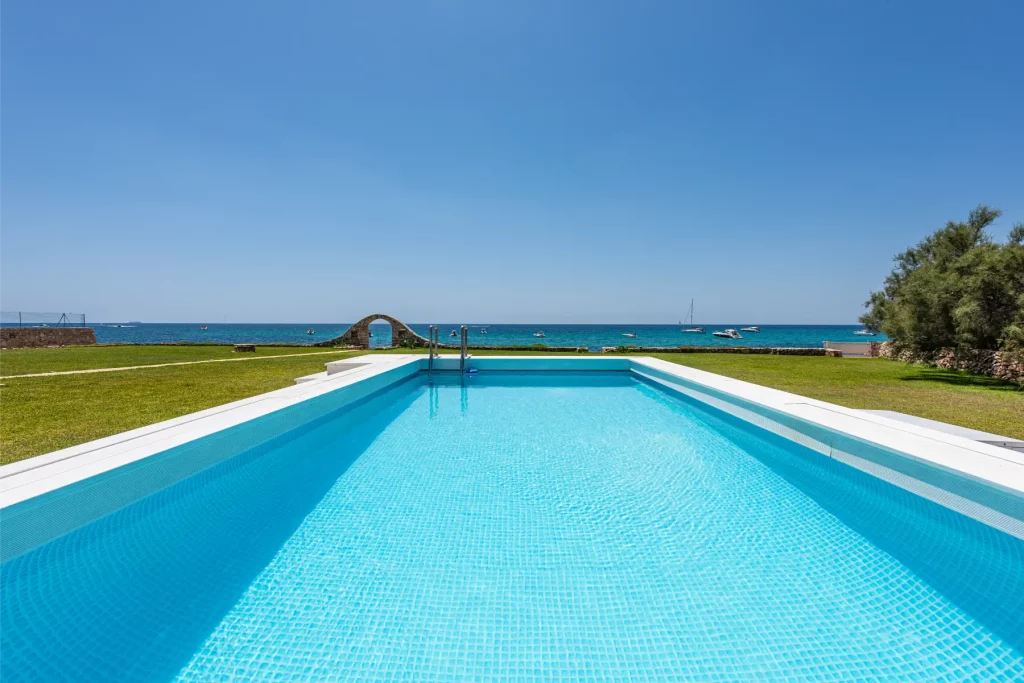
We have no houses in San Gregorio, but about 1.5 km away, between the bays of Ciardo and Felloniche, you will find our Villa Luxury 73: up to 12 guests and 3 bathrooms in two independent buildings, each with its own kitchen, in a 3,000 m² seafront garden with a private pool, heated up to 35 °C and so pleasant out of season too, and a panoramic jacuzzi for four adults with a sunset view. There are two sea-view terraces, a barbecue, a covered carport, an outdoor shower, air conditioning and Wi-Fi, and small dogs are allowed. By car you reach the San Gregorio jetty in a couple of minutes.
You will find other houses in the area on the page holiday homes in Santa Maria di Leuca. Would you like advice on dates, getting around or other houses? Contact us: we will help you choose the right option.
When to go and how much time to plan
June: the sea is already pleasant, the village is quiet and the days are very long: perfect for morning snorkelling and the evening sunset.
July and August: it is high season. The sea is warm and all the houses are open; the parking spaces near the jetty and the best rocks fill up early, so arrive early in the morning or enjoy the sea in the late afternoon. In these months there are also boats for hire and excursions.
September: the best month, in our opinion. The sea is still warm, there are far fewer people and the light on the little harbour is beautiful.
April, May and October: the ideal time to visit Vereto, the Centopietre and Patù in mild temperatures; swimming is for those who don’t mind cool water.
November to March: San Gregorio is almost deserted and many houses are closed. In heavy seas the sight of the waves on the rocks is impressive, but it is best watched from a distance.
Events and festivals (indicative dates, check them every year on the Patù municipality website and on SalentoMe):
- Infiorata del Corpus Domini in Patù: in June, with a carpet of flowers about 250 metres long through the streets of the town
- San Giovanni Battista fair in Patù: 24 June
- Sagra della Sciuscella in Patù: August, in the first half of the month
- Feast of San Gregorio in the seaside village: second half of August, with the procession of the patron saint (in 2025 there was also an underwater procession)
- Feast of San Michele Arcangelo in Patù: 29 September
How much time to allow: half a day is enough for a swim and snorkelling above the ancient harbour; a whole day if you add Vereto, the Centopietre and the sunset. With three or four days you can combine the boat trip, Santa Maria di Leuca and the sandy beaches of the Ionian coast. A typical day:
- 8:30: a swim and snorkelling above the Messapian harbour, when the sea is calmest
- 11:00: the viewpoint on the round terrace and the pebble bay
- 13:30: lunch in San Gregorio
- 16:30: Vereto, the Madonna di Vereto, the Centopietre and the Vereto Museum in Patù
- 19:30: sunset over San Gregorio’s little harbour
- 21:00: dinner in the village or a stroll along the seafront at Santa Maria di Leuca
Surroundings and extra ideas
San Gregorio is well placed for exploring the whole Capo di Leuca, with its bays, archaeological sites, sandy beaches and cliffs. Distances and driving times are approximate.
Marina di Felloniche (2 km, 3 minutes): the neighbouring seaside village, split between Patù and Castrignano del Capo, with a sandy bay, the Papa Fedele pajara and the Volito well.
Patù, Vereto and the Centopietre (5 km, 8 minutes): the town, with the Centopietre, the church of San Giovanni Battista and the Vereto Archaeological Museum in Palazzo Romano, and on the hill the archaeological area and the church of the Madonna di Vereto.
Santa Maria di Leuca and Punta Ristola (5 km, 10 minutes): the lighthouse, the de Finibus Terrae sanctuary, the seafront with its nineteenth-century villas and the boats to the caves. Read the guide to Santa Maria di Leuca and the one to the Leuca caves.
Torre Vado (5 km, 7 minutes): the seaside village of Morciano di Leuca, with the sixteenth-century tower on the tourist harbour, the freshwater springs among the rocks and the seafront that comes alive in the evening. Read our guide to Torre Vado.
Posto Vecchio and Pescoluse (6-7 km, 8 minutes): where the long white sandy beach of the Maldives of Salento begins, with a shallow sea that is ideal for children. Read our guide to Marina di Pescoluse.
Ponte del Ciolo and Marina di Novaglie (15-18 km, 20-25 minutes): on the Adriatic coast, high cliffs, caves and deep sea, for a change of scenery and to see the other sea of the Capo di Leuca.
Local tip
Get into the water early in the morning, when the sea is at its calmest and clearest: swimming with a mask towards the tip of the cove, you understand why ancient ships stopped right here, sheltered by the breakwater, where there was fresh water.
In the afternoon, when the sun is beating down, go up to Vereto and Patù: among the Centopietre, the pajare and the little church on the hill you discover the other half of this bay’s story, that of the city that used it as its harbour.
And in the evening go back to the jetty for the sunset. If you want to go out by boat, check the wind first: the bay stays fairly sheltered even with the sirocco, but further out, towards Punta Ristola, the sea can be rough.
FAQ
Where is Marina di San Gregorio?
On the Ionian coast of the Capo di Leuca, in the municipality of Patù (Lecce), between Torre Vado and Marina di Felloniche, about 5 km from Santa Maria di Leuca and 72 km from Lecce. It is also known as Torre San Gregorio.
Why is it also called Torre San Gregorio?
Because of the watchtower built here in the sixteenth century, which was originally called San Ligorio. Damaged in a pirate attack, it was later demolished: a private house stands on its site today.
Is there a sandy beach at San Gregorio?
Not a real beach: you swim from the low rocks, from a small stretch of sand and pebbles near the jetty and from a bay of large pebbles. The nearest sand is in the bay of Felloniche, 2 km away; the long beaches of Pescoluse are about 7 km away.
Can you still see the Messapian harbour?
Yes: with a mask and fins you can see the submerged breakwater of the ancient harbour of Vereto, about 7 metres deep, and on land the staircase and the well remain. They are protected archaeological remains: look at them without touching them.
Is Marina di San Gregorio suitable for children?
With care: to get into the water you have to move across rocks or pebbles. With small children, the sandy bay of Felloniche and the beaches of Pescoluse are easier.
Can you dive at San Gregorio?
Yes, the sea is clear and the seabed is suitable for snorkelling and diving. To dive, go with a local diving centre, with the right certification and when the sea is calm, and remember that there are archaeological remains and protected Posidonia meadows here.
How do you get to San Gregorio without a car?
In summer on «Salento in Bus» line 108, Lecce – Gallipoli – Santa Maria di Leuca, which stops at the public gardens in San Gregorio. The nearest railway station is Morciano-Barbarano, on the FS Sud Est line to Gagliano del Capo, about 8 km away.
When is the best time to go?
June and September, when the sea is already, or still, warm and there are fewer people. In July and August go to the sea early in the morning and come back to the little harbour for the sunset.
Where to stay near Marina di San Gregorio?
About 1.5 km away, between the bays of Ciardo and Felloniche, there is Salento Prime’s Villa Luxury 73: up to 12 guests, with a heated private seafront pool and a jacuzzi. Santa Maria di Leuca and Torre Vado, a few minutes away, are also convenient bases.
Conclusion
Marina di San Gregorio is the most secluded side of the Ionian coast of the Capo di Leuca: a small cove with its jetty, low rocks and crystal-clear sea above the remains of the Messapian harbour of Vereto. Set off early with your mask, go up to Vereto and the Centopietre in the afternoon and come back to the little harbour for the sunset.
If you want to stay a few minutes from the sea, between the bays of Ciardo and Felloniche you will find our Villa Luxury 73: up to 12 guests, 3 bathrooms, a heated private seafront pool and a jacuzzi with a sunset view. You will find our houses in the area on the page holiday homes in Santa Maria di Leuca.
Discover the available accommodations with Salento Prime. To best organize your base and transfers, contact us here or start a chat on WHATSAPP.
Cover photo: Falk2, CC BY-SA 4.0, via Wikimedia Commons