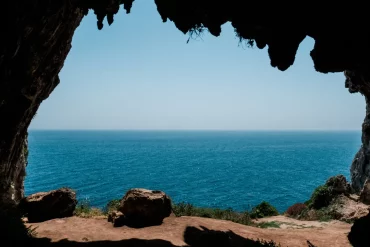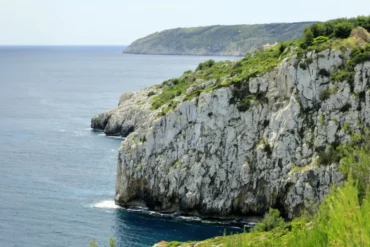
Have you seen Ostuni, the White City, and now want to discover its sea too? This guide takes you to Marina di Ostuni, the coast that runs down from the hill to the Adriatic between Fasano and Carovigno: the little harbour of Villanova with its castle, the white villas of Rosa Marina, the dunes of the Pilone and the Parco delle Dune Costiere, the coves of Creta Rossa and Costa Merlata and the old tower of Torre Pozzelle. It is about two hours by car from our houses in the south of Salento: that is why we present it as a one-day beach trip, which you can combine, if you like, with a walk in the centre of Ostuni.
In short
Marina di Ostuni is the coast of the municipality of Ostuni, in the province of Brindisi, on the Adriatic Sea, about 8 km from the town. It runs from the Parco naturale regionale Dune Costiere, on the border with Fasano, to Torre Pozzelle and Lamaforca, towards Carovigno, and includes the localities of Pilone, Rosa Marina, Monticelli, Diana Marina, Villanova, Gorgognolo, Costa Merlata, Cala dei Ginepri and Santa Lucia. Its centre is Villanova, with the little harbour and the Angevin castle. To the west, sandy beaches with dunes prevail; east of Villanova, coves among the rocks. In 2026 Ostuni received its 32nd Blue Flag. From our houses in the south of Salento it takes about two hours by car; the best months for the sea are June and September.
What is Marina di Ostuni?
«Marina di Ostuni» is the name for the whole stretch of coast that belongs to the municipality of Ostuni: a strip of beaches, dunes, coves and seaside villages at the foot of the plain of olive trees, a few kilometres from the old town on the hill. It is not a single village but a series of localities, some created as holiday villages, others very old, like Villanova, which was Ostuni’s port from the Middle Ages. Along the coast you come across two sixteenth-century watchtowers, Torre San Leonardo at the Pilone and Torre Pozzelle, or Torre Pozzella, and the Ostuni part of the Parco naturale regionale Dune Costiere da Torre Canne a Torre San Leonardo.
The sea at Ostuni changes character within a few kilometres. To the west, towards the Pilone and the Parco delle Dune Costiere, the beach is long and sandy, protected by dunes covered with junipers and Mediterranean scrub, with the wetlands of the Fiume Morelli behind. In the middle is Villanova, the seaside village with the marina, the castle and the fish restaurants. To the east, towards Gorgognolo, Costa Merlata and Torre Pozzelle, the coast becomes more indented, with small sandy coves between low rocks and very clear water.
If you are staying in southern Salento, it is a different sea from the one at home, further north and with a landscape all its own: behind the beaches there are no high cliffs like those of the Capo di Leuca, but the plain of ancient olive trees and, on the hill, the white of Ostuni. In this guide you will find how to get there from Salento, which beaches to choose, what to see besides the sea, the park rules and how to plan your day.
Curiosities and atmosphere
Villanova has an older history than it seems. Archaeological excavations have documented in the sea the remains of Ostuni’s Roman port, active in the time of Emperor Trajan for the trade in oil and wine, until Saracen raids destroyed it. In the Middle Ages its place was taken by the small settlement of Petrolla, near the ancient Via Traiana: in 1182 Tancred, Count of Lecce and lord of Ostuni, allowed a village to be founded there, and in 1191 the King of France, Philip II Augustus, also passed through on his way back from the Third Crusade. Frederick II tried in vain to repopulate it; in 1277 Charles I of Anjou founded a new village on the ruins of Petrolla, called, fittingly, Villanova, with walls and, a few years later, the castle by the sea.
In the sixteenth century, under the Duchy of Bari of Isabella of Aragon and her daughter Bona Sforza, the coast was defended by the towers of Pozzella and San Leonardo. Torre San Leonardo, at the Pilone, marked the northern border of the Terra d’Otranto on the Adriatic side, and remained so until 1927, when the province of Brindisi was created: if you are wondering where Salento ends, read our guide to geographical Salento: Upper, Middle and Lower Salento. Rosa Marina is much more recent, created at the end of the 1960s on the initiative of the Austrian entrepreneur Max Schachter: the first white single-storey villas were bought mainly by Swedish and British tourists, and in the 1970s it was one of the first examples of an albergo diffuso, a hotel spread across separate buildings. Today the Ostuni coast is among the most awarded in Puglia: in 2026 the municipality received its 32nd Blue Flag. You will find news and information on the website of the municipality of Ostuni.
Where it is and how to reach it
Marina di Ostuni lies on the Adriatic coast of the province of Brindisi, between Torre Canne, in Fasano, and Carovigno, about 8 km from the centre of Ostuni. Between the Pilone and Torre Pozzelle there are about 12 km of road along the coast. Brindisi is about 40 km away, Lecce 70-75 km. From our houses in the south of Salento the distance ranges from about 115 km, from the Adriatic coast at Marittima, to about 155 km, from the Ionian coast at Lido Marini: allow about two hours by car, up to two and a half, without traffic.
By car: from southern Salento you head up towards Lecce, take the SS613 dual carriageway to Brindisi and continue on the SS379 towards Bari. The road runs parallel to the coast and has dedicated exits for the seaside localities, such as Torre Pozzella, Costa Merlata, Gorgognolo and Ostuni-Villanova. Coming from the south, the first one you reach is Torre Pozzelle, the closest to our houses. In summer, parking along the coast is regulated: in 2025 the municipality set up about 1,500 parking spaces in 13 areas, from the Pilone to Torre Pozzelle, to stop people parking on the dunes. If you do not have a car, read our guide to car rental in Puglia and Salento.
By train and bus: from Lecce there are direct trains to Ostuni taking about 45-55 minutes. The station is on the plain, about 7 km from Villanova; the STP town bus line connects Ostuni, the station and Villanova. In summer 2025 the municipality also ran a free line along the whole coast road, from the Pilone to Torre Pozzelle, with stops at Rosa Marina, Monticelli, Diana Marina, Villanova, Gorgognolo, Costa Merlata, Cala dei Ginepri and Santa Lucia: check whether it is running and the timetable for the current year. From southern Salento, however, the train takes a long time: for a day at the sea, the car remains the most practical choice.
What to do and what to see
The way to enjoy Marina di Ostuni is to pick one or two beaches and move along the coast by car: you cannot see everything in one day. Here are the stops not to miss, from west to east.
1. The Pilone and Torre San Leonardo (1 hour)
At the Pilone, at the western end of the coast, the sandy beach stretches out at the foot of the dunes, inside the Parco delle Dune Costiere. Here stands Torre San Leonardo, also called the tower of San Lionardo or Torre di Capo: according to documents in the State Archives of Naples it was built by the master builder Scipione Lopes of Gallipoli and completed in 1569, with a square plan to hold more cannons, and from 1579 it was armed with artillery brought from Lecce. On the same spot, in Roman times, stood the Mutatio ad Decimum, a staging post for changing horses on the Via Traiana. The tower marked the northern border of the Terra d’Otranto, and for this reason it was also called the tower «del Pilone». Today it has been heavily altered and is a private home: you see it from the outside.
2. The Parco delle Dune Costiere and the Fiume Morelli (1-3 hours)
Between the Pilone and Torre Canne lies the most natural part of the Ostuni coast. The Parco naturale regionale Dune Costiere, established in 2006, stretches between Ostuni and Fasano over about 1,100 hectares and 8 km of coast: moving inland from the sea you find the beach, the dunes covered with juniper, mastic and myrtle, the wetlands behind the dunes, the fossil dunes and the ancient olive groves. Behind the beach flows the Fiume Morelli, an «L»-shaped watercourse 800 metres long, fed by springs of slightly salty water. Its ponds have been used for fish farming since the late nineteenth century: the old system, with seven basins and eleven sluices, has been restored since 2009 for organic farming of eels and grey mullet. Grey herons, little egrets and black-winged stilts live among the reeds; the kingfisher can be seen from July right through the winter, and in winter the ducks arrive. The park’s beach, the «litorale Parco Dune Costiere», is among those with the Blue Flag 2026. Walk only on the paths, do not climb the dunes, move slowly and speak softly so as not to disturb the animals; you will find itineraries and information on the website of the Parco Dune Costiere.
3. Rosa Marina, Monticelli and Diana Marina (half a day)
Rosa Marina, or Rosamarina, is the village of white single-storey villas created at the end of the 1960s, set in greenery between the olive trees and the sea. The area has been inhabited for thousands of years: finds from the Neolithic, the Iron Age, the Hellenistic period and Roman times have been discovered nearby. The «litorale Rosa Marina» has the Blue Flag 2026, and to the east the coast continues with the sandy beaches of Monticelli and Diana Marina, as far as Villanova. It is the ideal stretch if you are looking for sand, shallow water and facilities; between one beach club and the next, check on the spot which stretches are free and where you can get onto the beach.
4. Villanova, the little harbour and the castle (1-2 hours)
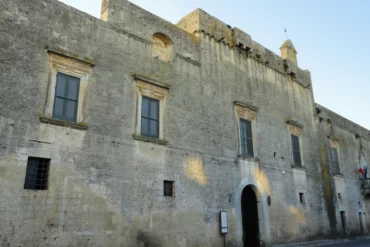
Villanova is the heart of Marina di Ostuni: a small seaside village gathered around the marina, with low houses, the nineteenth-century church and the seafront. Above the harbour rises the castle built by the Angevins, between the late thirteenth and the fourteenth century, to defend the coast from pirate raids: it is made up of three blocks like square towers with sloping bases, a stone string course running all the way round at first-floor level and, on the roof, a turret that looks like a lighthouse. From the harbour and the nearby rocks you get one of the finest views on the coast, with white Ostuni on the hill in the background. On summer evenings the seafront of via Consolato Veneziano becomes pedestrian: in 2025 it was from 4 July to 14 September at weekends and every day in August, from 20:00 to 1:00. In Villanova you will find fish restaurants, public car parks near the harbour and the beaches, and accessible toilets.
5. The beaches of Villanova: Camerini, Fontanelle and Creta Rossa (half a day)
Around Villanova, small sandy coves alternate with stretches of rocky shore, with transparent water and a seabed full of life. East of the harbour are the sandy bay of Camerini and the Fontanelle beach, both close to the village; further on, towards Gorgognolo, the little cove of Creta Rossa. Fontanelle and Creta Rossa are among the beaches awarded the Blue Flag 2026. Some beaches in Villanova have walkways and ramps for people with reduced mobility. Creta Rossa is also one of the three stretches of free beach where, in summer 2026, dogs on a lead were allowed.
6. Gorgognolo, Costa Merlata and Cala dei Ginepri (half a day)
East of Villanova the coast becomes lower and more indented, with small inlets between the rocks and Mediterranean scrub reaching almost to the sea. Here the localities of Gorgognolo, Costa Merlata and Cala dei Ginepri follow one another, with their beaches and coves, backed by masserie (farmhouses) and olive groves. It is a more intimate stretch of coast than the long beaches to the west: bring water shoes for the rocks and choose the most sheltered coves when it is windy. Along the way, the Lamasanta beach is another of the free stretches where, in summer 2026, dogs were allowed.
7. Torre Pozzelle and Lamaforca (2 hours)
At the eastern end of the coast, beyond Santa Lucia, is Torre Pozzelle, also called Torre Pozzella: a sixteenth-century watchtower, now partly in ruins, overlooking a coast of low rocks and small sandy coves with turquoise water. It is the closest seaside spot if you are coming from Salento. Near the tower there is a municipal car park, and the little cove of Torre Pozzelle, a few minutes away on foot, is one of the stretches of free beach open to dogs in summer 2026. A little further east, towards Carovigno, is Lamaforca, with its beach and an area already inhabited in the Neolithic. Torre Pozzelle is lovely out of season too, at sunset, when the light colours the rocks and the tower.
Sea, beaches and who will love it
The sea at Marina di Ostuni is clear and clean: as confirmed by the 32 Blue Flags the municipality has received, the latest in 2026 for six stretches of coast, from the dunes of the park to Creta Rossa. West of Villanova sandy beaches prevail, with a gently sloping seabed and the dunes behind; to the east, coves between low rocks, with turquoise water and a seabed to explore with mask and snorkel. Offshore, meadows of posidonia grow: the dry leaves that pile up on the shore in winter protect the beach from erosion and should be left where they are. On days of strong wind the sea gets rough and it is best to choose the more sheltered side of the coast.
It is perfect for families with children, who will find sandy beaches and shallow water between Rosa Marina and Villanova, for snorkelling fans in the coves towards Torre Pozzelle, for those travelling with a dog, for nature and birdwatching lovers in the Parco delle Dune Costiere and for anyone who wants to combine the sea with a visit to Ostuni. It is less suited to those looking for a short trip: from southern Salento it is about four hours’ driving there and back.
Free beach and facilities
Along the Ostuni coast, beach clubs alternate with stretches of free beach: the areas with the most facilities are Rosa Marina, Villanova and the park’s shoreline, while the coves towards Costa Merlata and Torre Pozzelle are more natural. Check on the spot which stretches are free, where you can get onto the beach and any paid parking areas. Some free beaches have no lifeguard service. Bars and fish restaurants are mainly in Villanova; in summer many facilities along the coast are seasonal.
Bring an umbrella, plenty of water, water shoes for the coves and a bag for your rubbish. If you go with your dog, choose one of the stretches of free beach designated by the municipality and follow the rules for the current year.
Marina di Ostuni vs other destinations
If you have a day for a beach trip outside southern Salento, here is a practical comparison to help you choose:
Marina di Ostuni vs the centre of Ostuni
- Marina di Ostuni: beaches, dunes, coves and the little harbour of Villanova, for a day at the sea
- Ostuni: the White City on the hill, 8 km from the coast, with the Cathedral, the alleys and the museum of the Woman of Ostuni. Read our guide to Ostuni; you can combine them in the same day
Marina di Ostuni vs Torre Guaceto
- Marina di Ostuni: many different localities, facilities, Blue Flag beaches and Villanova for lunch
- Torre Guaceto: the nature reserve and marine protected area between Carovigno and Brindisi, about 14 km from Torre Pozzelle, wilder and with its own rules
Marina di Ostuni vs the beaches of southern Salento
- Marina di Ostuni: the sea of Upper Salento, with dunes, olive trees behind and the White City on the hill, about two hours from our houses
- The sandy beaches of the Ionian coast and the cliffs of the Capo di Leuca: a few minutes from our houses, with no hours of travel
When to choose Marina di Ostuni: if you want to combine the sea with Ostuni, you like dunes and nature or you are looking for a landscape different from that of southern Salento.
When to choose somewhere else: if you only want a quiet day at the sea, with small children, stay on the beaches near our houses and keep Ostuni for a day trip.
Practical tips
For a day at the sea from southern Salento, set off early, around 7:00: you will reach the first seaside spot, Torre Pozzelle, around 9:00, when the coves are still quiet and parking is easier to find. In the summer months leave the car only in the designated parking areas: the dunes and the Mediterranean scrub are fragile and inside the park you may park only in the areas provided. Do not walk on the dunes, use the marked paths and do not take away sand, plants or shells.
Choose the side of the coast according to the wind and your company: for children, the sandy beaches between Rosa Marina and Villanova are best; for snorkelling, the coves towards Torre Pozzelle; for a walk in nature, the Pilone and the Fiume Morelli. Work out your return time carefully: about two hours of driving await you. For buses, parking and rules for dogs, check the latest news on the municipality’s website before you set off.
Useful practical information
| 📍 Where | Coast of the municipality of Ostuni (Brindisi), between Fasano and Carovigno, 8 km from Ostuni, 70-75 km from Lecce and about 115-155 km from our houses in the south of Salento |
|---|---|
| 🚗 Parking | In summer, regulated parking areas from the Pilone to Torre Pozzelle; public car parks near Villanova harbour; in the park only in the designated areas |
| ♿ Access | In Villanova a barrier-free seafront, some beaches with walkways and ramps, and accessible toilets; the coves among the rocks are less easy |
| 🏖 Beach | Sand and dunes west of Villanova, coves among the rocks to the east; beach clubs and free stretches |
| 🌊 Sea | Clear Adriatic; Blue Flag 2026 for six stretches of the municipality’s coast |
| 👟 What to bring | Umbrella, water, water shoes for the rocks, mask and snorkel, binoculars for the park and a bag for your rubbish |
| 🍴 Food | Fish restaurants and bars in Villanova; seasonal facilities along the coast in summer |
| 📅 Best time | June and September for the sea; spring and autumn for the park and walks |
Where to stay to visit Marina di Ostuni
Salento Prime has no houses in Ostuni or on its coast: our houses are all in the south of Salento, in the province of Lecce, between the Ionian coast, Santa Maria di Leuca and the Adriatic coast. From there Marina di Ostuni is about two hours by car, up to two and a half from the Ionian coast. That is why we suggest it as a long one-day beach trip, setting off early in the morning and coming back in the evening, perhaps combined with a walk in Ostuni.
If you are planning your holiday in Salento and want a base for the sea and for day trips, you will find all our houses on the page our houses. Would you like advice on how to plan your day or on which house to choose? Contact us: we are happy to help.
When to go and how much time to plan
February to April: no swimming, but a lovely time for the Parco delle Dune Costiere. From as early as late February, cranes fly over the park in «V» formations, and in spring the Mediterranean scrub is in flower.
May: long days, beaches still quiet and cool water. Perfect for a trip combining Ostuni and the sea, with a stroll in Villanova and at Torre Pozzelle.
June: in our view the best month, together with September. The sea is already pleasant, the beaches are not crowded on weekdays and between May and July the sea bindweed flowers on the dunes.
July and August: the liveliest and busiest period. Arrive early for parking and a spot on the beach; in the evening the Villanova seafront becomes pedestrian and Ostuni has its programme of summer events. The sea daffodil flowers on the dunes. At the end of August, in town, the feast of Sant’Oronzo with the Cavalcata.
September: the sea is still warm, there are far fewer people and on windless days the coves towards Torre Pozzelle are crystal clear. The afternoon light is perfect for combining the sea with Ostuni.
October to January: the coast becomes quiet again, good for walks and sunsets. In December, in the Fiume Morelli, fishing is still done with traditional methods and the park organises guided tours; between late November and early January Ostuni lights up for Christmas.
Events and festivals (indicative dates, check them every year on the website of the municipality of Ostuni and on PugliaMe):
- Summer in Ostuni: July to August, with the municipality’s programme of events in town and along the coast
- Feast of Sant’Oronzo, the patron saint: at the end of August, from 25 to 27 August in 2025, with the Cavalcata on 26 August through the streets of the town
- Traditional fishing in the Fiume Morelli: in December, with guided tours of the Parco delle Dune Costiere
- Christmas in Ostuni and «Bianco Natale»: from late November to early January, with the luminarie in town
How much time to allow: a whole day for two or three stops along the coast; if you want to add the centre of Ostuni, choose just one beach and spend the late afternoon in town. Allow for about four hours of driving there and back from southern Salento. A typical day:
- 7:00: departure from southern Salento
- 9:00: arrival at Torre Pozzelle, a swim in the coves while the sea is at its calmest
- 12:30: Villanova, the little harbour, the castle and a fish lunch
- 15:00: sandy beach at Rosa Marina or the Pilone, with a walk on the paths of the Parco delle Dune Costiere
- 17:30: up to Ostuni for a stroll in the old town, or sunset at Torre San Leonardo
- 19:30: the drive back, to be home around 21:30
Surroundings and extra ideas
Marina di Ostuni lies at the centre of a coast rich in nature and villages, between the Parco delle Dune Costiere, the Valle d’Itria and the Torre Guaceto reserve. On a day trip from southern Salento, choose just one extra stop. Distances and driving times are approximate.
Ostuni (8 km, 12 minutes from Villanova): the White City on the hill, with the Gothic Cathedral, the column of Sant’Oronzo and the museum of the Woman of Ostuni. Read our guide to Ostuni.
Archaeological park of Santa Maria di Agnano (10 km, 17 minutes from Villanova): the cave where the Woman of Ostuni was found, with views over the plain of olive trees and the sea. Open on limited days or by booking.
Torre Canne (9 km, about 10 minutes from the Pilone): the seaside village of Fasano, just north of the park.
Torre Guaceto (14 km, 18 minutes from Torre Pozzelle): the state nature reserve and marine protected area on the coast between Carovigno and Brindisi.
Carovigno (12 km, 20 minutes from Torre Pozzelle): a small town in the Brindisi hinterland, behind the coast.
Cisternino (25 km, 24 minutes from Villanova): a small white village in the hills of the Valle d’Itria.
Lecce (70-75 km, about an hour): on the way back, an evening stop in the city of the Baroque. Read our guide to Lecce.
Local tip
Coming from Salento, start from the east: leave the main road at Torre Pozzella and take your first swim in the coves below the tower, early in the morning, when the water is still and turquoise. Then work your way west along the coast, stopping in Villanova for lunch: from the little harbour, next to the castle, look inland and you will see white Ostuni on the hill, above the olive trees.
In the afternoon, change scenery and go to the Pilone: walk along the beach at the foot of the dunes to where the park begins, and bring binoculars for the birds of the Fiume Morelli. Stay on the sand and the marked paths: the juniper-covered dunes are the treasure of this coast.
If you have an hour left, go up to Ostuni before heading back: after a day at the sea, the old town at sunset is the loveliest way to end the trip.
FAQ
Where is Marina di Ostuni?
On the Adriatic coast of the province of Brindisi, between Fasano and Carovigno, about 8 km from the centre of Ostuni. It includes Pilone, Rosa Marina, Monticelli, Diana Marina, Villanova, Gorgognolo, Costa Merlata, Santa Lucia and Torre Pozzelle.
How far is Marina di Ostuni from southern Salento?
From about 115 km, from the Adriatic coast at Marittima, to about 155 km, from the Ionian coast at Lido Marini: about two hours by car, up to two and a half. From Lecce it is 70-75 km, about an hour.
Which are the sandy beaches of Marina di Ostuni?
The sandy beaches are mainly west of Villanova: the shoreline of the Parco delle Dune Costiere, the Pilone, Rosa Marina, Monticelli and Diana Marina. East of Villanova, towards Costa Merlata and Torre Pozzelle, coves among the rocks prevail.
Does Marina di Ostuni have the Blue Flag?
Yes: in 2026 Ostuni received its 32nd Blue Flag, for six stretches of coast, including Creta Rossa, Fontanelle, the litorale Parco Dune Costiere, the litorale di Rosa Marina and the litorale di Torre Canne Sud.
What is there to see at Marina di Ostuni besides the sea?
The little harbour and the Angevin castle of Villanova, the sixteenth-century towers of San Leonardo and Pozzelle, the dunes and the Fiume Morelli in the Parco delle Dune Costiere and, 8 km away, the old town of Ostuni.
Can you get to Marina di Ostuni without a car?
Yes, but it takes time: from Lecce the train reaches Ostuni in about 45-55 minutes, and the town bus line connects the station and the town with Villanova. In summer the municipality also ran a line along the coast: check the timetable and dates for the current year.
Can you take your dog to the beach at Marina di Ostuni?
Yes, on some stretches of free beach designated by the municipality: in summer 2026 they were the little cove of Creta Rossa, the Lamasanta beach and the little cove of Torre Pozzelle, with the dog on a lead and its health documents. Check the rules every year.
When is the best time to go?
June and September for the sea, with fewer people and warm water; spring and autumn for the Parco delle Dune Costiere and walks. In July and August arrive early in the morning.
Where to stay to visit Marina di Ostuni?
Salento Prime has no houses in Ostuni: our houses are in the south of Salento, about two hours away by car, and from there Marina di Ostuni is a long one-day beach trip. If you are looking for a base for the sea and day trips in Salento, you can choose from our houses or ask us for advice.
Conclusion
Marina di Ostuni is the sea of the White City: a little harbour with its castle by the sea, long sandy beaches protected by dunes and junipers, turquoise coves below a sixteenth-century tower and, in the background, white Ostuni on the hill. From southern Salento it is a long trip, but it is worth the day: set off early, choose two or three stops, respect the park’s dunes and, if you have time left, end the day in the centre of Ostuni.
Our houses are in the south of Salento, about two hours from Marina di Ostuni: they are a convenient base for the sea and for day trips, including longer ones like this. You will find them all on the page our houses.
Discover the available accommodations with Salento Prime. To best organize your base and transfers, contact us here or start a chat on WHATSAPP.
Cover photo: Davide Mauro, CC BY-SA 4.0, via Wikimedia Commons, cropped