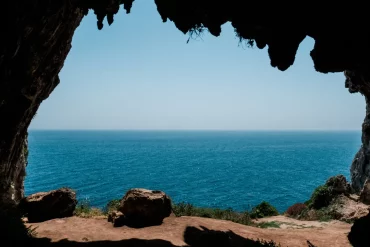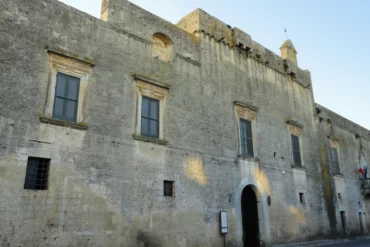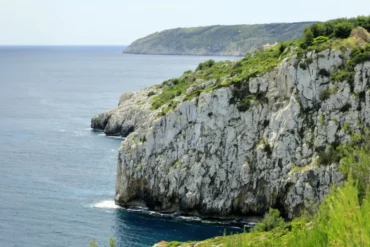
Have you already seen the sea of southern Salento and are you looking for a different day out, between ancient history and the sea? This guide takes you to Fasano, in the province of Brindisi, on the border between Salento and the Terra di Bari: the ruins of ancient Egnazia by the sea, with the Archaeological Park and the National Museum, the old town with Piazza Ciaia and the Chiesa Matrice, the Selva di Fasano on the first hills of the Murgia, and the sea at Savelletri and Torre Canne. It is far from our houses, about two hours by car: that is why we present it as a long day trip, with practical tips on how to get there, what to see and how to plan your time.
In short
Fasano, «Fasciâne» in dialect, is a town of almost 40,000 inhabitants in the province of Brindisi, about 5 km from the Adriatic Sea, on the border between Salento and the Terra di Bari. Its territory holds the ruins of Egnazia, a Messapian and then Roman town on the Via Traiana, with the Archaeological Park and the National Archaeological Museum «Giuseppe Andreassi»; the old town with Piazza Ciaia, the Torre dell’Orologio clock tower and the Chiesa Matrice di San Giovanni Battista; the Selva di Fasano, in the hills at about 400 metres; and 15 km of coast, with the rocky shores of Savelletri and the beaches of Torre Canne, with three stretches awarded the Blue Flag in 2026. From our houses in the south of Salento it takes about two hours, two and a half hours by car; from Lecce just over an hour. The best months are April, May, June, September and October; in June there is La Scamiciata.
What is Fasano?
Fasano is a town in Puglia, in the province of Brindisi, stretching from the Adriatic coast up to the hills of the Murgia dei trulli. Until 1927 it was part of the Terra di Bari, and even today, in dialect and traditions, it is more closely tied to the Terra di Bari than to Salento. Its territory includes the old town, many outlying villages, a plain of centuries-old olive trees and masserie, the Selva in the hills and a long stretch of coast, from Egnazia to Torre Canne, where the Parco naturale regionale Dune Costiere begins.
Fasano has three souls, and in one day you can get a taste of them all. By the sea there is Egnazia, an ancient city thirty centuries old, with the Messapian walls running down towards the water, the Roman road and the early Christian basilicas. In town there is the old town, white and compact, around Piazza Ciaia, with the Chiesa Matrice and the palaces of the Knights of Malta, who were lords here for centuries. In the hills there is the Selva, with its tree-lined avenues, summer villas and a view that reaches all the way to the Adriatic.
For those staying in southern Salento, Fasano is another Puglia: further north, with the Murgia behind it, huge olive trees and fortified masserie on the plain. It is a destination for those who love archaeology, old towns and a sea of rocks and coves, and for those who want to devote one day of their holiday to a trip outside Salento. In this guide you will find how to get there, what to see, how to plan the day and what to do nearby.
Curiosities and atmosphere
Fasano was born from the ruins of Egnazia. When the ancient city by the sea was abandoned, its inhabitants took refuge in the farming hamlets inland, and one of these, the Casale di Santa Maria di Fajano, founded in 1088, became Fasano. The name probably comes from a Latin personal name, Fadius; popular tradition instead links it to the «faso», the wood pigeon, which indeed appears on the town’s coat of arms. From the fourteenth century Fasano was a fief of the Knights of St John, the Knights of Malta, who governed the town and its church for centuries: their cross is still on the coat of arms and on the façade of the Chiesa Matrice.
The date dearest to the people of Fasano is 2 June 1678: according to the story, that night Turkish pirates landed to sack the town and were driven back by the inhabitants, led by the Madonna who appeared in the sky. Since then the victory has been remembered every year with La Scamiciata, during the feast of the patron saints San Giovanni Battista and Santa Maria di Pozzo Faceto. Fasano was also the birthplace of Ignazio Ciaia, poet and patriot of the Neapolitan Republic of 1799, to whom the main square is dedicated. If you are wondering where Salento ends and the rest of Puglia begins, read our guide to geographical Salento: Upper, Middle and Lower Salento.
Where it is and how to reach it
Fasano is in the northern part of the province of Brindisi, between Monopoli and Ostuni, almost at the centre of a triangle whose corners are Bari, Brindisi and Taranto. Ostuni is about 29 km away, Lecce about 95 km. From our houses in the south of Salento the distance ranges from about 140 km, from the Adriatic coast at Marittima, to about 170 km, from the Ionian coast at Lido Marini: allow between two and two and a half hours by car, without traffic.
By car: from southern Salento you head up towards Lecce, then take the SS613 dual carriageway to Brindisi and continue on the SS379 towards Bari, the stretch called «di Egnazia e delle Terme di Torre Canne». The exits for Torre Canne, Savelletri and Egnazia and for Fasano come one after the other: you can start with the sea and the excavations and go up into town in the afternoon, or do the opposite. A car is essential for getting around between the coast, the town and the Selva. If you do not have a car, read our guide to car rental in Puglia and Salento.
By train: Fasano is on the Trenitalia Adriatic line, with regional and long-distance trains to Bari, Brindisi and Lecce. The station is outside the town, about 3.5 km away, and is connected to the town by buses; Egnazia and the sea are even further. Check timetables, journey times and connections before you set off: for a day trip from southern Salento the car remains the most practical choice.
What to do and what to see
Fasano cannot be seen in a single spot: Egnazia and the sea are on the coast, the old town about 9 km inland and the Selva in the hills above the town. On a day trip from Salento it is best to choose: Egnazia and the sea, with a stop in town, or the old town and the Selva. Here are the experiences not to miss.
1. The Egnazia Archaeological Park (1.5-2 hours)
On the coast between Savelletri and Monopoli lie the ruins of Egnazia, Gnathia in Messapian: a town that began as a village of huts in the Bronze Age, in the sixteenth century BC, became a centre of the Messapians and then a Roman municipium, important for its port and for the Via Traiana, the road that led to Brindisi. It is mentioned by authors such as Pliny, Strabo and Horace, who passed through on the journey from Rome to Brindisi described in one of his Satires. In the park you walk on the paving stones of the Via Traiana and see the porticoed square, the civil basilica with the hall of the Three Graces, the Shrine of the Eastern Deities and the baths; of the Christian churches, built between the fourth and sixth centuries, there remain the episcopal basilica with its baptistery and the southern basilica, once paved with mosaics. Towards the sea you can see the mighty Messapian walls, and on the acropolis, the upper part of the ancient town, life went on until the thirteenth century. Outside the walls is the western necropolis, with tombs cut into the rock, some of them painted chamber tombs. Excavations are still under way. The ground is uneven and in summer there is little shade: bring a hat and water.
2. The National Archaeological Museum «Giuseppe Andreassi» (1 hour)
Next to the park, at the edge of the necropolis, stands the National Archaeological Museum of Egnazia, named after Giuseppe Andreassi, who directed the museum and the archaeological area from 1976 to 1985 and later became Archaeological Superintendent of Puglia. The display, opened in 2013, tells thirty centuries of history in seven sections, from the Bronze Age huts to the Iapygians and the Messapians, from the Roman town to the early Christian one, seat of a bishop, up to the last traces of the Lombards. Among the finds is the statue of Attis, from the second century AD, and the Tomb of the Pomegranates, a painted Messapian chamber tomb from the fourth century BC, is built into the foundations of the museum building. Egnazia also gives its name to «Gnathia ware», shiny black vases decorated in white, yellow and red. The museum and the park have different opening hours, which also change on Sundays: check days and times on the website of the Regional Directorate of National Museums of Puglia. In 2026 the museum also presented «Opera Viva», an underwater trail on the seabed of the ancient port: check whether and when it can be visited.
3. Piazza Ciaia and the Torre dell’Orologio (30 minutes)
The heart of Fasano is Piazza Ignazio Ciaia, wide and paved with white stone, where the new town meets the old. On the south side is the Torre dell’Orologio, with its broad loggia; on the north side the Town Hall, built on the old castle of the Bailiff of the Knights of Malta; to the west Palazzo Gaito, with the statue of the Madonna di Pozzo Faceto, the town’s patron saint, in a niche on the façade; to the east Palazzo Latorre, with its loggia, and the church of San Nicola, from 1596. The two main streets start from the square: corso Garibaldi is lined with elegant mansions, such as Palazzo Albano, from 1693, and Palazzo Colucci, in Pompeian red.
4. The old town, via del Balì and Largo Seggio (45 minutes)
From the west side of the square you enter the old town, which the people of Fasano call «U’mbracchie», from the Latin umbraculum, shade: the lime-washed lanes are so narrow that the sun struggles to get in and they stay cool almost all day. Walk along via del Balì: on the right opens the Arco del Balì, the old gateway of the castle of the Knights of Malta, and a little further on you reach Largo Seggio, with the Palazzo dell’Università and its loggia, the old seat of the town government. Behind the Town Hall is piazza Mercato Vecchio, a small garden in the heart of the old town, pedestrianised again in 2023. Among the alleys you can also see the Torrione delle Fogge, the only tower left of the old walls, now privately owned and closed.
5. The Chiesa Matrice di San Giovanni Battista (20 minutes)
At the end of the walk stands the most important church in Fasano, the Chiesa Matrice dedicated to San Giovanni Battista, the town’s patron saint. It was built in place of a smaller temple and opened for worship in the seventeenth century: the date 1600 is on the portal. The late Renaissance façade is in local tufa, divided into three parts by half-columns, with four niches, a richly decorated rose window and the statue of San Giovanni Battista at the top; below the rose window is the coat of arms with the «faso» and the lamb beneath the cross of the Knights of Malta. On the left rises the Baroque bell tower. The interior, a Latin cross with three naves and an oval dome, was restored between 1967 and 1970, and today looks more sober than the original Baroque. Go in suitably dressed and respect the services.
6. The Selva di Fasano and the Minareto (1-2 hours)
Above the town, about 5 km away and 400 metres up, is the Selva di Fasano, the highest point in the province of Brindisi: a summer holiday village with tree-lined avenues, pines, holm oaks and oaks, trulli, villas and cooler air than on the plain. On viale Toledo is the little church of the Madonna del Carmelo, built in the shape of a large trullo and called the «Trullo del Signore», and next to it the Casina Municipale, where exhibitions and evening events are held in summer. Not far away stands the Minareto, a Moorish-style villa with a very tall tower, built in the early twentieth century for the Fasano painter Damaso Bianchi and now in the care of the municipality, with a garden used for summer concerts. From the Selva, on clear days, the view sweeps down over the plain of olive trees, the town and the sea. At the foot of the Selva is also the Zoosafari Fasanolandia, a wildlife park opened in 1973, which you partly drive through in your own car, with an amusement park next door.
7. The masserie and the plain of olive trees (30 minutes-1 hour)
Between Fasano and the sea stretches a plain of centuries-old olive trees, divided by dry-stone walls and dotted with masserie: large farm estates of the past, often fortified, with towers, olive presses carved into the rock and small chapels inside. Many have now become places to stay or agriturismi, others are still working farms. You can see them well by driving the country roads between the town, Savelletri and Torre Canne: stop only where it is allowed and respect private property. Along the coast, between Torre Canne and Ostuni, the plain enters the Parco delle Dune Costiere, where the ancient Via Traiana once ran.
The sea at Fasano and who it suits
The centre of Fasano is not on the sea, but the coast is close: in 11-18 minutes by car you reach its seaside villages, and in 2026 the Blue Flag went to three stretches of the Fasano coastline, Egnazia Case Bianche, Savelletri and Torre Canne. Here are the three main areas, from north to south.
Egnazia and the Case Bianche (about 9 km from the centre, a quarter of an hour): the coast in front of the excavations is low and rocky, with small inlets and clear water lapping at the Messapian walls. A little further south, towards Savelletri, are the «Case Bianche», old buildings on the rocks that give their name to the stretch awarded the Blue Flag.
Savelletri (about 7 km, 12 minutes): a fishing village, lived in also in winter, with a small fishing harbour of about 300 berths. The coast is made of low rocks with small coves of pale sand, and it is only 4 km from Egnazia: it is the easiest choice if you want to combine the excavations with a swim.
Torre Canne (about 11 km, 11 minutes): here the coast changes, with beaches of fine white sand, the dunes and wetlands of the Parco delle Dune Costiere, the 1929 lighthouse that is the symbol of the village, and a small harbour. Torre Canne is also known for its spa: its spring waters, once called «Acque di Cristo», have been used for healing since the mid-nineteenth century.
Fasano is perfect for those who love archaeology, old towns and a sea of rocks and coves, for couples and for families with curious kids, and for those travelling in spring, June and September. It is less suited to those looking for a short trip: there and back from southern Salento you spend at least four hours in the car.
Free beach and facilities
Along the Fasano coast there are beach clubs and stretches of free beach: check on site for access, facilities, parking and any paid areas, especially in August. In Savelletri and Torre Canne you will find bars and restaurants overlooking the sea; in town, around Piazza Ciaia and along the main streets, bars, pastry shops and shops.
Fasano vs other destinations in Puglia
If you have only one day for a trip outside southern Salento, here is a practical comparison to help you choose:
Fasano vs Ostuni
- Fasano: the Egnazia excavations by the sea, a compact old town, the Selva and the beaches of Savelletri and Torre Canne
- Ostuni: the White City on the hill, with the Gothic Cathedral and the museum of the Woman of Ostuni, about half an hour from Fasano. Read our guide to Ostuni
Fasano vs Lecce
- Fasano: archaeology, sea and countryside, about two hours from our houses
- Lecce: the city of Baroque in Lecce stone, with churches, museums, the Roman amphitheatre and plenty of places to go out, about an hour away. Read our guide to Lecce
Fasano vs the Valle d’Itria
- Fasano: the ancient history of Egnazia and the sea a few minutes away
- Locorotondo, Cisternino and Alberobello: smaller villages and the landscape of the trulli, 12-20 minutes from Fasano; combine them with the trip only if you set off very early
When to choose Fasano: if you are passionate about archaeology and ancient history, if you want to combine a cultural visit with a swim in a different sea and you have a whole day to devote to the trip.
When to choose somewhere else: if you are travelling with small children or do not want to spend four hours in the car, choose Lecce or one of the destinations in southern Salento, much closer to our houses.
Practical tips
For a day trip from southern Salento set off early, between 7 and 7:30: you will reach the Fasano coast around 9:30, in time to see the Egnazia Archaeological Park in the morning light and before the heat. Visit the park first and then the museum: the park usually has shorter hours, but always check them on the official website before you set off, especially on Sundays and out of season. Among the ruins the ground is uneven and in summer there is little shelter from the sun: comfortable shoes, a hat and water.
In the afternoon choose between a swim at Savelletri or Torre Canne and a walk in the old town of Fasano, perhaps with a drive up to the Selva at sunset. In town leave the car outside the old town, which is made of narrow alleys, and continue on foot from Piazza Ciaia. Work out your return time carefully: two hours on the road await you, plus a few stops.
Useful practical information
| 📍 Where | Fasano (Brindisi), about 5 km from the sea, 29 km from Ostuni, 95 km from Lecce and about 140-170 km from our houses in the south of Salento |
|---|---|
| 🚗 Parking | In town leave the car outside the old town; at Egnazia, Savelletri and Torre Canne check on site for parking and any paid areas |
| ♿ Access | Piazza Ciaia is flat; uneven ground among the ruins in the Archaeological Park; for museum accessibility check the official website |
| 🏖 Beach | Low rocks and coves at Egnazia and Savelletri, fine sand and dunes at Torre Canne; Blue Flag 2026 |
| 🌊 Sea | Adriatic, 11-18 minutes by car from the centre of Fasano |
| 👟 What to bring | Comfortable shoes for the excavations, a hat, sunglasses, water, a swimsuit and suitable clothing for going into churches |
| 🍴 Food | Bars and restaurants in Piazza Ciaia and by the sea at Savelletri and Torre Canne; try focaccia, panzerotti and orecchiette with turnip tops |
| 📅 Best time | April, May, June, September and October; La Scamiciata in June |
Where to stay to visit Fasano
Salento Prime has no houses in Fasano or nearby: our houses are all in the south of Salento, in the province of Lecce, between the Ionian coast, Santa Maria di Leuca and the Adriatic coast. From there Fasano is about two hours, two and a half hours by car. That is why we suggest it as a long day trip, setting off early in the morning and returning in the evening, perhaps on a windy day when the Salento sea is rough, or when you feel like a change of scenery.
If you are planning your holiday in Salento and want a base for the sea and for day trips, you will find all our houses on the page our houses. Would you like advice on how to plan your day in Fasano and Egnazia or on which house to choose? Contact us: we are happy to help.
When to go and how much time to plan
April and May: in our view the best time for Egnazia. Temperatures are mild, the countryside is green and in bloom, and walking among the ruins is pleasant even in the middle of the day.
June: very long days, the sea is already pleasant and the town holds its most heartfelt festival of the year, La Scamiciata, with the historical procession arriving in Piazza Ciaia. Set off early to see the excavations before the heat.
July and August: the liveliest time on the coast, with the beaches of Savelletri and Torre Canne full of swimmers and evenings at the Selva. It is very hot: visit Egnazia early in the morning and keep the afternoon for the sea. On the second Sunday of August Savelletri celebrates its patron saint, San Francesco da Paola, with a procession at sea.
September and October: there are fewer people, the sea is still warm and the light is softer; an ideal time to combine the excavations, a swim and a walk in town.
November to March: Fasano is quiet and the sea is mostly for looking at; you can still visit the museum and the park, with reduced hours to check. In December the town gets ready for Christmas: on 7 December, the eve of the Immaculate Conception, pettole are fried, and on the hill of Monte Rivolta the great comet star «Stella sulla grotta» is lit.
Events and festivals (indicative dates, check every year on the website of the municipality of Fasano and on PugliaMe):
- La Scamiciata: in June, during the feast of the patron saints San Giovanni Battista and Santa Maria di Pozzo Faceto, the historical re-enactment of the victory over the Turkish pirates in 1678, with the costumed procession arriving in Piazza Ciaia; in 2026 it took place on 19 and 20 June
- Feast of San Donato at the Selva di Fasano: on 6 August, with mass in the little church carved out of a cave, the luminarie and the stalls
- Exhibition of Fasano crafts: in August, in the Casina Municipale at the Selva
- Feast of San Francesco da Paola in Savelletri: the second Sunday of August, with the procession at sea
- Christmas in Fasano: the pettole of 7 December and the «Stella sulla grotta», the illuminated comet on the hill of Monte Rivolta, lit every year since 1986, with the living nativity scene in the cave on 6 January
How much time to allow: two or three hours for the Egnazia Archaeological Park and Museum, an hour and a half for the old town of Fasano, an hour for the Selva. With the sea and about four hours of driving there and back, you need a whole day. A typical day:
- 7:00: departure from southern Salento, with a coffee stop along the way
- 9:30: arrival in Egnazia and visit to the Archaeological Park, from the Via Traiana to the walls by the sea
- 11:00: National Archaeological Museum «Giuseppe Andreassi» and the Tomb of the Pomegranates
- 12:30: lunch in Savelletri, near the small harbour
- 14:30: swim at Savelletri or Torre Canne, in the coves or on the sand near the lighthouse
- 17:00: walk in Fasano, from Piazza Ciaia through the old town to the Chiesa Matrice
- 18:30: drive back, to be home around 21:00; alternatively, go up to the Selva for the view over the plain and leave half an hour later
If you prefer the countryside inland to the sea, swap the afternoon: the old town at lunchtime, then the Selva, the Minareto and the plain of olive trees.
Surroundings and extra ideas
Fasano straddles the Adriatic coast, the Valle d’Itria and the plain of olive trees. On a day trip from southern Salento there is no time for everything: choose just one extra stop. Distances and driving times from the centre of Fasano are approximate.
Lama d’Antico (about 4 km, 7 minutes): near the station, the largest of Fasano’s rock-cut villages, carved into the rock of a ravine (lama) in the Middle Ages, with a two-nave cave church and a baptistery. Check visiting days and arrangements before you go.
Locorotondo (11 km, 12 minutes): one of the villages of the Valle d’Itria, among vineyards and trulli.
Dolmen di Montalbano (16 km, 22 minutes): a prehistoric stone monument, also called the «tavola dei paladini» (paladins’ table), in the countryside on the border between Fasano and Ostuni, along the route of the ancient Via Traiana.
Monopoli (16 km, 17 minutes): the town on the sea just north of Fasano, with its old town and harbour.
Cisternino (19 km, 20 minutes) and Alberobello (19 km, 20 minutes): a small white village in the hills and the town of the trulli; close to Fasano, but to add them to a day trip from Salento you need to set off at dawn.
Ostuni (28 km, about half an hour): the White City on the hill, with the Gothic co-cathedral and the museum of the Woman of Ostuni. On the way back to Salento you can stop for a sunset. Read our guide to Ostuni.
The Parco delle Dune Costiere (from Torre Canne southwards): dunes covered in Mediterranean scrub, the small spring-fed rivers Fiume Grande and Fiume Piccolo, where migratory birds stop, and further inland centuries-old olive groves and masserie, to explore on foot or by bike. The park runs from Torre Canne to Torre San Leonardo, in Ostuni: you will find routes and information on the website of the Parco Dune Costiere.
Lecce (95 km, just over an hour): on the way back, an evening stop in the city of the Baroque. Read our guide to Lecce.
Local tip
At Egnazia arrive early and walk along the Via Traiana to the Messapian walls by the sea, where the ancient port once was: between the Roman road, the remains of the basilicas and the water a few steps away, it is the best way to understand why, for centuries, this town was a gateway between West and East. Then go into the museum: once you have seen the ruins, the finds tell you much more.
In town, don’t stop at Piazza Ciaia: slip into the alleys of the «U’mbracchie», look for the Arco del Balì and the loggia of Largo Seggio, and look up at the façade of the Chiesa Matrice, with the faso and the lamb beneath the cross of Malta. If you still have an hour, go up to the Selva before sunset: in the evening light the plain of olive trees and the sea stretch all the way to the horizon.
At the table ask for focaccia, panzerotti and orecchiette with turnip tops, and if you come in December, pettole, fried and hot. In summer, at markets and in local shops, look for the Regina tomato, the local variety grown in the brackish soils between Torre Canne and Egnazia and kept hanging in bunches all winter long.
FAQ
Where is Fasano?
In Puglia, in the province of Brindisi, between Monopoli and Ostuni, about 5 km from the Adriatic coast: it is about 29 km from Ostuni, 95 km from Lecce and about 140-170 km from the south of Salento.
Is Fasano in Salento?
Fasano is in the province of Brindisi, but it lies on the border between Salento and the Terra di Bari: until 1927 it was part of the province of Bari, and its dialect and traditions are more closely tied to the Terra di Bari than to Salento.
How far is Fasano from southern Salento?
From about 140 km, from the Adriatic coast at Marittima, to about 170 km, from the Ionian coast at Lido Marini: between two and two and a half hours by car. From Lecce it is about 95 km, just over an hour.
Can you visit Fasano in a day from Salento?
Yes, if you set off early in the morning: the morning for the Egnazia Archaeological Park and Museum, the afternoon for the sea at Savelletri or Torre Canne and a walk in town. Allow about four hours of driving there and back.
What to see in Egnazia?
In the Archaeological Park, the Via Traiana, the porticoed square, the civil basilica, the baths, the early Christian basilicas, the Messapian walls by the sea and the acropolis; in the National Museum «Giuseppe Andreassi», finds from thirty centuries of history, the statue of Attis and the Tomb of the Pomegranates.
How much time do you need for Egnazia?
Two or three hours for the park and the museum together. The museum and the park have different opening hours, which also change on Sundays and public holidays: always check them on the official website before you set off.
Does Fasano have Blue Flag beaches?
Yes: in 2026 the Blue Flag went to three stretches of the Fasano coastline, Egnazia Case Bianche, Savelletri and Torre Canne. At Egnazia and Savelletri there are low rocks and coves, at Torre Canne beaches of fine sand and dunes.
What is La Scamiciata?
It is the historical re-enactment of the victory of the people of Fasano over the Turkish pirates on 2 June 1678, with the costumed procession that crosses the town to Piazza Ciaia. It is held every year in June, during the feast of the patron saints: in 2026 on 19 and 20 June. Check the programme every year.
Where to stay to visit Fasano?
Salento Prime has no houses in Fasano: our houses are in the south of Salento, about two hours away by car, and from there Fasano is a long day trip. If you are looking for a base for the sea and trips in Salento, you can choose from our houses or ask us for advice.
Conclusion
Fasano is one of the most complete day trips you can take from Salento: an ancient city by the sea, Egnazia, with thirty centuries of history among Messapians, Romans and early Christians; a white old town around Piazza Ciaia, shaped by the Knights of Malta; the Selva in the hills and a sea of rocks, coves and dunes. From southern Salento it is a long trip, but it is worth the day: set off early, start with the excavations and leave the afternoon for the sea or the town.
Our houses are in the south of Salento, about two hours from Fasano: they are a convenient base for the sea and for day trips, including longer ones like this. You will find them all on the page our houses.
Discover the available accommodations with Salento Prime. To best organize your base and transfers, contact us here or start a chat on WHATSAPP.
Cover photo: Fabrizio Garrisi, CC0, via Wikimedia Commons, cropped