Looking for an inland Salento town where history can be read in stone, flowers and wine, a quarter of an hour from the sea at Porto Cesareo? This guide takes you to Leverano, Liranu in dialect, in the Terra d’Arneo: the Tower of Frederick II, about 28 metres high, the old town of paved alleys and churches, the convent with its cloister, the flowers of the greenhouses and the Leverano in fiore festival, DOC wine and Novello in festa, and the nearest sea between Porto Cesareo, Torre Lapillo and Punta Prosciutto, with practical tips and local curiosities.
In short
Leverano, Liranu in Salento dialect, is a town of about 13,300 inhabitants in the province of Lecce, in north-western Salento, about 18 km from Lecce. It lies in the Terra d’Arneo, a plain of vineyards, olive groves and greenhouses a few kilometres from the Ionian coast. Its symbol is the Tower of Frederick II, or Torre Federiciana, a square tower about 28 metres high which, according to tradition, the Swabian emperor had built in 1220 to watch over the coast against pirates. Around it lies a compact old town, with the Chiesa Matrice della Santissima Annunziata, the Torre dell’Orologio, small churches and the convent of Santa Maria delle Grazie with its cloister. Leverano is known for its flowers, grown mainly in greenhouses and celebrated between late May and early June with Leverano in fiore, and for its wine, with the Leverano DOC since 1979. The town has no sea: the nearest is at Porto Cesareo, about 10 km away. The best months are May, June and September, and early November for the new wine festival.
What is Leverano?
Leverano is a farming town in inland Salento, between Copertino, Veglie, Carmiano, Arnesano and Nardò, on an almost completely flat plain. It is part of the Terra d’Arneo, the area of Salento facing the Ionian coast between San Pietro in Bevagna and Torre Inserraglio, known for its masserie (farmhouses), many of them fortified. The municipality does not reach the sea: to the south and west it borders Nardò, and the nearest coast is that of Porto Cesareo, which the municipality itself describes as Leverano’s natural outlet on the Ionian Sea. It is a town that lives from vines, olive trees, vegetables and flowers, with an old town that has remained compact, gathered around its great tower.
Leverano is best discovered on foot: from the square with the Torre dell’Orologio you enter a tangle of narrow streets paved with basolato stone slabs, among low houses, stone portals, small courtyards and churches, and from every corner you can see the bulk of the Tower of Frederick II rising up. Just outside the town the countryside of the Terra d’Arneo begins, with vineyards, olive groves, vegetable gardens and the flower greenhouses.
It is not a seaside town, but the sea is close: in a quarter of an hour you reach Porto Cesareo, in twenty minutes the beaches of Torre Lapillo and in half an hour Punta Prosciutto. Lecce is less than half an hour away, Copertino five minutes and Nardò a quarter of an hour. It is the Salento for those who love quiet villages, towers and churches, wine and village festivals, and for those looking for an inland base close to the Ionian coast. In this guide you will find how to get there, what to see, where to swim and how to plan your day, including the surrounding area.
Curiosities and atmosphere
There are two theories about the origin of the name. The Leverano historian Girolamo Marciano, who lived between the sixteenth and seventeenth centuries, derived it from a Greek word meaning a damp, marshy place, as this area was before land reclamation; others link it to an ancient Roman landowner, Liberius, from whom came Liberianum and then Leverano. The town’s coat of arms shows a tower dividing two letters, an L and a B, a reminder of the old name Liberano. According to Marciano himself, Leverano was founded in the sixth century as a refuge for the inhabitants of two nearby villages, Sant’Angelo and Torricella, destroyed by the Goths; destroyed in turn by the Saracens in the ninth century, the town was rebuilt by the Normans.
Girolamo Marciano is Leverano’s most famous son: a physician and man of letters, born here in 1571 and died here in 1628, he was also the town’s mayor and wrote a great description of the Terra d’Otranto, published only in 1855, which served as a guide for scholars and travellers in the eighteenth and nineteenth centuries. He is buried in the Chiesa Matrice. Leverano is also the birthplace of the painter Geremia Re (1894-1950), who studied in Rome, spent a few months in Paris and taught in Lecce and Parma. The exhibition set up inside the Torre Federiciana is dedicated to the two of them.
In the past the main crop here was the jujube, a small tree with sweet, reddish fruit; today the countryside is made up of vineyards, olive trees, vegetables and, for a few decades now, flower greenhouses, which have made Leverano one of the most important centres for floriculture in southern Italy, as noted by the municipality of Leverano. Since 2016 the town has been a member of the Borghi Autentici d’Italia association.
Where it is and how to reach it
Leverano lies in north-western Salento, inland from the Ionian coast, about 37 metres above sea level. It borders Veglie and Carmiano to the north, Copertino and Arnesano to the east and Nardò to the south and west. Copertino is 5 km away, Nardò 14 km, Lecce 18 km, Porto Cesareo 10 km and Gallipoli 32 km.
By car: from Lecce head out towards Monteroni di Lecce and take provincial road 119 to Leverano: about 25 minutes without traffic. From the south, from Gallipoli and the Capo di Leuca, drive up the Lecce-Gallipoli state road 101 and exit towards Copertino. For the sea, provincial road 21 leads straight to Porto Cesareo. In the old town the streets are narrow: leave the car in the surrounding streets, following the signs, and explore on foot. On the days of Leverano in fiore, the feast of San Rocco and Novello in festa, arrive early.
By public transport: Leverano has no station; the nearest is Copertino, about 5 km away, on the Novoli-Gagliano del Capo line of FS Sud Est (Ferrovie del Sud Est), while national trains arrive in Lecce. Check timetables and any buses before you set off. The most convenient airport is Brindisi, about 64 km away, an hour by car.
What to do and what to see
You can walk around the centre of Leverano in half a day: the Tower of Frederick II, the Torre dell’Orologio, the Chiesa Matrice, the small churches in the alleys and, a little further on, the convent of Santa Maria delle Grazie. With an extra day, add the sea at Porto Cesareo or a village festival. Here are the experiences not to miss.
1. The Tower of Frederick II (30 minutes-1 hour)
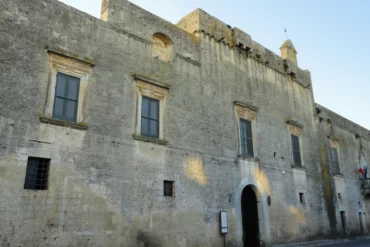
The Torre Federiciana is the symbol of Leverano and one of the few reminders of the Swabians left in the Terra d’Otranto. According to tradition, Emperor Frederick II had it built in 1220, in place of a wooden Norman tower, to watch over the Ionian coast, where pirates landed easily, and to defend the town. It is a large square-based block of local stone, about 28 metres high, with its façades facing the four points of the compass and battlements at the top; it was once surrounded by a moat, with a drawbridge. Inside it was divided into four levels by wooden floors, now collapsed, with fireplaces and a spiral staircase built into the thickness of the walls; the top floor has a cross vault whose ribs are made of alternating light and dark stone blocks. In the fifteenth century the Count of Copertino turned it into a masseria (farmhouse); abandoned for a long time, it was restored in the mid-nineteenth century thanks to a few Salento scholars and has been a national monument since 1870. Today it houses an exhibition dedicated to Girolamo Marciano and Geremia Re, with 3D reconstructions of the medieval interior. Opening days and times change: ask at the tourist Info-Point in Piazza Roma before you go. In any case, the tower seen from outside, from the surrounding alleys, is already worth the walk.
2. Piazza Roma and the Torre dell’Orologio (20 minutes)
Piazza Roma is the heart of the town. Here stands the civic Torre dell’Orologio (clock tower), built in the first half of the eighteenth century: a simple structure, with a base, the chamber for the mechanism and at the top a double bell arch in Lecce stone, topped by a weather vane with the figure of San Rocco, the patron saint of Leverano. On the side facing the square is the coat of arms attributed to the Greco family, probably the ones who had it built. It still has an old escapement mechanism, striking the hours and the quarters on two bells. Piazza Roma is also home to the tourist Info-Point, open since 2017, where you can ask for information about visits, events and opening times.
3. The Chiesa Matrice della Santissima Annunziata (30 minutes)
The Chiesa Matrice is striking for its size: the façade, 25.5 metres high, is attributed to the architect Giovanni Maria Tarantino of Nardò and was completed in 1622. It is an example of the transition from the Renaissance to the Baroque: paired fluted columns, three portals, small rose windows, a large window decorated with male heads, acanthus leaves and grotesque masks, and at the top a cusp with some «apotropaic» masks, meant to keep evil away. The earthquake of 1743 badly damaged it and the people of Leverano rebuilt it at their own expense. Inside are three naves divided by pillars, a large painted «cielo» (sky) with the Annunciation that hides the wooden roof, a carved arch from 1602, the 24-seat wooden choir from 1615, the Baroque altar of the Madonna del Carmelo with its twisted columns and the altar of San Rocco. The octagonal chapel of the Santissimo Sacramento dates from 1725; its dome of coloured majolica tiles was rebuilt in 1829, when the old bell tower collapsed. Go into the church outside service times and dressed appropriately.
4. Santa Maria la Greca and the churches of the old town (45 minutes)
In the alleys of the centre there are small churches worth looking for. The church of Santa Maria, once called «la Greca» (the Greek one), already existed in 1565; after collapsing in a cloudburst, it was rebuilt between 1622 and 1625. It has a Baroque altar carved around 1660 by Ambrogio Martinelli, a sculptor from Copertino, vaults frescoed with geometric and floral motifs and three old papier-mâché statues of the Mysteries of the Passion. There are two theories about the name: a memory of the town’s possible Greek founders, or of a Greek community that helped build it. The church of San Benedetto bears the date 1625 on its portal and has a star vault inside, seventeenth-century canvases and papier-mâché statues; it is the seat of the confraternity of the Anime Purganti. Just outside the old centre is the church of the Madonna della Consolazione, rebuilt in 1965 in place of the seventeenth-century one, which keeps an old image of the Virgin Hodegetria and a canvas from 1605 with the Trinity and Saints Francis and Anthony.
5. The convent of Santa Maria delle Grazie and the cloister (30 minutes)
The church of Santa Maria delle Grazie dates back to the second half of the fifteenth century: it has a simple façade, with late Romanesque elements and Baroque decoration on the portal and the large window, and a single nave with a wooden truss roof. Next to it is the convent of the Friars Minor, built in the sixteenth century around a large rectangular cloister with 24 pointed arches on polygonal columns and vaults frescoed in the eighteenth century with saints and biblical scenes. Closed in 1807, when religious orders were suppressed, the convent was returned to the friars in 1935. If you find it open, step into the cloister: it is one of the most peaceful corners of the town.
6. The flowers of Leverano and the Leverano in fiore festival (one day)
Leverano is one of the great flower-growing centres of southern Italy: floriculture, almost all under glass, began here a few decades ago and today is one of the most important parts of the economy, with a municipal flower market for sales. You see it as soon as you leave the town, among the greenhouses in the countryside, but the right time to discover it is Leverano in fiore, the flower festival founded in 1983 and relaunched in 2018: for a few days, between late May and early June, the old town turns into a garden, with floral displays in the alleys, the squares and the historic houses that their owners open for the occasion, an international floral art competition, music and stalls of local products. Dates and programme change every year: check them on SalentoMe and on the municipality’s website.
7. Leverano DOC wine and Novello in festa (half a day or an evening)
Around Leverano there are vineyards of Negroamaro and Malvasia, used to make the wines of the Leverano DOC, recognised in 1979: the production area is the municipal territory, and the rules cover reds, rosés, whites, the white passito and the red novello. One of the town’s most heartfelt festivals is Novello in festa, which since 1998, at the beginning of November, has filled the alleys of the old town with tastings of new wine, local dishes, music and pizzica. To visit a winery, ask at the Info-Point which ones welcome visitors, and remember that whoever is driving must not drink.
Salento Prime holiday homes: pick your dates and see at once which are free.
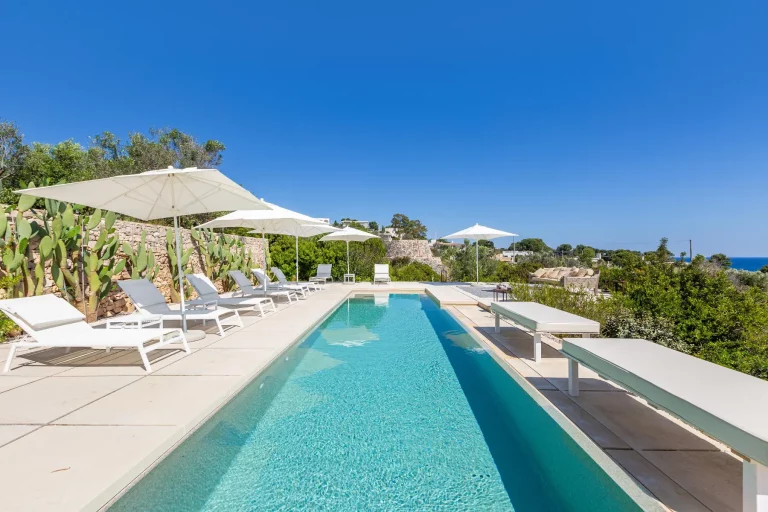
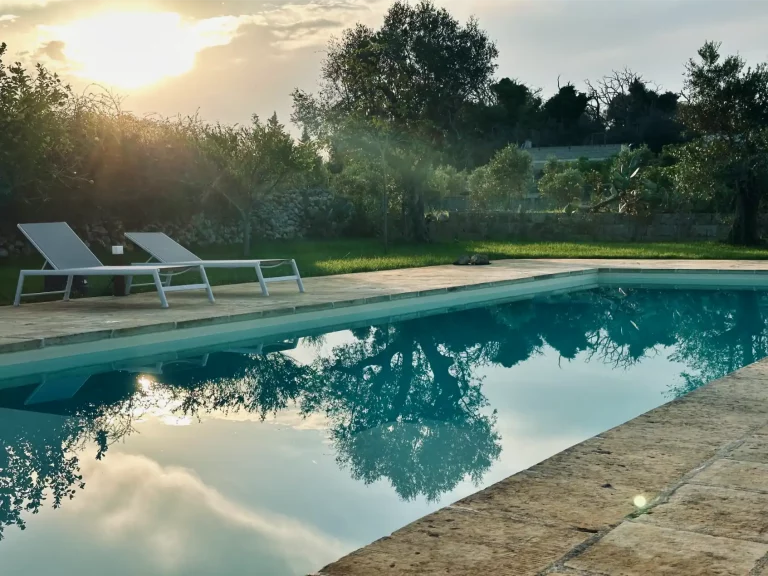 Villetta Arenosa con piscinasleeps 4
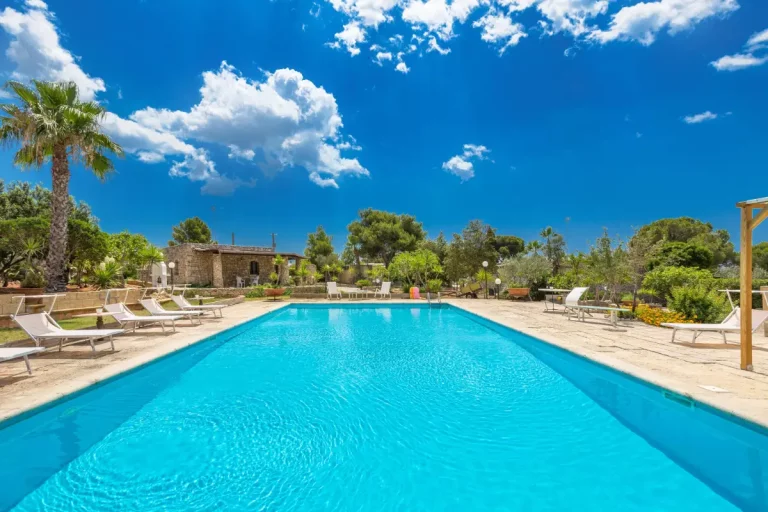
 Luxury – Trullo dei Silvisleeps 8 · pool
 Love Passion con Piscina – Unit 1 – Pescolusesleeps 7
The sea near Leverano
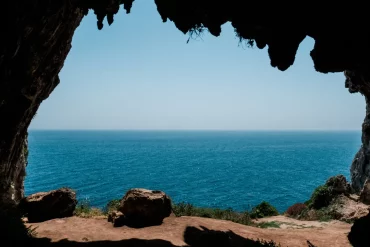
Leverano has no stretch of coast: its territory ends before the sea, and towards the Ionian coast it borders Nardò. The nearest sea is at Porto Cesareo, which the municipality of Leverano has always regarded as its natural outlet on the Ionian Sea, even though Porto Cesareo was never part of Leverano: until 1975 it was a hamlet of Nardò. Along provincial road 21 you reach Porto Cesareo in about a quarter of an hour (10 km): the fishing town on its peninsula, Torre Cesarea, the Isola dei Conigli off the coast and a shallow, clear sea, protected by the Porto Cesareo Marine Protected Area.
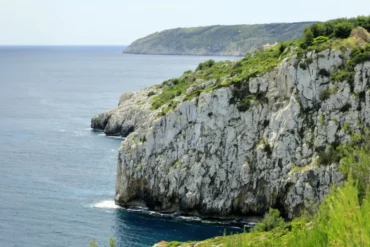
To the north-west, about 20 minutes away (16 km), is Torre Lapillo, with its sixteenth-century tower and a long bay of fine sand that stretches as far as Torre Chianca. Further on still, about half an hour away (24 km), lies Punta Prosciutto: white sand, transparent water that stays shallow for many metres and tall dunes protected by the Palude del Conte e Duna Costiera nature reserve, to be reached only by the authorised paths and boardwalks. To the south, on the Nardò coast, are Sant’Isidoro, about 13 km away, and the bay of Porto Selvaggio, about 20 km and 25 minutes away.
Leverano is perfect for those who love quiet villages and village festivals, for those who want to get to know the wine and flowers of Salento, for those travelling in spring and autumn and for those looking for an inland base a quarter of an hour from the Ionian Sea and half an hour from Lecce. It is less suited to those who want to step out of the door and be on the beach, or who are looking for nightlife by the sea: for that there are Porto Cesareo and its seaside villages.
Free beach and facilities
At Porto Cesareo and Torre Lapillo, beach clubs with umbrellas, sun loungers and bars alternate with stretches of free beach; at Punta Prosciutto the beach is more natural and there are few facilities. Check access, parking and any paid areas on the spot, follow the rules of the Marine Protected Area and do not climb on the dunes. In Leverano you will find bars, pastry shops and restaurants in the centre.
On the sand bring a beach umbrella, water and sunscreen; on the low rocks, water shoes and a mask. On very windy days the sea gets rough quickly: stay where you can touch the bottom and follow the lifeguards’ flags.
Leverano vs other towns of Salento
In north-western Salento the towns are very close to each other. Here is a practical comparison to help you choose:
Leverano vs Copertino
- Leverano: a smaller, quieter town, with the Swabian tower, the flowers and DOC wine
- Copertino: a larger town, 5 km away, with the castle, now a state museum, and the birthplace of San Giuseppe da Copertino. Read our guide to Copertino
Leverano vs Nardò
- Leverano: a village to explore on foot in half a day, with no coast of its own
- Nardò: a Baroque town 14 km away, with Piazza Salandra, the Cathedral and a long stretch of coast, from Sant’Isidoro to Porto Selvaggio and Santa Maria al Bagno. Read our guide to Nardò
Leverano vs Porto Cesareo
- Leverano: the inland town, with everyday life, the countryside and traditional festivals
- Porto Cesareo: the seaside town, 10 km away, with the beaches, the harbour, the islands and all the services for the summer
When to choose Leverano: if you love villages and history, want to see the Tower of Frederick II, are in Salento between late May and early June or in early November for the flower and wine festivals, or are looking for a quiet stop between Lecce and the Ionian coast.
When to choose somewhere else: if you want to walk to the beach, look directly at Porto Cesareo, Torre Lapillo and the other seaside villages of the Ionian coast.
Practical tips
Explore the old town in the morning or from late afternoon: in summer it is very hot in the middle of the day and the churches may be closed. For the Torre Federiciana and church opening times, stop first at the tourist Info-Point in Piazza Roma: opening hours change with the seasons and with events. To go into a church, dress appropriately and respect the services.
In the alleys of the centre the streets are narrow: park in the surrounding streets and walk. On the days of Leverano in fiore, the feast of San Rocco in mid-August and Novello in festa in early November the town fills up: arrive early and, on the evening of the Novello, sort out who is driving. For the sea, set off early in the morning, when the beaches of Porto Cesareo and Torre Lapillo are still quiet and parking is easier.
Useful practical information
| 📍 Where | Leverano (Lecce), in the Terra d’Arneo, 18 km from Lecce, 5 km from Copertino and 10 km from Porto Cesareo |
|---|---|
| 🚗 Parking | In the streets around the old town, which has narrow streets; follow the parking signs |
| ♿ Access | A town on flat ground, with paved alleys; in the tower the ground floor has been made accessible, with a virtual tour of the upper floor (check on the spot); some churches have steps |
| 🏖 Beach | No sea in town: sand at Porto Cesareo, Torre Lapillo and Punta Prosciutto, 10-24 km away |
| 🌊 Sea | On the Ionian coast shallow and clear, suitable for children too; deeper among the rocks towards Porto Selvaggio |
| 👟 What to bring | Comfortable shoes for the alleys, suitable clothing for the churches; beach umbrella and sunscreen for the sea |
| 🍴 Food | Bars, pastry shops and restaurants in the centre; stalls of local products during the festivals |
| 📅 Best time | May, June and September; late May for the flowers, mid-August for San Rocco, early November for the new wine |
When to go and how much time to plan
March and April: the countryside is green and the days are mild, perfect for exploring the old town, the tower and the churches without the heat.
May and June: in our view the best time for Leverano. On the fourth Sunday of May there is the cherry fair, between late May and early June the town fills with flowers for Leverano in fiore and the sea at Porto Cesareo starts to be pleasant.
July and August: it is hot, so explore the town early in the morning or in the evening and go to the sea early. In summer the municipality organises the Leverano d’estate cultural programme and in mid-August there is the feast of the patron saint, San Rocco.
September: the sea is still warm, there are fewer people on the beaches and the grape harvest is under way in the countryside.
October and November: quiet days, with the olive harvest; in early November Novello in festa brings the new wine, music and pizzica to the alleys.
December, January and February: Leverano is lived as an everyday town, quiet, with its Christmas lights and, in December, the days dedicated to oil and the olive tree.
Events and festivals (indicative dates, check them every year on the website of the municipality of Leverano and on SalentoMe):
- Feast of the Madonna della Consolazione and Fiera delle cirase (cherries): on the fourth Sunday of May, with the cherry stalls, the livestock fair and the parade of vintage carts drawn by horses
- Leverano in fiore: for a few days between late May and early June, with floral displays in the old town
- Leverano d’estate: the municipality’s summer cultural programme, with shows and talks
- Patronal feast of San Rocco: from 15 to 18 August, with the saint’s day on the 16th, the procession, the luminarie, the bands and fireworks
- Novello in festa: in early November (from 6 to 8 November in 2026), with tastings, music and pizzica in the old town
- L’Oro della terra, the days of oil and the olive tree: in December, with talks, music and tastings
How much time to allow: half a day is enough for the tower, the churches and the old town; a full day if you add the sea at Porto Cesareo or Copertino. With two or three days you can combine Lecce, Nardò and the Ionian coast as far as Punta Prosciutto. A typical day:
- 9:30: Info-Point in Piazza Roma and the Torre dell’Orologio
- 10:00: the Tower of Frederick II, if open, and the surrounding alleys
- 11:00: Chiesa Matrice, Santa Maria la Greca and San Benedetto
- 12:00: the convent of Santa Maria delle Grazie and its cloister
- 13:00: lunch in the town
- 15:30: swim at Porto Cesareo or Torre Lapillo, 15-20 minutes away
- 20:00: back to Leverano for a stroll in the centre and dinner
Surroundings and extra ideas
Leverano is conveniently placed for discovering north-western Salento: in a few minutes you reach Copertino, in a quarter of an hour the sea at Porto Cesareo and Nardò, in less than half an hour Lecce. Distances and driving times are approximate.
Copertino (5 km, 8 minutes): the neighbouring town, with its great castle, now a state museum, and the places of San Giuseppe da Copertino, who was born here. In the thirteenth century Leverano was part of the county of Copertino. Read our guide to Copertino.
Porto Cesareo (10 km, 14 minutes): the fishing town on the Ionian coast, with Torre Cesarea, the Isola dei Conigli and the Marine Protected Area. Read our guide to Porto Cesareo.
Nardò (14 km, 17 minutes): the Baroque town of Piazza Salandra and the Guglia dell’Immacolata, with the Cathedral and the castle. Read our guide to Nardò.
Torre Lapillo (16 km, 19 minutes): the sixteenth-century watchtower and the long bay of fine sand as far as Torre Chianca. Read our guide to Torre Lapillo.
Lecce (18 km, 24 minutes): the provincial capital, with its Baroque old town in Lecce stone. Read our guide to Lecce.
Porto Selvaggio (20 km, 25 minutes): the bay between the pine wood and the cliffs of the Nardò coast, inside a regional nature park. Read our guide to Porto Selvaggio.
Galatina (20 km, 26 minutes): the Basilica of Santa Caterina d’Alessandria, with its walls covered in frescoes, and the pasticciotto. Read our guide to Galatina.
Punta Prosciutto (24 km, 30 minutes): the white sand beach and the dunes of the Palude del Conte e Duna Costiera reserve. Read our guide to Punta Prosciutto.
Gallipoli (32 km, 37 minutes): the old town on the island, the harbour and the beaches of the Ionian coast further south.
Local tip
Start from Piazza Roma and look up: on the Torre dell’Orologio San Rocco turns with the wind, and from there a few steps bring you to the foot of the Tower of Frederick II. Walk around it slowly, going into the alleys that surround it: it is from there, among the low houses, that you understand how imposing it must have been for anyone arriving from the countryside or from the sea.
If you can, plan your trip between late May and early June: with Leverano in fiore the alleys, the courtyards and the private houses opened for the occasion become one big garden, and it is the only time of year when you can see up close the work of the flowers that grow in the greenhouses around the town. Go early in the morning or late in the evening, when there are fewer people and the light is more beautiful.
In summer do as the people of Leverano do: morning in town, afternoon at the sea at Porto Cesareo and back in the evening for a stroll in the centre. And if you are here in early November, don’t miss an evening of Novello in festa: the new wine, the music and the pizzica in the alleys are the best way to get to know the town.
FAQ
Where is Leverano?
In north-western Salento, in the province of Lecce, in the Terra d’Arneo, between Copertino, Veglie, Carmiano, Arnesano and Nardò. Lecce is 18 km away, Copertino 5 km, Nardò 14 km and the sea at Porto Cesareo about 10 km. In dialect the town is called Liranu.
Is Leverano by the sea?
No, the municipality does not reach the coast: to the south and west it borders Nardò. The nearest sea is at Porto Cesareo, about 10 km and a quarter of an hour away by car; Torre Lapillo is about 20 minutes away and Punta Prosciutto half an hour. Porto Cesareo was never part of Leverano: until 1975 it was a hamlet of Nardò.
What to see in Leverano?
The Tower of Frederick II, the Torre dell’Orologio in Piazza Roma, the Chiesa Matrice della Santissima Annunziata, the churches of Santa Maria la Greca and San Benedetto, the Madonna della Consolazione and the convent of Santa Maria delle Grazie with its cloister, as well as the paved alleys of the old town.
When was the Tower of Frederick II built?
According to tradition in 1220, at the behest of Emperor Frederick II of Swabia, to watch over the Ionian coast against pirates. It is about 28 metres high and has been a national monument since 1870.
Can you visit the Torre Federiciana?
Yes, on some days and during events: inside there is an exhibition on Girolamo Marciano and the painter Geremia Re. Days and times change, so ask at the tourist Info-Point in Piazza Roma before you go.
When is Leverano in fiore held?
Usually for a few days between late May and early June, in the old town. The dates change every year: check them on the municipality’s website before you set off.
What wine is made in Leverano?
Mainly wines from Negroamaro and Malvasia grapes. Since 1979 there has been the Leverano DOC, produced within the municipality, with reds, rosés, whites, the white passito and the red novello. In early November the town celebrates the new wine with Novello in festa.
Who is the patron saint of Leverano?
San Rocco. The patronal feast is held from 15 to 18 August, with the saint’s day on the 16th, the procession, the luminarie, the bands and fireworks.
How do you get to Leverano without a car?
Leverano has no station: the nearest is Copertino, about 5 km away, on the FS Sud Est line, and national trains arrive in Lecce. Check timetables and any buses before you set off.
Where to stay near Leverano?
Salento Prime has no houses in Leverano. The most convenient is the Villetta Arenosa con piscina, in Marittima, in Adriatic Salento, about an hour away by car: 4 guests, 2 rooms and a private pool with a sea view, a base for those who want to combine Leverano with a holiday in southern Salento.
Conclusion
Leverano is the inland Salento that works and celebrates: a Swabian tower towering over low houses, churches full of papier-mâché and carved stone, vineyards and flower greenhouses all around, and the Ionian Sea a quarter of an hour away. Give it at least a morning, at a relaxed pace, and if you can, come back for Leverano in fiore or Novello in festa.
If you want to combine Leverano with a holiday in southern Salento, in Marittima, about an hour away by car, there is our Villetta Arenosa con piscina: 4 guests, 2 rooms, 3 bathrooms and a private pool with a sea view. You will find our houses in the area on the page holiday homes in Marittima.
Discover the available accommodations with Salento Prime. To best organize your base and transfers, contact us here or start a chat on WHATSAPP.
Cover photo: Patrub01, CC BY-SA 3.0, via Wikimedia Commons, cropped