Looking for an art town in Salento a few minutes from the sea, with one of the most spectacular Baroque squares in Puglia and a long coastline that is still wild? This guide takes you to Nardò, in western Salento, half an hour from Lecce and twenty minutes from Gallipoli: Piazza Salandra with the Guglia dell’Immacolata, the Cathedral of Santa Maria Assunta, the church of San Domenico and the other Baroque churches of the old town, the Castello Acquaviva, the Osanna, the Museo della Preistoria and its seaside villages, from Santa Maria al Bagno to Porto Selvaggio, with practical tips and local curiosities.
In short
Nardò is a town of about 31,000 inhabitants in the province of Lecce, in western Salento, 45 metres above sea level, about 30 km from Lecce and 18 km from Gallipoli. Its old town, largely rebuilt after the earthquake of 1743, is one of the richest in Baroque architecture in Salento: its heart is Piazza Salandra, with the Guglia dell’Immacolata, the Sedile, the Palazzo dell’Università and the church of San Domenico, and a few steps away are the Cathedral of Santa Maria Assunta and the Castello Acquaviva, now the town hall. The municipality also has 22 km of coastline on the Ionian Sea, with the seaside villages of Santa Maria al Bagno, Santa Caterina and Sant’Isidoro and the Porto Selvaggio Regional Nature Park, 10-20 minutes from the centre. The best months are May, June and September; the patron saint, San Gregorio Armeno, is celebrated around 20 February.
What is Nardò?
Nardò is a town in western Salento, in the province of Lecce; it has been a bishop’s seat since 1413, today of the diocese of Nardò-Gallipoli, and has held the title of city since 1952. Its territory, more than 190 km², stretches from the flat countryside inland to the Ionian Sea: it includes a Baroque old town with dozens of churches and noble palazzi, the masserie (farmsteads) of the countryside, part of the Terra d’Arneo to the north and a long stretch of coast with sixteenth-century watchtowers, low rocks, coves, sandy beaches and the pine wood of Porto Selvaggio.
Nardò is a town that is alive all year round, and its people meet in Piazza Salandra: around the Guglia dell’Immacolata stand the white portico of the Palazzo dell’Università with the Torre dell’Orologio, the Sedile, the small church of San Trifone and the carved façade of San Domenico, and in the evening the square fills up for aperitifs and strolls. From the square, streets paved with pale stone lead off, with courtyards, Baroque doorways and palazzi that hide gardens behind their walls; a few steps away are the Cathedral, the castle with its historic garden and the little temple of the Osanna.
Nardò is not a seaside town, but the sea is very close: in ten minutes by car you reach the rocks of Santa Caterina and the pine wood of Porto Selvaggio, and in a quarter of an hour the sandy beaches of Sant’Isidoro. This is the Salento for those who love the Baroque, history and evening strolls in the square, and for those who want to alternate a morning by the sea with an afternoon in town. In this guide you will find how to get there, what to see, where to swim and how to plan your day, nearby too.
Curiosities and atmosphere
According to the most widely held theory, the name Nardò comes from the Illyrian word «nar», meaning water: hence the Greek Nerìton and the Latin Neritum or Neretum. Water returns in the legend of the town’s founding: the first inhabitants are said to have settled where a bull, digging the ground with its hoof, had made a spring gush out. This is why the bull and a jet of water became symbols of the town, and in Piazza Salandra there is the Fontana del Toro; the people of Nardò are called neretini. Nardò began as a Messapian centre in the seventh century BC and in 269 BC was conquered by the Romans, together with its port, the Emporium Nauna, today’s Santa Maria al Bagno. The Byzantines followed, with the Basilian monks, and from 1055 the Normans; in 1413 the town became a bishop’s seat and from 1497 to 1806 it was the duchy of the Acquaviva, who made it a centre of learning and academies, so much so that it was called «the New Athens».
Nardò’s history also has some dark pages. In 1647, during the revolt that had spread from Naples to the provinces, the Count of Conversano, an Acquaviva, crushed the town’s rebellion by hanging the mayor and many citizens, including four canons. On 20 February 1743 a violent earthquake destroyed most of the churches and palazzi and claimed about 150 victims: the relatively low number was attributed to the intercession of San Gregorio Armeno, who since then has been celebrated on the very anniversary of the earthquake. The reconstruction that followed gave the old town the Baroque face you see today. Between 1943 and 1947 Santa Maria al Bagno took in thousands of Jewish refugees who had survived the extermination camps, on their way to the future State of Israel: for this hospitality, in 2005 the town received the Gold Medal for Civil Merit. You will find places, news and events on the website of the municipality of Nardò.
Where it is and how to reach it
Nardò is in western Salento, in the north-western part of the province of Lecce, a few kilometres from the Ionian Sea: it borders Porto Cesareo, Avetrana, Salice Salentino and Veglie to the north, Leverano, Copertino and Galatina to the east, and Galatone to the south. The old town is about 7 km from the sea at Santa Caterina; Gallipoli is 18 km away, Galatina 14 km and Lecce about 30 km.
By car: from Lecce take the SS101 Lecce-Gallipoli and come off at the Nardò exit: about half an hour without traffic. From Gallipoli take the same road northwards, in about twenty minutes. In the old town the streets are narrow: leave the car in the surrounding streets and explore on foot. In summer, for the seaside villages, set off early in the morning.
By public transport: Nardò has two Ferrovie del Sud Est stations, Nardò Città, the closest to the centre, and Nardò Centrale, on the Lecce-Gallipoli line; national trains arrive in Lecce. Check the timetables and any replacement buses before you set off. In summer the «Salento in Bus» lines connect many places on the coast: check the routes and timetables for the current year. The most convenient airport is Brindisi, about 76 km away, just over an hour by car.
What to do and what to see
The centre of Nardò can be explored on foot in half a day, but it is worth giving it more time: around Piazza Salandra are the Guglia, the palazzi and San Domenico, a few steps away the Cathedral and the Museo Diocesano, the castle with the Villa Comunale and, on the edge of the old town, the Osanna and the Museo della Preistoria. Here are the experiences not to miss.
1. Piazza Salandra and the Guglia dell’Immacolata (1 hour)
Piazza Salandra has been the heart of the town for centuries: it was once called piazza delle Legne, then piazza Municipale, and as early as the fourteenth century it was the centre of religious and civic life. In the middle rises the Guglia dell’Immacolata, wanted by the whole population after the earthquake of 1743 and inaugurated in 1769: it is 19 metres high, carved in carparo, the most golden and porous local stone, and has a pyramid shape on an octagonal plan, divided into five sections. At the base are the statues of St Joseph, St Anne, St Joachim and St John the Baptist, and at the top the Immaculate Virgin. Around the square stand the Sedile, an arcaded Renaissance building with the statues of San Gregorio Armeno, St Michael the Archangel and St Anthony of Padua, now home to the tourist information office; the Palazzo dell’Università, the old town hall built between 1588 and 1612 and rebuilt after the earthquake, with its seven-column portico; the Torre dell’Orologio, the clock tower, with an 1882 mechanism by the Neapolitan firm Caccialupi, still wound by hand today; the little church of San Trifone, built at the beginning of the eighteenth century by the townspeople to ask the saint to free the fields from caterpillars; and the Fontana del Toro, made in 1930 by the Nardò sculptor Michele Gaballo for the arrival of the aqueduct.
2. The Cathedral of Santa Maria Assunta and the Museo Diocesano (1 hour)
A few steps from the square, in Piazza Pio XI, stands the Cathedral, where the church of Santa Maria de Nerito, founded by Eastern monks, once stood. At the end of the eleventh century the Normans rebuilt it and entrusted it to the Benedictines; over the centuries it was enlarged several times, and in 1725 the architect Ferdinando Sanfelice, the bishop’s brother, redid the Baroque façade. With the restoration work at the end of the nineteenth century, between 1892 and 1899, the medieval arches came to light again: inside, the church has three naves, divided by round and pointed arches, and on the pillars and walls frescoes from the twelfth to the fifteenth century survive, with saints, Madonnas and a Christ blessing in the Greek manner. The most famous piece is the Cristo Nero, a medieval crucifix in cedar wood of a very dark colour; the walls of the nave and the vault above the altar were painted at the end of the nineteenth century by Cesare Maccari, and among the Baroque altars the Cappellone di San Gregorio Armeno, the patron saint, stands out, with its altar of 1680. The Cathedral has been a national monument since 1879 and a minor basilica since 1980. Next door, in the old Seminary overlooking Piazza Pio XI, is the Museo Diocesano, open since 2017, with the treasure of the Cathedral and works of sacred art from all over the diocese. For the Cathedral and the museum, check opening times and days before your visit, and respect the services.
3. San Domenico and the Baroque churches of the old town (1-2 hours)
Overlooking Piazza Salandra is the church of San Domenico, built between 1580 and 1594 for the Dominicans. The earthquake of 1743 destroyed it almost completely, but the carparo façade held: the lower part is a dense interweaving of human figures and caryatids carved side by side, while the upper part has lighter forms. The interior, on a Latin-cross plan, was rebuilt after the earthquake; among the altars, that of the Madonna del Rosario stands out, with the fifteen mysteries painted by the Nardò artist Antonio Donato D’Orlando. In the old town there are many other churches to discover as you stroll: the church of the Immacolata, from 1580, with the statue of the Virgin above the doorway; Santa Maria della Purità, built between 1710 and 1724 to a design by Ferdinando Sanfelice, with a façade animated by concave and convex surfaces and a large dome; San Giuseppe Patriarca, rebuilt in 1758, with its semicircular façade and the inscription «De Domo David»; Santa Teresa, consecrated in 1769, with the curved wings of its staircase; and the church of the Carmine, documented as early as 1460, with its doorway between two lions and an interior decorated with Baroque stucco. Many churches open mainly for services: if you find one closed, come back at another time of day.
4. The Castello Acquaviva and the Villa Comunale (45 minutes)
In Piazza Cesare Battisti, a few minutes from Piazza Salandra, is the Castello Acquaviva, built at the end of the fifteenth century by the Acquaviva, the dukes of Nardò, to a design attributed to the school of Francesco di Giorgio Martini. It was a quadrangular fortress with four large towers at the corners, surrounded by a deep moat; one of the towers was rebuilt after the revolt of 1647. At the beginning of the nineteenth century it passed to the Personè barons, who around the turn of the twentieth century turned it into a noble palazzo: the main façade, with its rustication and carved corbels, the work of the engineer Generoso De Maglie, dates from that period. Since the 1930s the castle has belonged to the municipality and is the town hall; inside there are also some museum spaces, whose opening times are worth checking. In the old moat, in the nineteenth century, De Maglie created the garden now called the Villa Comunale, a historic garden with Aleppo pines, holm oaks, palms and yuccas and a small temple with blue majolica tiles: it is the right place for a break in the shade.
5. The Osanna and the Museo della Preistoria (1 hour)
Where the avenue that rings the old town crosses the road to Lecce, near the old Porta San Paolo, stands the Osanna, a small octagonal temple built in 1603 at the wish of the town’s mayors: eight columns joined by small arches, a column in the centre supporting the dome and eight small spires. Here on Palm Sunday the palms were blessed and, later, the fields too. A few steps away is the church of Sant’Antonio da Padova, from 1497, with a coffered walnut ceiling, the wooden statue of St Anthony carved in 1514 by Stefano da Putignano and the Acquaviva cenotaph of 1545. In the former convent next door, in Piazza Sant’Antonio, is the Museo della Preistoria di Nardò: it displays the finds made since the 1960s in the caves of the Porto Selvaggio park, such as the Grotta del Cavallo in the bay of Uluzzo, including remains of Homo sapiens from about 45,000 years ago, among the oldest in Europe, and a collection of fossil fish from about 75 million years ago. The museum is accessible to people with reduced mobility; check opening days and times before you go.
6. Palazzi, courtyards and walks in the old town (1-2 hours)
Part of the beauty of Nardò is getting lost in its streets, looking up at doorways, balconies and coats of arms. The Palazzo De Pandi has an arch that spans the street and joins two buildings; the Palazzo Il Mignano, which belonged to the Acquaviva, has a richly decorated Baroque doorway-balcony carved after the earthquake by the Preite, the same family of master builders who built the Guglia; the Palazzo Personè is so large that it is called the «palace of a hundred rooms». In Piazza San Giuseppe, in the Palazzo Antico, was the workshop of Luigi «Gigi» Stifani, one of the last musicians who played for the tarantate (women believed to have been bitten by the tarantula). Not far away is the Teatro Comunale, opened in 1909. Many palazzi are private and can be admired from outside; during some events, such as the Cavalcata storica, courtyards and cloisters in the centre come alive with shows and exhibitions, and at the tourist office in the Sedile you will find information on guided tours and routes.
7. The Friday market (a morning)
Every Friday morning Nardò has its weekly market, in the market area of zona 167, outside the old town: seasonal fruit and vegetables, cheeses, local products, clothes and household goods. It is a simple way to see the town’s everyday life; during some holidays the market may be moved or cancelled. You will find the other markets in the area in our guide to the weekly markets of Salento.
The sea at Nardò and who it suits
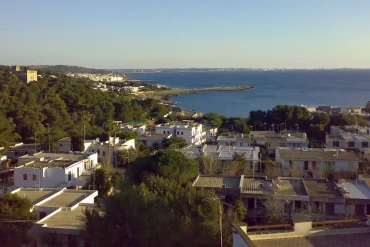
Nardò has 22 km of coastline on the Ionian Sea, from Santa Maria al Bagno in the south to Torre Squillace, on the border with Porto Cesareo, all between ten and twenty minutes by car from the centre. The coast is dotted with sixteenth-century watchtowers and alternates low rocks, coves, the pine wood of Porto Selvaggio and, further north, sandy beaches. Each seaside village has its own character: here is how to find your way.
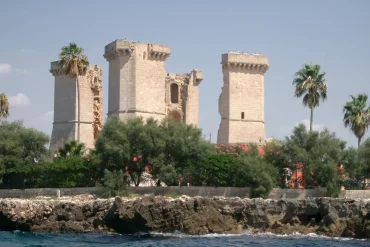
Santa Maria al Bagno (8 km, 12 minutes): Nardò’s ancient Roman port is today a small village by the sea, with the Quattro Colonne, the four corner bastions that remain of the sixteenth-century Torre del Fiume di Galatena. Here is the Museo della Memoria e dell’Accoglienza (museum of memory and welcome), opened in 2009, which tells the story of the Jewish refugees taken in between 1943 and 1947 and preserves the murals painted by one of them, Zivi Miller. Read our guide to Santa Maria al Bagno.
Santa Caterina (7 km, 10 minutes): the seaside village closest to the centre, with its low, rocky coast, a few stretches of sand, the small harbour and two sixteenth-century towers, the Torre di Santa Caterina and the Torre dell’Alto, on the headland towards Porto Selvaggio. Read our guide to Santa Caterina.
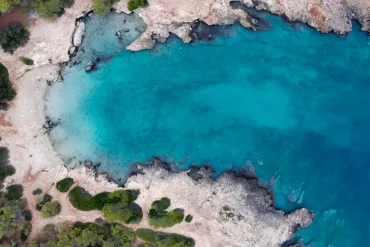
Porto Selvaggio (7-9 km, 10 minutes): the Porto Selvaggio and Palude del Capitano Regional Nature Park protects more than 1,100 hectares, with about 300 hectares of pine wood, 7 km of rocky, jagged coastline, the Torre dell’Alto and Torre Uluzzo and caves inhabited since the Palaeolithic. The bay, between the pine wood and the sea, can be reached on foot and is one of the best-loved places on the Ionian coast. Read our guide to Porto Selvaggio.
Torre Inserraglio (11 km, 17 minutes): also called «Critò», after the rock samphire that grows on the rocks, it has a low, jagged coastline with small coves and short stretches of sand, overlooked by a fifteenth-century tower.
Sant’Isidoro (13 km, 15 minutes): «Santu Sitru» in dialect, it is the seaside village of sand, with a long beach at the foot of its sixteenth-century tower.
Torre Squillace (15 km, 18 minutes): at the northern tip of the municipality, «Li Scianuri» to the locals, it has a tower built between 1567 and 1570 a few metres from the beach, on the edge of the Porto Cesareo marine protected area.
Nardò is perfect for those who love the Baroque and art towns, for those who want to combine history and the sea on the same day, for couples, for those travelling in spring and autumn and for those looking for a real town, alive all year round. It is less suited to people who want to step out of the house and be on the beach: for that, it is better to stay in one of the seaside villages or along the coast.
Free beach and facilities
Along the Nardò coast, free stretches alternate with beach clubs: on the rocks of Santa Maria al Bagno, Santa Caterina and Torre Inserraglio you swim mostly from the rock, while at Sant’Isidoro and towards Torre Squillace there is more sand. Check access, parking and any paid zones on the spot; in the seaside villages many places are open mainly in summer. In town you will find bars, pastry shops and restaurants all year round, especially around Piazza Salandra.
On the rocks bring reef shoes and a mask; on the sand, an umbrella, water and sun cream. When the sea is rough, don’t go down onto the rocks, and stay where you can touch the bottom.
Nardò vs other towns of Salento
In Salento the art towns are very close to one another. Here is a practical comparison to help you choose:
Nardò vs Lecce
- Nardò: a smaller, quieter town, with a compact Baroque square and the sea ten minutes away
- Lecce: the provincial capital, the city of the Baroque par excellence, with more museums, bars and evening life, half an hour away by car. Read our guide to Lecce
Nardò vs Gallipoli
- Nardò: the Baroque old town inland, with the coast of the towers and the pine wood of Porto Selvaggio
- Gallipoli: the old town on an island linked by a bridge, sandy beaches to the south and the liveliest evening life on the Ionian coast, 20 minutes away. Read our guide to Gallipoli
Nardò vs Galatina
- Nardò: Piazza Salandra, the Cathedral with its medieval frescoes and the sea a few minutes away
- Galatina: the Basilica of Santa Caterina d’Alessandria, with one of the great fifteenth-century fresco cycles in Puglia, the story of the tarantate and the pasticciotto, a quarter of an hour away. Read our guide to Galatina
When to choose Nardò: if you love the Baroque and piazzas, want an art town less crowded than Lecce and Gallipoli and like the idea of going from the old town to the rocks of Santa Caterina in ten minutes.
When to choose somewhere else: if you are looking for big white sandy beaches and shallow water, look at the Ionian coast further south, between Torre San Giovanni, Lido Marini and Pescoluse.
Practical tips
Explore the old town early in the morning or from late afternoon: in summer it is very hot in the middle of the day and churches and museums may be closed. Stop first at the tourist information office in the Sedile, in Piazza Salandra, for up-to-date opening times of the Cathedral, the Museo Diocesano, the Museo della Preistoria and guided tours, especially out of season. To go into a church, dress appropriately and respect the services.
For the sea, plan your day the other way round from the town: early in the morning on the rocks of Santa Caterina or in the pine wood of Porto Selvaggio, when it is cooler and there is more parking, and the evening in Piazza Salandra. If the sea is rough, move your swim to another day and spend the morning in town or at a museum.
Useful practical information
| 📍 Where | Nardò (Lecce), in western Salento, 7 km from the sea at Santa Caterina, 18 km from Gallipoli and 30 km from Lecce |
|---|---|
| 🚗 Parking | In the streets around the old town, which you explore on foot; in summer, at the seaside villages, arrive early |
| ♿ Access | Flat old town with paved streets; the Museo della Preistoria is accessible to people with reduced mobility |
| 🏖 Beach | No sea in town: rocks and coves at Santa Maria al Bagno, Santa Caterina and Torre Inserraglio, sand at Sant’Isidoro and towards Torre Squillace, 7-15 km away |
| 🌊 Sea | Clear; off the rocks the seabed drops quickly, on the sandy beaches it is shallower |
| 👟 What to bring | Comfortable shoes for the old town, suitable clothes for the churches, reef shoes, a mask and sun cream for the sea |
| 🍴 Food | Bars, pastry shops and restaurants in town all year round, especially around Piazza Salandra; in summer in the seaside villages too |
| 📅 Best time | May, June and September; around 20 February for San Gregorio Armeno, at the end of July for the Cavalcata storica |
Where to stay near Nardò
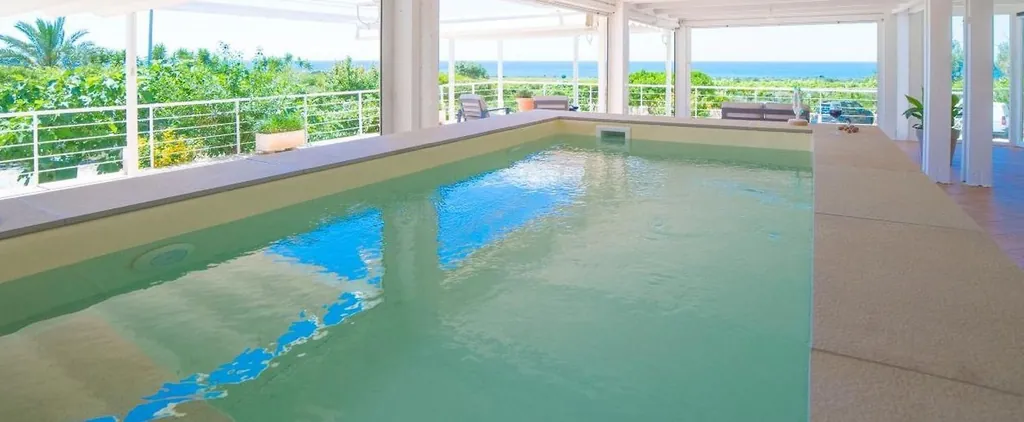
We have no houses in Nardò: ours are all in southern Salento, between Lido Marini, Torre Pali, Pescoluse, Torre Vado, Santa Maria di Leuca, Marittima and Tricase. The nearest is on the Ionian coast, between Lido Marini and Torre Pali, about 52 km from Nardò and just under an hour by car: so, if you stay with us, Nardò makes a lovely day trip, perhaps combined with the sea at Santa Caterina or Porto Selvaggio. The house is our Le Secche Suite & House – 2, La Secca di Ponente: 4 guests, 1 bathroom and 55 m², with a double bedroom and a bedroom with two single beds or a double bed, a private pool with a sea view, an equipped terrace, air conditioning, a fully equipped kitchen with a dishwasher, Wi-Fi, a garden and private parking. Small dogs are allowed and the sea is less than 1 km away.
The house is part of Le Secche Suite & House, a small complex of six units completed in 2024: you will find them all on the page holiday homes in Lido Marini. From here the sandy beaches of Lido Marini and Torre Pali are a few minutes away, and on a day trip you can reach the whole Ionian coast, as far as Gallipoli and Nardò.
Would you like advice on dates, getting around or other houses in the area? Contact us: we will help you choose the right option.
When to go and how much time to plan
February and March: the town celebrates its patron saint, San Gregorio Armeno, around 20 February, with the procession, the fair and the festive lights in the old town; in March there is the fair of San Giuseppe. It is the right time to see Nardò as its people live it.
April and May: mild temperatures, perfect for exploring the old town and the pine wood of Porto Selvaggio; in May the town celebrates the Santissimo Crocifisso. The sea is for those who don’t mind cool water.
June: the sea is already pleasant, the days are very long and in the evening Piazza Salandra fills up.
July and August: it is the liveliest time of year, with the «Nardò Estate» programme, the Cavalcata storica at the end of July and, in early August, a stop of the Notte della Taranta festival. It is hot: explore the town early in the morning or in the evening and, for the sea, arrive early to find parking.
September: in our view the best month. The sea is still warm, there are fewer people and the sunset light on the stone of the old town is beautiful.
October to January: quiet days, suited to visiting churches and museums at your own pace and walking along the coast; the town stays lively in winter too, especially at weekends.
Events and festivals (indicative dates, check them every year on the Nardò municipality website and on SalentoMe):
- Feast of San Gregorio Armeno, the patron saint: around 20 February, the anniversary of the 1743 earthquake, with the procession, the ceremony of the cento rintocchi, the hundred chimes of the Torre dell’Orologio in Piazza Salandra, the fair and the festive lights
- Fair of San Giuseppe: March
- Feast of the Santissimo Crocifisso: May
- Cavalcata storica and Fiera dell’Incoronata: end of July, with the historical procession in costume, the Palio dei Pittagi and shows in Piazza Salandra
- A stop of the travelling festival La Notte della Taranta: early August
How much time to allow: half a day is enough for Piazza Salandra, the Cathedral and San Domenico; a whole day if you add the castle, the Osanna, the Museo della Preistoria and a swim at Santa Caterina. With two or three days you can also discover Porto Selvaggio, the other seaside villages, Gallipoli and Galatina. A typical day:
- 9:00: a swim at Santa Caterina or Porto Selvaggio, while the sea is still calm
- 12:30: lunch by the sea or in town
- 16:30: Piazza Salandra, the Guglia and the church of San Domenico
- 17:30: the Cathedral and the streets of the old town
- 19:00: the Castello Acquaviva, the Villa Comunale and the Osanna
- 20:30: aperitif and dinner around Piazza Salandra
Surroundings and extra ideas
Nardò is well placed for discovering western Salento, between the Ionian coast, the art towns and the masserie of the countryside. Distances and driving times are approximate.
Santa Caterina and Porto Selvaggio (7-9 km, 10 minutes): the rocks, the towers and the pine wood of the park, the nearest sea to the town. Read our guides to Santa Caterina and to Porto Selvaggio.
Galatina (14 km, 17 minutes): the art town of central Salento, with the Basilica of Santa Caterina d’Alessandria and its fifteenth-century frescoes. Read our guide to Galatina.
Porto Cesareo (16 km, 19 minutes): just north of Torre Squillace, with its marine protected area.
Gallipoli (18 km, 20 minutes): the old town on the island, the harbour and the sandy beaches south of the town. Read our guide to Gallipoli.
Lecce (30 km, 30 minutes): the provincial capital, with the basilica of Santa Croce, Piazza Sant’Oronzo and its Baroque architecture. Read our guide to Lecce.
The Nardò Technical Center (26 km, 40 minutes): in the countryside north-west of the town is the famous circular track of about 12.6 km, opened by FIAT in 1975 and owned since 2012 by Porsche Engineering, where car manufacturers test their cars. It is a private area, not open to visitors: we talk about it in our article on the Nardò Technical Center.
Lido Marini and the coast of southern Salento (52 km, an hour): heading down the Ionian coast you reach the sandy beaches of Lido Marini, Torre Pali and Pescoluse, where our houses are.
Local tip
Arrive in Piazza Salandra at sunset: the stone of the Guglia and of the façade of San Domenico glows orange, the portico of the Palazzo dell’Università turns even whiter and the people of Nardò come out for their evening stroll. Listen to the Torre dell’Orologio striking the hours: its nineteenth-century mechanism is still wound by hand.
Before you leave, stop at the Fontana del Toro, beside San Domenico: it is the symbol of the town and recalls the legend of its founding. If you are in Nardò on 20 February, stay in the square for the cento rintocchi, the hundred chimes that remember the victims of the 1743 earthquake: it is one of the most heartfelt moments of the year.
In summer, do the opposite of the tourists: early in the morning by the sea, at Santa Caterina or in the pine wood of Porto Selvaggio, and late in the afternoon in town, when the streets of the old town are in the shade. At the table, ask for a Nardò DOC wine, red or rosé, produced in the countryside around the town.
FAQ
Where is Nardò?
In western Salento, in the province of Lecce, a few kilometres from the Ionian Sea: the old town is about 7 km from the sea at Santa Caterina, 18 km from Gallipoli and 30 km from Lecce.
What is there to see in Nardò in a day?
Piazza Salandra with the Guglia dell’Immacolata, the Sedile, the Palazzo dell’Università and the Fontana del Toro, the church of San Domenico, the Cathedral of Santa Maria Assunta, the Castello Acquaviva with the Villa Comunale, the Osanna and the Museo della Preistoria. If you have time, add a swim at Santa Caterina or Porto Selvaggio.
What is the Guglia in Piazza Salandra?
It is the Guglia dell’Immacolata, a 19-metre Baroque monument in carparo stone, wanted by the townspeople after the earthquake of 1743 and inaugurated in 1769. At the base it has the statues of St Joseph, St Anne, St Joachim and St John the Baptist, and at the top the Immaculate Virgin.
Does Nardò have a coastline?
Yes: the town centre is inland, but the municipality has 22 km of coastline on the Ionian Sea, with the seaside villages of Santa Maria al Bagno, Santa Caterina, Torre Inserraglio, Sant’Isidoro and Torre Squillace and the Porto Selvaggio Regional Nature Park, 10-20 minutes away by car.
When is Nardò’s patron saint’s feast?
The patron saint is San Gregorio Armeno, celebrated around 20 February, the anniversary of the 1743 earthquake, with the procession, the ceremony of the cento rintocchi (a hundred chimes) in Piazza Salandra, the fair and the festive lights. The programme should be checked every year.
What day is the market in Nardò?
The weekly market is on Friday morning, in the market area of zona 167. During some holidays it may be moved or cancelled: check the municipality’s notices.
Can you visit the Nardò Technical Center?
No: the Nardò track is a private Porsche Engineering testing centre, open only for professional activities. It is in the countryside north-west of the town, about 26 km from the centre.
How do you get to Nardò without a car?
By train, with the Ferrovie del Sud Est: Nardò has two stations, Nardò Città, close to the centre, and Nardò Centrale, on the Lecce-Gallipoli line. Check the timetables and any replacement buses; for getting around the seaside villages, a car remains the most convenient option.
Where to stay near Nardò?
Salento Prime has no houses in Nardò: the nearest is Le Secche Suite & House – 2, between Lido Marini and Torre Pali, for 4 guests, with a private pool and a sea view, about 52 km and just under an hour away by car. From there Nardò makes a lovely day trip.
Conclusion
Nardò is Baroque Salento a stone’s throw from the sea: a spectacular square with its Guglia, a Cathedral born in the Middle Ages, churches and palazzi rebuilt after the 1743 earthquake, a castle that became the town hall and, ten minutes away, the rocks of Santa Caterina and the pine wood of Porto Selvaggio. Give it at least a day, without hurrying, and stay until evening to see Piazza Salandra lit up.
If you want to combine Nardò with a seaside holiday in southern Salento, between Lido Marini and Torre Pali you will find our Le Secche Suite & House – 2, for 4 guests, with a private pool and a sea view, about an hour away by car. You will find our houses in the area on the page holiday homes in Lido Marini.
Discover the available accommodations with Salento Prime. To best organize your base and transfers, contact us here or start a chat on WHATSAPP.
Cover photo: Lupiae, CC BY-SA 3.0, via Wikimedia Commons, cropped