Looking for a real town in the Capo di Leuca, with a historic centre to explore on foot and, a few minutes away, one of the most spectacular stretches of coast in Salento? This guide takes you to Gagliano del Capo, Gajànu in dialect, 7 km from Santa Maria di Leuca: the mother church of San Rocco and the town’s palazzi, the menhirs of Arigliano, the crypt of San Dana, the Ciolo gorge, the paths above the sea to the Cipolliane Caves and everything there is to see nearby, with practical tips and local curiosities.
In short
Gagliano del Capo, or Gajànu in dialect, is a municipality of just under 4,800 inhabitants in the province of Lecce, at the far southern end of Salento, 7 km from Santa Maria di Leuca. The town stands 144 metres above sea level, a few minutes from the Adriatic coast, and includes the hamlets of Arigliano and San Dana. Its coast is high and rocky: the most famous spot is the Ciolo, a gorge between rock walls that ends in a small cove below the coast-road bridge. The Ciolo trail and the Cipolliane trail start from here. The best months are June and September.
What is Gagliano del Capo?
Gagliano del Capo is a town in the Capo di Leuca, between Alessano to the north and Castrignano del Capo to the south and west, looking out over the Adriatic Sea. It is a small town of low houses, squares and stately palazzi, with Gagliano Leuca station, the end of the line for the FS Sud Est trains from Lecce. Its territory runs down to the sea in a high coast full of caves, which since 2006 has been part of the Costa Otranto – Santa Maria di Leuca e Bosco di Tricase Regional Nature Park. Since 2016 Gagliano has been a member of the Borghi Autentici d’Italia (authentic villages of Italy) association.
Gagliano is a town that is alive all year round, not a seaside holiday resort. The centre gathers around piazza San Rocco and corso Umberto I, with the mother church, the saints’ columns and the palazzi of past centuries. Arigliano has now merged with the town, while San Dana, a country village of about 180 inhabitants, lies 3 km away, along the SS275 towards Montesardo. In summer the evenings come alive with «Vivere», the municipality’s programme of concerts, theatre and open-air cinema in the squares and the courtyards of the palazzi.
Here you don’t reach the sea from a sandy beach: the coast is high, often sheer, and you get into the water at the few points where the rock opens up, such as the Ciolo cove. This is the Salento for those who love walking, swimming in deep water and looking at the sea from above, and for anyone looking for a quiet base between Santa Maria di Leuca and the Adriatic coast. In this guide you will find how to get there, what to see, where to swim and how to plan your day, nearby too.
Curiosities and atmosphere
According to tradition, the name Gagliano comes from Gallius or Gaius, a Roman centurion who is said to have received these lands after the conquest of Salento. The area, however, was inhabited long before, as the two prehistoric menhirs of Arigliano remind us. In 877 Gagliano took in the survivors of Vereto, the Messapian city destroyed by the Saracens, and for centuries the Greek religious rite was kept alive here, surviving until the seventeenth century. Between 1413 and 1421 the town was surrounded by walls, strengthened after 1547, when Saracen pirates carried off many of its inhabitants. In 1495 King Ferdinando d’Aragona granted the fief to Giovanni Castriota, son of the Albanian military leader Giorgio Castriota Scanderbeg; when he was in Gagliano, Giovanni lived in the castle next to the mother church. In 1900 Palazzo Ciardo, the birthplace of the painter Vincenzo Ciardo, was built on the ruins of that castle.
The name of the Ciolo, the most famous spot in the municipality, comes from the dialect: «ciole» or «giole» were the magpies that nested among the rocks of the gorge, as noted by the municipality of Gagliano del Capo. And there is a curiosity that few people know about: for a long time part of Santa Maria di Leuca too, the part with the de Finibus Terrae sanctuary, belonged to Gagliano, and only a dispute that lasted 83 years assigned the whole of Leuca to the municipality of Castrignano del Capo. The Leuca cornflower and several wild orchids flower on the coastal rocks, and along the gorge there are caves that have been used since prehistoric times.
Where it is and how to reach it
Gagliano del Capo is at the far southern end of Salento, on the Adriatic side of the Capo di Leuca, between Alessano to the north and Castrignano del Capo to the south and west. Santa Maria di Leuca is about 7 km away, the Ciolo 3.5 km, Marina di Novaglie 5 km and Lecce about 64 km. From the town the SP195 goes down towards the sea and the Otranto-Leuca coast road (SP358), which follows the coast and crosses the Ciolo gorge on its bridge.
By car: from Lecce take the SS16 to Maglie and then the SS275 towards Santa Maria di Leuca, following the signs for Gagliano del Capo: just over an hour without traffic. In the town you park along the streets; at the Ciolo there are a few car parks near the bridge, which in August fill up as early as the morning: check on the spot for any paid zones.
By public transport: national trains arrive in Lecce; from there the FS Sud Est (Ferrovie del Sud Est) lines run as far as Gagliano Leuca station, in Arigliano, which is the terminus of the network: check the timetables and any replacement buses. In summer the «Salento in Bus» lines connect many places on the coast: check this year’s routes and timetables before you set off. The most convenient airport is Brindisi, about an hour and three quarters away by car.
What to do and what to see
Gagliano is about the town and the sea: walking the Ciolo and Cipolliane trails early in the morning, then a swim in the cove, and in the late afternoon the old town, the menhirs and the churches of the hamlets. Here are the experiences not to miss.
1. The old town and the mother church of San Rocco (1-2 hours)
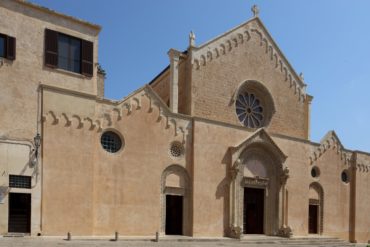
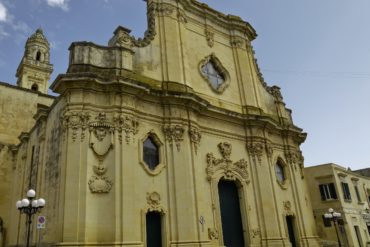
The heart of the town is piazza San Rocco, with the mother church built at the end of the sixteenth century to a design by the architect Ercole Cassano of Tricase. The carparo stone façade has a portal from 1664 and a bas-relief of San Nicola that comes from the old Greek-rite church; inside, in the single nave, there are eight altars, including the eighteenth-century Baroque ones by the sculptor Emanuele Orfano of Alessano and the altar of the Passion, with seventeenth-century wooden sculptures by Genuino Vespasiano. Strolling around you will find the column of San Rocco and that of the Immacolata, both from 1825, the church of the Immacolata, from 1860, with its 1884 mosaic floor, and the church of San Francesco di Paola, from 1613, next to the former convent of the Minims, with its majolica floor. Among the town’s palazzi are the nineteenth-century Palazzo Daniele and Palazzo Bleve, with its loggia in Lecce stone.
2. Palazzo Ciardo and the painter Vincenzo Ciardo (30 minutes)
Palazzo Ciardo was built in 1900 on the ruins of the baronial castle, of which a massive tower survives, with a large cistern at its base and a small chapel inside. Vincenzo Ciardo, one of the Neapolitan painters of the twentieth century, was born here in 1894; he often painted the landscapes of his homeland, such as «Verso Leuca» and the olive groves of Salento. Today the palazzo houses the parish oratory, and in summer its courtyard hosts concerts and talks; the municipal library, named after the painter, also organises exhibitions and book presentations in its cloister. Check on the spot when you can go in.
3. Arigliano and San Dana: the menhirs and the Basilian crypt (1 hour)
Arigliano, Trianu in dialect, has merged with the town and has two menhirs: the Menhir del Foggiaro, also called the Menhir della Croce, with several carved crosses, and the Menhir dello Spirito Santo, about 1.7 metres tall, next to the seventeenth-century chapel of the same name. They are stone monoliths raised in prehistoric times, whose meaning is still uncertain; access is free and barrier-free. In San Dana, 3 km away, is the crypt of Santa Apollonia, cut into the rock by Byzantine monks between the sixth and eleventh centuries, with frescoes of the Madonna and Child, the Trinity, San Francesco and Sant’Apollonia: it was restored only recently after a long period of neglect, so check on the spot how to visit it. The village takes its name from San Dana, an Albanian saint killed by the Saracens in the nearby countryside, where a stele commemorates him today.
4. The Ciolo, the gorge by the sea (1-2 hours)
3.5 km from the town the coast road crosses the Ciolo, a deep gorge carved by water on its way to the sea, enclosed by towering rock walls full of caves. The bridge that spans it dates from the 1960s and is about 30 metres high: from up there the view over the cove and the coast is one of the most photographed panoramas in Salento, and the place has also been the set of several films. At the bottom of the gorge there is a tiny cove, from which you get into a deep, clear sea. Climbers scale the walls, and in the caves, such as the 42-metre-long Grotta delle Prazziche, pottery, prehistoric stone tools and animal bones have been found, including those of a rhinoceros. For the bridge, the steps and tips on swimming, read our guide to the Ponte del Ciolo.
5. The Ciolo trail (2 hours there and back)
The Ciolo trail starts in the countryside just outside the town, along the SP195, and in about 4 km goes down into the gorge to the Ciolo bay, between rocky ridges, dry-stone walls and caves where people and animals once took shelter. Along the way grow the Leuca cornflower, carnations, bellflowers and wild orchids. According to the municipality it is an easy route, about an hour one way, but it is not suitable for people with reduced mobility: you need closed shoes and water. Every year the trail also hosts the Trofeo Ciolo, a mountain running race.
6. The Cipolliane trail (2 hours there and back)
From the Ciolo the Cipolliane trail heads north, an old mule track of about 2.5 km that reaches Novaglie’s Porto Vecchio in just under an hour, between dry-stone walls and Mediterranean scrub, with the sea always below you. In the past farmers and merchants walked it with donkeys to carry salt and goods from the coast inland. Along the way, with short detours, you go down to the Cipolliane Caves, hollows in the rock where traces of prehistoric people have been found, including engraved pebbles whose meaning is still unknown. The way down to the caves is over uneven rock: take care. Also read our guide to Marina di Novaglie.
7. The coastal caves from the sea (half a day)
Between the Ciolo and Santa Maria di Leuca the Gagliano coast is a long, high cliff, full of caves that can only be seen properly from the sea. Just south of the Ciolo opens the Grotta Grande del Ciolo, also called the Grotta delle Giole, about 120 metres long, with a deposit of Pleistocene fossils and a pool of very cool water; further on, towards Leuca, there are the tent-shaped Terradico caves, the Grotta di Ortocupo, where fresh water mixes with salt water, and the Grotta delle Vore, with a hole in its roof about 50 metres up. In summer the boat trips that leave from the harbour of Santa Maria di Leuca run along this stretch, that of the eastern caves: choose a day when the sea is calm and check operators, times and routes on the spot.
The Gagliano coast: where to swim and who it suits
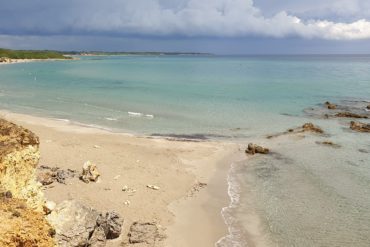
The coast of Gagliano del Capo runs, more or less, from Novaglie’s Porto Vecchio to the edge of Santa Maria di Leuca, and it is high and rocky all the way: sheer cliffs, Mediterranean scrub and caves. The sea is deep, crystal-clear and an intense blue, but there are few places to get into the water. The easiest, and the most famous, is the Ciolo cove: a little beach a few metres wide, used by fishermen to haul their boats ashore, with a shore that is partly concreted over and a seabed that is sandy at first and becomes very deep after a few strokes, as explained by the Regione Puglia. When the sea is calm the water is as clear as a swimming pool; in heavy seas the waves surge into the gorge and you should not swim.
It is perfect for strong swimmers, for those who love snorkelling, diving, trekking and climbing, for couples and for anyone looking for a quiet base in town, with the sea a few minutes away. It is less suited to small children, because the water gets deep straight away, and to those who find it hard to walk: you go down to the cove by a flight of steps from the road, and the trails are unpaved and uneven.
Free beach and facilities
Swimming at the Ciolo is free: there are no beach clubs in the cove. Near the bridge there are a few car parks, public toilets, a bar, a restaurant and a tourist info point run by the municipality: check on the spot what is open and when, especially out of season. In the town you will find bars, restaurants and a pharmacy; for more choice there is Santa Maria di Leuca, a few minutes away.
Bring water, reef shoes and a thick towel: there is little space in the cove and in the middle of the day the sun beats down on the rocks.
Gagliano del Capo vs other places in the Capo di Leuca
In this corner of Salento the places are very close to each other. Here is a practical comparison to help you choose:
Ciolo vs Marina di Novaglie
- Ciolo: the gorge between towering walls, a tiny cove and water that gets deep straight away
- Novaglie: low, flat rocks around the little harbour cut into the rock, with more room to stretch out
Ciolo vs Marina Serra
- Ciolo: wild nature, trails and caves, with the town a few minutes away
- Marina Serra: the famous natural pool among the rocks, one of the most photographed places in southern Salento, very crowded in summer. Read our guide to Marina Serra
Gagliano vs Santa Maria di Leuca
- Gagliano: a town that is lived in all year round, with the wild coast close at hand
- Leuca: the lighthouse, the de Finibus Terrae sanctuary, the seafront with its nineteenth-century villas, the harbour with the boats to the caves and every service
Gagliano vs the Ionian coast
- Gagliano: high cliffs and deep water on the Adriatic
- Pescoluse and Torre Vado: sand or low rocks and shallow water near the shore, easier with children
When to choose Gagliano: if you like walking and swimming in deep water and want a base in a real town, halfway between Leuca and the Adriatic coast.
When to choose somewhere else: if you are travelling with small children or want an umbrella and sunbed on the sand, look at the beaches of the Ionian coast, such as Pescoluse, about 15 km away.
Practical tips
Walk the Ciolo and Cipolliane trails early in the morning or in the late afternoon: they are almost entirely in the sun and it is very hot in summer. The Ciolo trail goes down from the town to the sea, so the way back is uphill: if you can, arrange a second car at the Ciolo. For the Cipolliane trail, start from the Ciolo, go as far as the caves or all the way to Novaglie and come back the same way.
For a swim at the Ciolo, arrive early: in July and August the cove and the car parks fill up during the morning, and climbing back up the steps in the midday sun is tiring. If the sea is rough, don’t go into the water. Some people dive from the bridge, from many metres up: it is dangerous; it is a show to watch, not to copy.
Useful practical information
| 📍 Where | Gagliano del Capo (Lecce), 7 km from Santa Maria di Leuca and 64 km from Lecce; the Ciolo is 3.5 km from the town |
|---|---|
| 🚗 Parking | Along the streets in the town; at the Ciolo a few car parks near the bridge, full early in August |
| ♿ Access | To the Ciolo cove by a flight of steps from the road; unpaved trails not suitable for people with reduced mobility; barrier-free access to the Arigliano menhirs |
| 🏖 Beach | No sand: the small Ciolo cove and high cliffs |
| 🌊 Sea | Deep and crystal-clear; suited to strong swimmers |
| 👟 What to bring | Closed shoes for the trails, reef shoes, mask, water and hat |
| 🍴 Food | Bars and restaurants in the town; a bar and a restaurant near the Ciolo bridge; more choice in Leuca |
| 📅 Best time | June and September for the sea; spring and autumn for the trails |
Where to stay in Gagliano del Capo
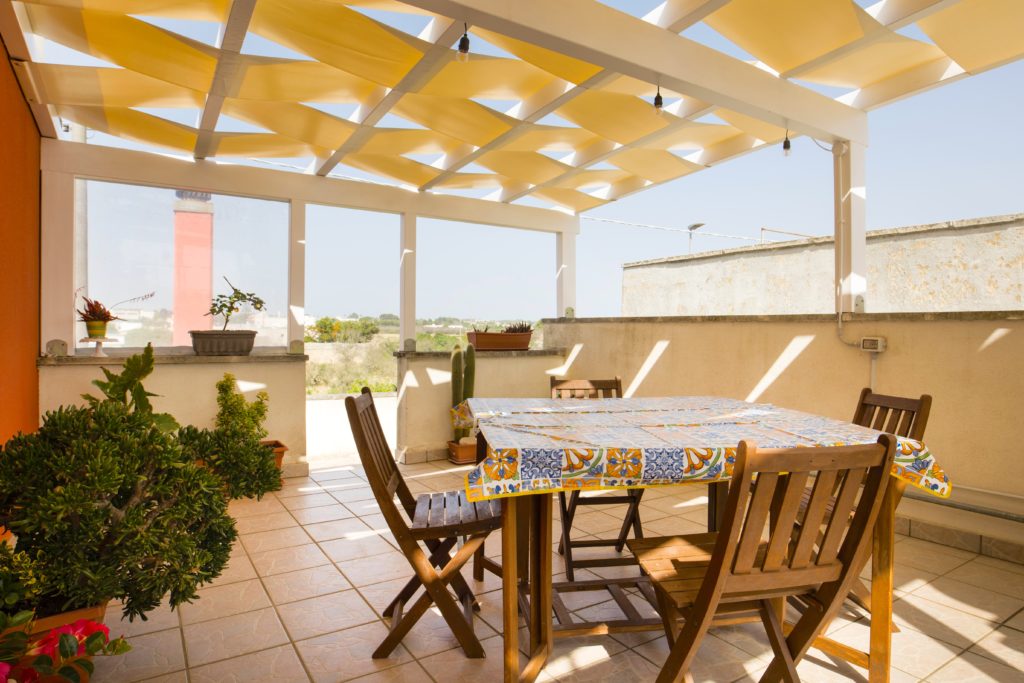
We have no houses in Gagliano, but about 2 km away, in the municipality of Castrignano del Capo, you will find our Casa Frida Cozy: up to 4 guests, a double bedroom and one with two single beds, 2 bathrooms and 100 m². It is a traditional, cosy house, with star vaults in Lecce stone, a fully equipped kitchen with a dining area, a mezzanine with a sofa and TV, air conditioning and Wi-Fi in every room, a washing machine and a covered terrace with a barbecue for eating outdoors. Parking is free on the street and small dogs are allowed. By car you reach the centre of Gagliano in 5 minutes, the Ciolo in 10 and the seafront of Santa Maria di Leuca in 7.
If you prefer to stay with the sea right in front of you, between Novaglie and Marina di Corsano, about 4 km from the Ciolo, you will find our Villa Azzurra / Villa Panorama: 7 guests, 2 bathrooms, 120 m², a large garden with a terrace and barbecue, private parking and a 200-degree sea view. You will find our houses near Gagliano on the page holiday homes in Castrignano del Capo.
Would you like advice on dates, getting around or other houses in the area? Contact us: we will help you choose the right option.
When to go and how much time to plan
June: the sea is already pleasant, the trails are still cool early in the morning and there are far fewer people than in August. From the middle of the month the summer evenings in the town begin.
July and August: it is the liveliest time, with the municipality’s summer programme, the patron saints’ feasts and the Festa dell’Emigrante. The sea is warm, but it is best to go to the Ciolo early in the morning, and the trails should be walked at dawn or towards evening.
September: the best month, in our opinion. The sea is still warm, there are far fewer people and the light on the cliffs is beautiful.
April, May and October: the ideal time for the Ciolo and Cipolliane trails, with mild temperatures and the Mediterranean scrub in flower; swimming is for those who don’t mind cool water.
November to March: the town is quiet and the coast almost deserted. In heavy seas the waves inside the Ciolo gorge are quite a sight, best watched from above and from a distance.
Events and festivals (indicative dates, check them every year on the Gagliano del Capo municipality website and on SalentoMe):
- San Francesco fair: in spring, on the second Sunday after Easter
- Trofeo Ciolo, a mountain running race on the Ciolo trail: in June
- «Vivere», the municipality’s summer programme: from June to September, with concerts, theatre, open-air cinema and book presentations
- Feast of the Madonna delle Grazie: early July
- Patron saint’s feast of San Dana, in the hamlet of San Dana: early August, with another feast on 16 January
- Festa dell’Emigrante, dedicated to the people of Gagliano who emigrated all over the world: mid-August
- «A cappello», a street arts festival: August
- Patron saint’s feast of San Rocco: the saint’s day is 16 August, and the celebrations in the square, with a procession, a band and fireworks, take place in the second half of the month
- Feast of the Madonna di Costantinopoli: 8 September
How much time to allow: half a day is enough for the old town and the hamlets; a whole day if you add the Ciolo and one of the trails. With three or four days you can combine Santa Maria di Leuca, the boat trip to the caves, Novaglie and the beaches of the Ionian coast. A typical day:
- 7:30: the Cipolliane trail from the Ciolo to the caves, before the heat
- 10:00: a swim in the Ciolo cove, when the sea is calm
- 13:00: lunch in the town
- 16:30: the old town, the mother church of San Rocco and Palazzo Ciardo
- 18:00: the menhirs of Arigliano and the crypt of San Dana
- 20:00: a stroll along the seafront of Santa Maria di Leuca or an evening in the square with the summer events
Surroundings and extra ideas
Gagliano is well placed for exploring the whole Capo di Leuca, with the Adriatic coast, Santa Maria di Leuca and the inland towns. Distances and driving times are approximate.
Ponte del Ciolo (3.5 km, 6 minutes): the bridge over the gorge, the cove and the start of the Cipolliane trail. Read our guide to the Ponte del Ciolo.
Marina di Novaglie (5 km, 9 minutes): the seaside village of Alessano, with its little harbour cut into the rock, swimming from the low rocks and the end of the Cipolliane trail. Read our guide to Marina di Novaglie.
Santa Maria di Leuca (7 km, 11 minutes): the lighthouse, the de Finibus Terrae sanctuary, the seafront with its nineteenth-century villas and the boats to the caves. Read the guide to Santa Maria di Leuca.
Castrignano del Capo (3 km, 5 minutes): the neighbouring town, which Santa Maria di Leuca belongs to, with its historic centre.
Alessano (6 km, 7 minutes): the home town of don Tonino Bello, the bishop loved throughout Italy. His tomb, in Alessano cemetery, draws many visitors: on 20 April 2018 Pope Francis also stopped there.
Marina Serra and Tricase Porto (11-14 km, 16-20 minutes): the natural pool among the rocks of Marina Serra and the harbour of Tricase with its boats. Read our guide to Marina Serra.
Pescoluse and the Ionian coast (15 km, 22 minutes): the white sandy beaches and the shallow sea of the Maldives of Salento, ideal with small children.
Local tip
The Gagliano coast faces east: if you wake up early, the sun rises straight out of the sea, in front of the cliffs. It is the best moment to set off on the Cipolliane trail or to go down into the Ciolo gorge, when the rock turns pink and it is still cool.
After the walk, stop for a swim in the Ciolo cove: in the morning the sea is clearer and there is still room. Rest during the hottest hours, and in the late afternoon go back into town for the historic centre, Arigliano and San Dana, when the stone of the churches and palazzi catches the warmest light.
And if you are in the area in August, don’t miss a festival evening in piazza San Rocco: with the festive lights switched on, the band and the fireworks, you understand how much the patron saint means to the people of Gagliano.
FAQ
Where is Gagliano del Capo?
At the far southern end of Salento, in the Capo di Leuca, in the province of Lecce, between Alessano and Castrignano del Capo, about 7 km from Santa Maria di Leuca and 64 km from Lecce. In dialect it is called Gajànu.
Is Gagliano del Capo by the sea?
Yes: the municipal territory reaches the Adriatic coast, a few minutes from the town. It is a high, rocky coast, with no sandy beaches; the most famous place to swim is the small Ciolo cove, below the coast-road bridge, 3.5 km from the centre.
What is the Ciolo?
It is a rocky gorge carved by water, which opens onto the sea in a tiny cove. It is crossed by the bridge of the Otranto-Leuca coast road, built in the 1960s and about 30 metres high, one of the most photographed places in Salento.
What are the hamlets of Gagliano del Capo?
Arigliano, which has now merged with the town, with its two menhirs and Gagliano Leuca station, and San Dana, a small village along the SS275, with the Basilian crypt of Santa Apollonia. The Ciolo is a locality on the coast.
How long are the Ciolo and Cipolliane trails?
The Ciolo trail is about 4 km long and goes down from the town to the sea through the gorge; the Cipolliane trail is about 2.5 km long and runs from the Ciolo to Novaglie’s Porto Vecchio. For each, allow about an hour one way, with closed shoes and water.
Is Gagliano del Capo suitable for children?
The town, yes; the sea, with care: at the Ciolo the water gets deep after a few strokes and to reach the cove you go down a flight of steps. With small children, the sandy beaches of the Ionian coast, such as Pescoluse, about 15 km away, are easier.
How do you get to Gagliano del Capo without a car?
By train: Gagliano Leuca station, in Arigliano, is the terminus of the FS Sud Est lines from Lecce. In summer there are also the «Salento in Bus» lines: check this year’s routes and timetables.
When is the feast of San Rocco in Gagliano del Capo?
San Rocco, the patron saint, is celebrated on 16 August; the celebrations in the square, with a procession, a band and fireworks, take place in the second half of August. Check the municipality’s programme every year.
When is the best time to go?
June and September for the sea, when there are fewer people; spring and autumn for the trails. In August the town is livelier, with the summer feasts and events.
Where to stay near Gagliano del Capo?
About 2 km away, in the municipality of Castrignano del Capo, there is Salento Prime’s Casa Frida Cozy: up to 4 guests, 2 bathrooms and a covered terrace with a barbecue. To stay with the sea right in front of you, about 4 km from the Ciolo, there is Villa Azzurra / Villa Panorama, with a 200-degree sea view.
Conclusion
Gagliano del Capo is the Capo di Leuca to enjoy on foot: a real town, with its mother church, its palazzi and the menhirs of its hamlets, and a few minutes away a high, wild coast, cut by the Ciolo gorge and crossed by trails that lead to the Cipolliane Caves. Set off early, bring closed shoes and reef shoes, and keep the evening free for a stroll in the square.
If you want to stay close to the town, about 2 km away you will find our Casa Frida Cozy: up to 4 guests, 2 bathrooms, star vaults in Lecce stone and a covered terrace with a barbecue. You will find our houses in the area on the page holiday homes in Castrignano del Capo.
Discover the available accommodations with Salento Prime. To best organize your base and transfers, contact us here or start a chat on WHATSAPP.
Cover photo: Falk2, CC BY-SA 4.0, via Wikimedia Commons