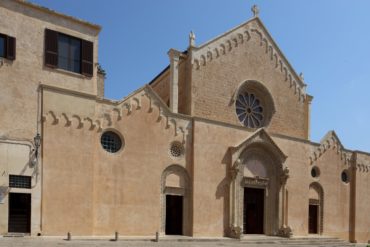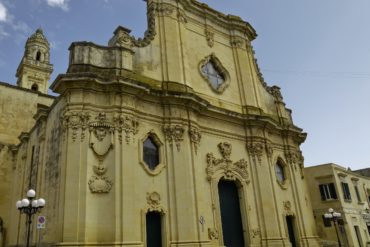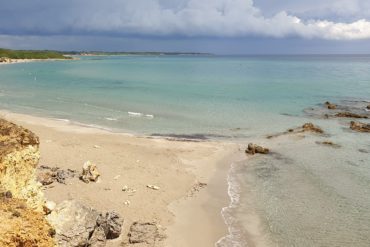
Do you want to reach the very end of Salento, where the land runs out and there is nothing but sea in front of you? This guide takes you to Punta Ristola, at Santa Maria di Leuca: the southernmost point of the heel of Italy, the Grotta del Diavolo and the Grotta Porcinara, the story of the two seas that meet, swimming from the rocks, the sunset over the Ionian Sea and everything there is to see nearby, with practical tips and local curiosities.
In short
Punta Ristola is the rocky headland at the western end of Santa Maria di Leuca, in the municipality of Castrignano del Capo (Lecce), just over 1 km from the centre of the town. It is the southernmost point of Salento and of the whole of Puglia, about 400 metres further south than Punta Meliso, the lighthouse cape. It is a low, wild point of rock with no facilities, famous caves such as the Grotta del Diavolo and the Grotta Porcinara, deep, crystal-clear sea and a beautiful view of the sunset. The best months are June and September.
What is Punta Ristola?
Punta Ristola is a natural cape on the coast of Santa Maria di Leuca, the hamlet of Castrignano del Capo at the tip of Salento. Together with Punta Meliso, to the east, it encloses the bay that the Marina di Leuca looks out over. It is an expanse of limestone rock that runs down into the sea in low cliffs, full of hollows and caves used since prehistoric times, and it is the very last tip of the heel of Italy.
Punta Ristola is where the Leuca seafront ends: beyond the last houses and the beach clubs on the rocks, the road opens onto an expanse of white rock, low scrub and sea all around. On one side you see the bay of Leuca with the harbour and, high up, the lighthouse and the sanctuary on Punta Meliso; on the other, the Ionian coast running towards Felloniche and San Gregorio.
There are no beaches or beach clubs here: you walk on the rocks, go down to the caves, swim from the rocks when the sea is calm and in the evening sit and watch the sun go down over the sea. This is the Capo di Leuca at its simplest and most authentic, a quarter of an hour’s walk from the centre. In this guide you will find how to get there, what to see, where to swim and how to plan your day, nearby too.
Curiosities and atmosphere
For everyone, the end of Salento is the Leuca lighthouse, on Punta Meliso. Yet the southernmost point is elsewhere: Punta Ristola lies about 400 metres further south, and on the map it is Punta Ristola that is the very tip of the heel of Italy. Punta Meliso keeps the title by convention: that is where, for sailors, the Adriatic coast ends and the Ionian coast begins, and it is Punta Meliso that, together with Punta Alice in Calabria, closes off the Gulf of Taranto. In Leuca they say that this is where «the two seas meet», and on some days you really can see a line on the water separating two different colours: it is created by the currents coming from the Gulf of Taranto and the Strait of Otranto. It is not a boundary between the Ionian and the Adriatic, but seeing it from the point is quite something.
A love story is also told about the two points of Leuca. The siren Leucasia fell in love with the shepherd Melisso, who, however, loved the beautiful Arìstula; rejected, the siren unleashed the waves and caused the death of the two lovers, and the goddess Minerva, moved, turned their bodies into the two points that close off the bay, Punta Meliso and Punta Ristola. The story has also been told by the Salento writer Carlo Stasi in his books about Leucasia.
The point is full of history. In the Grotta del Diavolo, in 1871, Ulderico Botti found weapons, flint and bone tools and pottery showing that the cave was used as far back as the Neolithic; they are now kept in the museums of Lecce and Maglie. In the nearby Grotta Porcinara, for centuries a sanctuary, first Messapian, then Greek and finally Roman, dozens of inscriptions can still be read, as noted by the FAI. On 14 June 2008 it was right here at Punta Ristola that Pope Benedict XVI landed by helicopter, on his visit to the de Finibus Terrae sanctuary, and the bridge on the seafront now bears his name. Offshore, about three miles from the coast and more than 80 metres down, lies the wreck of the submarine Pietro Micca, sunk on 29 July 1943; and the seabed between Punta Ristola and Capo San Gregorio is protected as a site of the European Natura 2000 network for its posidonia meadows.
Where it is and how to reach it
Punta Ristola is at the south-western end of Santa Maria di Leuca, in the municipality of Castrignano del Capo, at the end of the seafront that runs west from the harbour. The centre of Leuca is about 1.3 km away, the Basilica de Finibus Terrae and the lighthouse on Punta Meliso 3 km, Castrignano del Capo 6 km, Gallipoli 48 km and Lecce about 72 km. Above the point runs the coast road, the SP 214, which leads west to Felloniche, San Gregorio and Torre Vado.
By car: from Lecce take the SS16 to Maglie and then the SS275 to Santa Maria di Leuca, or the SS101 to Gallipoli and then the SS274 towards Leuca: either way, about an hour and twenty minutes without traffic. In Leuca follow the seafront west to the end of the town and check on the spot for any roadworks or diversions. You park along the road near the point; at sunset and in August the spaces run out quickly, so arrive a little early and check on the spot for any paid zones.
By public transport: national trains arrive in Lecce; from there the FS Sud Est (Ferrovie del Sud Est) line runs to Gagliano del Capo, to Gagliano-Leuca station, about 8 km away: check the timetables and any replacement buses. In summer «Salento in Bus» line 108, Lecce – Gallipoli – Santa Maria di Leuca, runs all the way to Leuca, to the terminus at Piazzale Le Terrazze (in 2026 from 13 June to 13 September): check this year’s routes and timetables before you set off. From the centre of Leuca to the point it is about twenty minutes on foot along the seafront. The most convenient airport is Brindisi, about two hours away by car.
What to do and what to see
Punta Ristola is about the rocks and the sea: a walk on the point and a climb down to the caves early in the morning, then a swim from the rocks if the sea is calm, a boat trip along the coast in the afternoon and the sunset in the evening. Here are the experiences not to miss.
1. The southernmost point of Salento (30 minutes)
Leave the car along the road and walk towards the sea: the rock steps down to the water and in front of you there is no more land, only the open sea. You are at the southernmost point of Salento and Puglia: to the east you see the bay of Leuca and the lighthouse, to the west the Ionian coast. The ground is uneven rock, with holes and sharp edges: wear closed shoes, keep away from the edge of the cliff and, when the wind is strong, don’t go near the water.
2. The Grotta del Diavolo (1 hour)
On the point opens the Grotta del Diavolo, the Devil’s Cave, a cavity about forty metres long and seventeen wide that runs down to the sea. The name comes from an old superstition: the loud booming of the waves in the cave was blamed on devils. You can also reach it from land, through an opening in the back of the rock, as noted by the municipality of Castrignano del Capo: inside, the floor is made of large boulders and the light comes in through the openings onto the sea. Only go down wearing closed shoes and when the sea is calm, and don’t go near the opening onto the sea when there are waves.
3. The Grotta Porcinara, the sailors’ sanctuary (30 minutes)
On the side of the point that faces the bay of Leuca, a few hundred metres from the Grotta del Diavolo, is the Grotta Porcinara, a man-made cave divided into three chambers. For many centuries it was a sanctuary, first Messapian, then Greek and finally Roman: on the walls you can read inscriptions dedicated to Jupiter and Aphrodite, and names of ships and of figures from myth. Among the gods invoked was Zeus Batius, protector of those crossing the Strait of Otranto. It is an archaeological site: treat it with respect, don’t touch the inscribed walls and check on the spot whether the entrance is open.
4. Swimming and snorkelling from the rocks (2 hours)
When the sea is calm, Punta Ristola is a place for experienced swimmers: you get into the water from the rocks, the seabed gets deep straight away and the water is crystal clear, perfect for watching the fish with a mask and fins. At the foot of the cliff, on the west side, there is a small inlet of turquoise water in front of the Grotta del Diavolo. There are no facilities, and with waves, getting in and out of the water becomes dangerous: if the sea is rough, enjoy the view and go for a swim at one of the beach clubs on the seafront.
5. Sunset over the Ionian Sea (1 hour)
The point faces west, towards the Ionian coast, and it is one of the places in Leuca where people go to watch the sunset: in summer the sun goes down over the sea beyond Felloniche and San Gregorio and, when it gets dark, the Punta Meliso lighthouse comes on behind you. Arrive half an hour early, sit on the flat rocks and bring a light sweatshirt if it is windy.
6. By boat to the western caves (half a day)
Beyond the point, towards Felloniche, begins the coast of the western caves, which can only be seen from the sea. The first is the Grotta del Fiume, also called Sparascenti, where a trickle of fresh water disappears into the salt sea; then come the Grotta del Presepe, with its concretions, the Tre Porte, with three entrances that join into a single cavity, the Grotta del Bambino, where the tooth of a Neanderthal child was found, the Grotta dei Giganti, the Grotta della Stalla and the Grotta del Drago. In summer, boat trips to the caves leave from the harbour of Leuca: choose a day when the sea is calm and check operators, times and conditions on the spot. Read our guide to the Leuca caves.
7. On foot along the seafront to the harbour (1-2 hours)
From Punta Ristola to the centre of Leuca it is about 1.3 km along the seafront, some twenty minutes on foot. Along the way you come to the Torre dell’Omomorto, the Dead Man’s Tower, a sixteenth-century watchtower at the start of the Lungomare Cristoforo Colombo, which owes its name to the human bones found in a nearby cave and today can be seen from the outside; then the nineteenth-century villas with their gardens, the church of Cristo Re and the harbour, where the boats leave from. It is the right walk for early in the morning or after sunset. Read our guide to Santa Maria di Leuca.
Sea, rocks and who it suits
The sea at Punta Ristola is deep and crystal clear, an intense blue that turns turquoise in the inlets at the foot of the cliff. The coast is all rock: low, jagged rocks, small coves and caves, and a seabed that drops away quickly. The east side faces the bay of Leuca and the harbour, the west side is open towards the Ionian coast. When the sea is calm the water is clear; in heavy seas the waves crash hard on the point and the rocks become dangerous. Off the coast, between Punta Ristola and Capo San Gregorio, the seabed is protected for its posidonia meadow: if you are in a boat, don’t anchor on the meadow.
It is perfect for those who love views and walks on the rocks, for anyone who wants to watch the sunset over the sea, for photographers, for couples and for experienced swimmers who love snorkelling. It is less suited to small children, because the ground is uneven and the water deep, to people who find walking difficult and to those looking for a sandy beach with an umbrella and sunbed.
Free beach and facilities
At Punta Ristola there is no beach and there are no facilities: you swim freely from the rocks, when the sea allows. Along the seafront towards the town there are beach clubs on the rocks, bars and restaurants, and in the centre of Leuca there is a small free sandy beach. For proper sand, go to the bay of Felloniche, 3 km away, or to the beaches of Pescoluse, 10 km away.
Bring water, a hat and comfortable shoes: there is no shade on the point and in summer the rock gets scorching hot.
Punta Ristola vs other places in the Capo di Leuca
The places on this coast are very close to each other. Here is a practical comparison to help you choose:
Punta Ristola vs Punta Meliso
- Punta Ristola: the southernmost point, of bare, wild rock, with the caves and the sunset over the Ionian Sea
- Punta Meliso: the headland of the lighthouse and the Basilica de Finibus Terrae, with the view from above over the whole bay of Leuca
Punta Ristola vs the Leuca seafront
- Punta Ristola: rocks, quiet and deep sea, with no facilities
- Leuca seafront: beach clubs on the rocks, the small sandy beach, the nineteenth-century villas, the harbour and every service
Punta Ristola vs Marina di Felloniche
- Punta Ristola: rocks and water that is deep straight away, for strong swimmers
- Felloniche: a sandy bay with shallow sea, 3 km away, easier with children
Punta Ristola vs Marina di San Gregorio
- Punta Ristola: the point exposed to the open sea, with the Leuca caves close at hand
- San Gregorio: a small cove with the little jetty and the underwater remains of the Messapian harbour of Vereto, 4 km away
When to choose Punta Ristola: if you want to stand at the southernmost point of Salento, love rocks, caves and sunsets and are a strong swimmer.
When to choose somewhere else: if you are travelling with small children and are looking for sand and shallow water, look at the bay of Marina di Felloniche or the beaches of Marina di Pescoluse, 10 km away.
Practical tips
Go to Punta Ristola early in the morning, when the light is soft and the sea is usually calmer, or an hour before sunset. At midday in summer there is not a scrap of shade on the rock. Before you go down towards the sea, look at the waves: if they are crashing hard on the point, stay up high and put off your swim.
For the Grotta del Diavolo you need closed shoes with a good sole and, if you want to see the inside properly, a torch or your phone light. If you come for the sunset in August, arrive early to find a space along the road, or leave the car in town and walk along the seafront.
Useful practical information
| 📍 Where | Punta Ristola, Santa Maria di Leuca (Castrignano del Capo, Lecce), 1.3 km from the centre of Leuca and 72 km from Lecce |
|---|---|
| 🚗 Parking | Along the road near the point; at sunset and in August arrive early, check the paid zones |
| ♿ Access | Uneven rock with no maintained paths, not suitable for pushchairs or wheelchairs; into the water only from the rocks |
| 🏖 Beach | No sand: rocks and small inlets; the nearest small sandy beach is in the centre of Leuca |
| 🌊 Sea | Clear and deep straight away, suited to those who can swim; dangerous when the sea is rough |
| 👟 What to bring | Closed shoes, reef shoes, mask, water, hat and a torch for the Grotta del Diavolo |
| 🍴 Food | No facilities on the point; bars and restaurants on the seafront and in town, a few minutes away |
| 📅 Best time | June and September for the sea; April to October for walking and for the sunset |
Where to stay near Punta Ristola
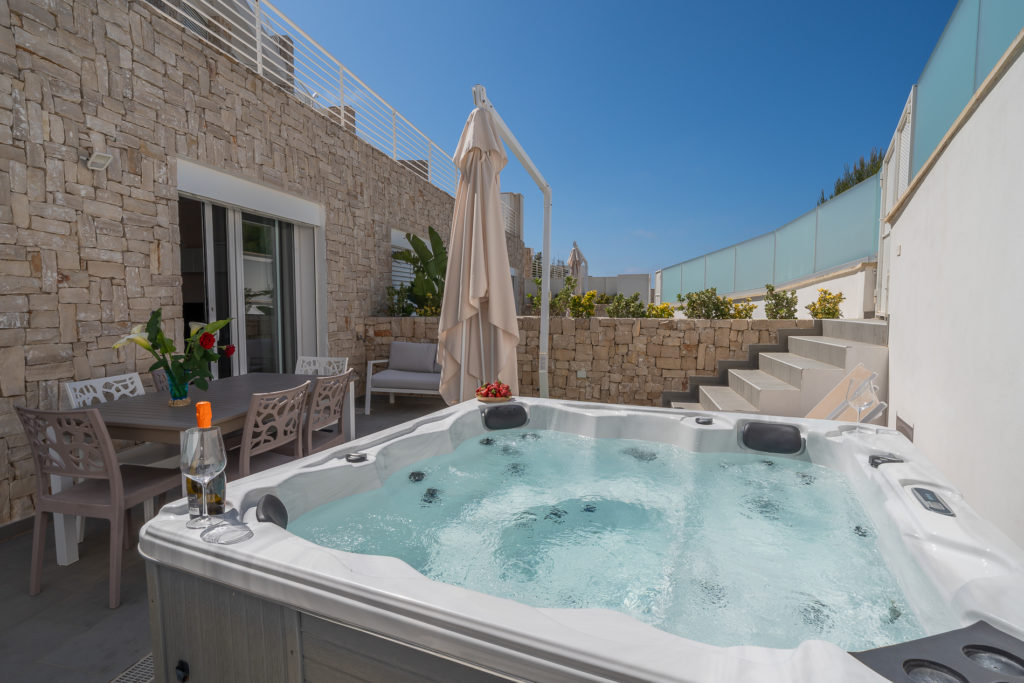
To enjoy the point early in the morning and walk back there for the sunset, it is worth staying here. About 500 metres from the point, seven minutes on foot, in a recently built residential complex in via Sorelle Bastianutti, you will find our Petit Paradise Maia: 60 m², a double bedroom and one with two single beds, a bathroom, an equipped kitchen and a living room with dining area, a patio with a private jacuzzi and relaxation area, sea view, air conditioning, Wi-Fi, a washing machine, a dishwasher and on-site parking.
In the same complex there is also our Grand Paradise Minerva, with the same layout: 60 m², a double bedroom and one with two single beds, a bathroom, the patio with jacuzzi and on-site parking. You will find all our houses in the area on the page holiday homes in Santa Maria di Leuca.
Would you like advice on dates, getting around or other houses in the area? Contact us: we will help you choose the right option.
When to go and how much time to plan
June: the sea is already pleasant, Leuca is still quiet and the days are very long: the sun sets late and the point is the perfect place to end the day.
July and August: it is high season. The sea is warm and Leuca is full of life; at sunset the point fills up and the parking spaces run out quickly, so arrive early. In mid-August there is the feast of the Madonna di Leuca, with the procession at sea.
September: the best month, in our opinion. The sea is still warm, there are far fewer people and the sunset light on the rock is beautiful.
April, May and October: the ideal time for walking on the point and along the seafront, going down to the caves and taking photos in mild temperatures; swimming is for those who don’t mind cool water.
November to March: the point is almost deserted and has a charm all of its own. In heavy seas the sight of the waves on the rock is impressive, but it is best watched from a distance.
Events and festivals (indicative dates, check them every year on the Castrignano del Capo municipality website and on SalentoMe):
- Feast of San Giuseppe: 19 March, in the old church of San Giuseppe, set in the pine wood on the road between Castrignano and Leuca, opened for the occasion
- Feast of the Madonna di Leuca: 14-15 August, with the statue carried from the Basilica to the church of Cristo Re, the procession through the town and then out to sea on a fishing boat, followed by hundreds of boats as far as the waters of San Gregorio and back, and fireworks around midnight
- Feast of San Michele Arcangelo, patron saint of Castrignano del Capo: 29 September
How much time to allow: an hour is enough for the point and the view; half a day if you add the Grotta del Diavolo, the Grotta Porcinara and a swim; a whole day with the boat trip to the caves and the sunset. A typical day:
- 8:30: a walk on the point and down to the Grotta del Diavolo, in the morning light
- 10:00: a swim and snorkelling from the rocks, if the sea is calm
- 13:00: lunch on the Leuca seafront
- 15:30: a boat trip to the western caves from the harbour of Leuca
- 18:00: the Basilica de Finibus Terrae and the lighthouse on Punta Meliso
- 19:45: sunset at Punta Ristola
- 21:00: a stroll along the seafront among the nineteenth-century villas
Surroundings and extra ideas
Punta Ristola is well placed for exploring the whole Capo di Leuca, with the town, the lighthouse, the caves, the seaside villages of the Ionian coast and the inland villages. Distances and driving times are approximate.
Santa Maria di Leuca, seafront and harbour (1.2-1.7 km, 2-3 minutes; 20 minutes on foot): the nineteenth-century villas, the church of Cristo Re, the Torre dell’Omomorto and the harbour where the boats leave for the caves. Read the guide to Santa Maria di Leuca and the one to the Leuca caves.
Punta Meliso, the lighthouse and the Basilica de Finibus Terrae (3 km, 5 minutes): Leuca’s other point, with the 48.60-metre lighthouse standing 102 metres above the sea, the sanctuary and the monumental waterfall of the Acquedotto pugliese with its flight of steps. Read our guide to the de Finibus Terrae sanctuary.
Torre Marchiello (1.3 km, 18 minutes on foot): to the west, along the coast, the ruins of a sixteenth-century watchtower built against pirate raids, above the coast of the western caves.
Marina di Felloniche (3 km, 7 minutes): a sandy bay with shallow sea and a posidonia meadow off the shore, ideal with children. Read our guide to Marina di Felloniche.
Marina di San Gregorio (4 km, 8 minutes): the seaside village of Patù with its little jetty, low rocks and the underwater remains of the Messapian harbour of Vereto. Read our guide to Marina di San Gregorio.
Castrignano del Capo (6 km, 9 minutes): the town Leuca belongs to, with its old town and the mother church of San Michele Arcangelo, and, in its hamlets, the tower of Salignano and the castle of Giuliano. Read our guide to Castrignano del Capo.
Torre Vado and Pescoluse (8-10 km, 13-15 minutes): the little harbour with its tower and the freshwater springs, then the long white sandy beach of the Maldives of Salento. Read our guides to Torre Vado and to Marina di Pescoluse.
Ponte del Ciolo (9 km, 10-15 minutes): on the Adriatic coast, the bridge over the gorge between towering rock walls and a small pebble bay; the right place to see the other sea of the Capo di Leuca. Read our guide to the Ponte del Ciolo.
Local tip
Come to Punta Ristola twice: early in the morning, when there is hardly anyone on the point, the sea is calmer and you can take your time going down to the Grotta del Diavolo, and in the evening for the sunset, when the sun sinks over the Ionian Sea and the white rock turns orange.
Before you pick the day for the boat trip, look at the sea: when it is calm you get a good close-up view of the western caves; with waves it is better to put it off. And if in the bay you see a line on the water separating two different colours, stop and look at it: it is Leuca’s famous meeting of the two seas, which is actually the meeting of two currents.
FAQ
Where is Punta Ristola?
In Santa Maria di Leuca, a hamlet of Castrignano del Capo (Lecce), at the western end of the bay of Leuca, about 1.3 km from the centre of the town and 72 km from Lecce. You reach it by car or on foot by following the seafront west.
Is Punta Ristola really the southernmost point of Salento?
Yes: it lies about 400 metres further south than Punta Meliso, the cape with the lighthouse, and it is the southernmost tip of Salento and Puglia. Punta Meliso remains the reference point by convention, because of the lighthouse and for sailors.
Is this where the Ionian Sea and the Adriatic Sea meet?
In Leuca people often say so. By nautical convention the boundary between the two seas is set at Punta Meliso; the line of a different colour that you sometimes see on the water comes from the meeting of the currents of the Gulf of Taranto and the Strait of Otranto.
Can you visit the Grotta del Diavolo?
Yes, you can reach it from land too, through an opening in the back of the rock on the point, or from the sea. The floor is made of boulders and the rock is uneven: you need closed shoes and care, and when the sea is rough you must not go near the opening onto the sea.
Can you swim at Punta Ristola?
Yes, from the rocks and only when the sea is calm: the water is deep and clear, suited to strong swimmers and to snorkelling. There are no facilities; beach clubs, bars and restaurants are on the Leuca seafront, a few minutes away.
Is Punta Ristola suitable for children?
For a walk, yes, holding their hands and keeping away from the edge of the cliff. For swimming, no: with small children, Leuca’s small sandy beach and the bay of Felloniche, 3 km away, are easier.
How do you get to Punta Ristola without a car?
In summer on «Salento in Bus» line 108, Lecce – Gallipoli – Santa Maria di Leuca, which runs to Leuca; from the centre to the point it is about twenty minutes on foot. The nearest railway station is Gagliano-Leuca, on the FS Sud Est line, about 8 km away.
When is the best time to go?
Early in the morning or an hour before sunset, when the light is at its best and it is less hot. For the sea the best months are June and September; from April to October the point is perfect for walking.
Where to stay near Punta Ristola?
About 500 metres from the point, in a recently built complex, there are Salento Prime’s Petit Paradise Maia and Grand Paradise Minerva, two apartments with a double bedroom, a bedroom with two single beds and a patio with a private jacuzzi. You will find the other houses on the holiday homes in Santa Maria di Leuca page.
Conclusion
Punta Ristola is the real end of Salento: a point of white rock looking out over the open sea, with the Grotta del Diavolo, the ancient sanctuary of the Grotta Porcinara, deep, clear sea and the sunset over the Ionian Sea. Come early in the morning or in the evening, wear closed shoes and take the time to sit on the rocks and look at the place where the land ends.
If you want to stay a short walk from the point, about 500 metres away you will find our Petit Paradise Maia, with two bedrooms, a bathroom, sea view and a patio with a private jacuzzi; in the same complex there is also the Grand Paradise Minerva. You will find our houses in the area on the page holiday homes in Santa Maria di Leuca.
Discover the available accommodations with Salento Prime. To best organize your base and transfers, contact us here or start a chat on WHATSAPP.
Cover photo: Pepemanuele, CC BY-SA 4.0, via Wikimedia Commons