Looking for a corner of Salento a quarter of an hour from Lecce where you can find, all together, a Renaissance fortress town, one of the last coastal marshes in Puglia and a sea of sand and dunes? This guide takes you to Vernole, «Èrnule» in dialect, and its hamlets: the fortified citadel of Acaya with the castle of Gian Giacomo dell’Acaya, the Le Cesine Nature Reserve and WWF Oasis, the centre of Vernole with the Chiesa Madre and the underground olive mill, the villages of Acquarica, Pisignano, Strudà and Vanze and the coast between San Cataldo and Torre Specchia, with practical tips and local curiosities.
In short
Vernole is a municipality of about 6,500 inhabitants in the province of Lecce, about 15 km from the provincial capital towards the Adriatic Sea. It has five hamlets, Acaya, Acquarica di Lecce, Pisignano, Strudà and Vanze, and a stretch of coast with sand and dunes between San Cataldo and Torre Specchia. Its jewel is Acaya, a fortified 16th-century citadel with walls, a moat and a large castle, about 5 km from the sea. On the coast lies the Le Cesine State Nature Reserve and WWF Oasis, a wetland of ponds, pine woods and dunes that can only be visited with the reserve’s guides, by booking. The best months are April, May, June and September; from October to March for the birds of Le Cesine.
What is Vernole?
Vernole is an inland town in the Lecce area, on the plain of the Valle della Cupa, between Lecce, Lizzanello, Castri di Lecce, Calimera and Melendugno. The municipality is made up of a main town and five old hamlets which until the 19th century were municipalities in their own right, each with its own church, its own palazzo and its own feast. Its territory reaches the sea, where it includes the Le Cesine reserve, part of Campo Verde, on the edge of San Cataldo, and part of Torre Specchia Ruggeri, a seaside village shared with Melendugno. Vernole belongs to the Unione dei comuni Terre di Acaya e Roca.
Vernole is a quiet town of courtyards, Baroque churches in Lecce stone and olive countryside enclosed by dry-stone walls. Around the main square, Piazza Vittorio Veneto, you will find the Chiesa Madre, the column of Sant’Anna and, beneath the paving, an olive mill carved into the rock. A few minutes’ drive takes you to Acaya, where the streets inside the walls are still the ones laid out in the 16th century, and then to the coast, where the pine wood and the ponds of Le Cesine reach all the way to the beach.
It is not a holiday resort with a seafront and bars: it is the Salento for those who love history, nature, birdwatching, bike rides between villages and beaches still free of buildings. Lecce is about twenty minutes away, the seaside villages of Melendugno a quarter of an hour. In this guide you will find how to get there, what to see in Vernole, Acaya and Le Cesine, where to swim and how to plan your day.
Curiosities and atmosphere
There are only theories about the origin of the name Vernole: some derive it from the Latin «verno», to be spring, because of the mild climate, others from «ver in olae», spring among the olive trees. In dialect the town is called «Èrnule», in Griko «ta Vèrnula». The first document to mention it dates from 1115, when the Norman count Goffredo gave the bishop of Lecce «half of the hamlet of Vernole, which is called San Lorenzo»: all that remains of that first village is the small church of San Lorenzo, now in ruins, near the cemetery.
The most famous figure of this land is Gian Giacomo dell’Acaya, military engineer to the Emperor Charles V: besides his Acaya, he designed the castle and walls of Lecce and worked on Castel Sant’Elmo in Naples. He died in 1570 in the prison of Lecce which, by an irony of fate, he had designed himself. In Acaya, outside the walls, stands the 18th-century chapel of San Paolo, which together with Galatina was one of the pilgrimage destinations of the «tarantate», the women who believed they had been bitten by the tarantula and came here to drink the water from the saint’s well. In Vernole, on the other hand, they say that the old underground olive mill in the square was inhabited by the «uri», mischievous goblins who came out at night to play tricks on the inhabitants, until the people of Vernole shut them inside. The mill was reopened at the end of the 1990s: who knows whether the uri are still there. Up-to-date news and notices are on the website of the municipality of Vernole.
Where it is and how to reach it
Vernole lies in Adriatic Salento, south-east of Lecce, inland, about ten minutes’ drive from the coast. Lecce is about 15 km away, Melendugno 5 km, San Foca 10 km, Torre dell’Orso 13 km and Otranto 30 km. The hamlets are all close by, between 2 and 7 km from the main town: Acaya is about 6 km to the north-east, on the road to the sea.
By car: from Lecce take the provincial road to Vernole, the SP1: about twenty minutes without traffic. For Acaya and Le Cesine it is better to leave Lecce’s eastern ring road towards San Cataldo: for the reserve, according to the WWF directions, take exit 8B, follow signs for San Cataldo and at the traffic lights turn right towards Otranto; after about 2.8 km, on the left, a small paved road of about 1 km leads to Masseria Cesine, the visitor centre. In Acaya you park outside the walls and enter on foot through the monumental gate.
By public transport: national trains arrive in Lecce; from there, to reach Vernole and the coast you need the suburban buses, which run reduced timetables, especially out of season: check them before you set off. The most convenient airport is Brindisi, about 60 km away, an hour’s drive. To get around the hamlets, Acaya and Le Cesine, a car or a bike is almost essential.
What to do and what to see
Vernole can be discovered in a full day, better in two: in the morning a guided visit to Le Cesine, in the afternoon the sea, towards evening Acaya, and another half day for the centre of Vernole and the hamlets. Here are the experiences not to miss.
1. Acaya, the ideal town of the 16th century (1 hour)
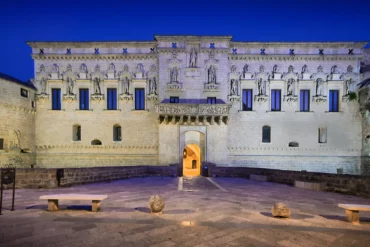
Acaya, a village of about 450 inhabitants, is one of the most complete examples of a Renaissance fortified town in southern Italy. In the Middle Ages it was called Segine and from 1294 it was the fief of the dell’Acaya family. In 1535 Gian Giacomo dell’Acaya transformed it: he enclosed it within a ring of walls in Lecce stone, with three bastions at the corners and the castle at the fourth, surrounded everything with a moat cut into the rock and redesigned the streets as in an ideal town, with six parallel streets, all 4 metres wide and the same distance apart, crossed by three perpendicular axes. Then he gave it his family’s name. You enter through the monumental gate of 1535, the gate of Sant’Oronzo, with the coats of arms of the dell’Acaya, De Monti and Vernazza families beneath the insignia of Charles V and the statue of the saint on top. Inside you will find Piazza d’Armi in front of the castle, the central square with the church of Santa Maria della Neve, rebuilt in the 19th century but with its medieval bell tower, and the old Franciscan convent in the north-east corner; in the paving of the streets the silos cut into the rock, where provisions were stored, are marked. Then leave the walls to see the small chapel of San Paolo, linked to tarantism.
2. The castle of Acaya (1 hour)
The castle occupies the south-west corner of the walls. The first core, with its round towers, was built by Alfonso dell’Acaya between the end of the 15th century and 1506; his son Gian Giacomo turned it into a modern fortress, suited to the age of cannons, and an inscription on the bastion records the end of the works in 1536. From the moat you can clearly see two round towers and two spearhead-shaped bastions, with gun ports on several levels: one of the most innovative defence systems in the Kingdom of Naples. In 1714 the village was nevertheless attacked and plundered by Turkish pirates. Inside are the courtyard, the rooms with barrel and cross vaults, the old prisons, the stables and, on the main floor, the nine-sided hall with a frieze portraying Alfonso and Maria dell’Acaya. During the restoration, a large 14th-century fresco re-emerged in a cavity in the wall, the Dormitio Virginis, about four metres by three, with the Apostles around the Virgin. Today the castle belongs to the Province of Lecce and hosts exhibitions and events: opening times and tickets change, so check before you go. Even from outside, at sunset, a walk around the moat is worth the visit.
3. The Le Cesine Nature Reserve and WWF Oasis (2-3 hours)
Le Cesine is the last remaining stretch of the coastal marshes that once ran along the Adriatic from Brindisi to Otranto. The oasis, covering about 350 hectares, has been a wetland of international importance under the Ramsar Convention since 1977 and a State Nature Reserve since 1980: two large ponds, Pantano Grande and Salapi, fed by rainwater and separated from the sea by a line of dunes, are surrounded by reed beds, woods of Aleppo pine and stone pine, holm oak woods and Mediterranean scrub. This is one of the great migration routes of the Mediterranean: about 180 species of birds have been counted here, from herons to the marsh harrier, and the common pochard, a diving duck that arrives in autumn and winter, is the symbol of the reserve. In spring 32 species of wild orchids bloom, and among the rare plants is the silk vine. The reserve is managed by WWF Italia, with the WWF Foundation and the support of the Seges cooperative. It can be visited all year round, but by ministerial decree you can only enter with the reserve’s guides and booking is compulsory: according to the official page, on Sundays and public holidays visits start at 10:00 and 16:00, and groups on weekdays need to make arrangements. Visits start from Masseria Cesine, the visitor centre, and follow the paths through the pine wood to the observation hides on the ponds. You will find contacts and information on the page of theLe Cesine WWF Oasis.
4. The centre of Vernole and the underground olive mill (1 hour)
The heart of Vernole is Piazza Vittorio Veneto. The Chiesa Madre of Maria Santissima Assunta was built in 1730 and consecrated in 1748, with its bell tower of 1740: the Lecce Baroque façade has the statues of Saints Oronzo, Giusto and Fortunato in its niches and, higher up, Faith, Hope and Charity. Inside are Baroque altars carved in the first half of the 18th century and the chapel with the statues of Sant’Anna and San Gioacchino, the town’s patron saints. A few steps away are the church of Sant’Anna, from 1673-1680, and the votive column of Sant’Anna, completed in 1781, with the statue of the saint on top facing her church. The Palazzo Baronale, from the 1760s, has a large rusticated portal. Beneath the square, carved into the bedrock, is the 16th-century «Caffa» underground olive mill, with its presses and millstones still in place: it remained in use until the end of the 19th century, was filled in in 1930 and brought back to light in 1995. Check with the municipality when it is open for visits.
5. The hamlets: Acquarica, Pisignano, Strudà and Vanze (half a day)
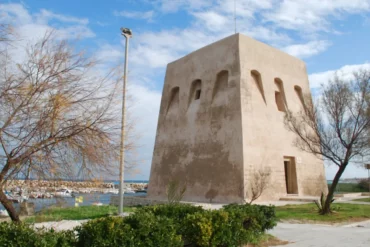
Each hamlet has something to see. In Acquarica di Lecce, 2 km from Vernole, there is a small fortress from 1549, built by Gian Giacomo dell’Acaya for Baron Guarino against Turkish raids, as a Latin inscription records, and the church of San Gregorio Nazianzeno, from 1904, with a bell tower from 1525. In Pisignano there are the mother church of Santa Maria Mater Domini, of Romanesque origin, and the Materdomini menhir, one of the tallest in the area. Strudà, whose name is said to come from «struthea», a wild quince, has the marquis’s palace of the Esperti-Saraceno family. In Vanze you enter through the monumental gate that opened the village towards the sea, with 16th-century tower houses and the column of the Virgin. Between Pisignano and Strudà, in the countryside, look for the great holm oak of the «Lizza dei Briganti», with a trunk about four metres in circumference: according to the story, its crown was the brigands’ hiding place.
6. The Messapian farm of Pozzo Seccato (30 minutes)
In the countryside of Acquarica, about 3 km from Vernole, excavations by the University of Salento have brought to light a real fortified Messapian farmstead, built at the end of the 4th century BC: an enclosure of almost 5,000 square metres, surrounded by a wall almost 4 metres thick, with the owner’s house, workshops, a granary and a tower from which the countryside could be watched all the way to the sea. It had two phases of life, separated by a short period of abandonment, and was finally left at the beginning of the 1st century AD. Check first whether the area is accessible.
7. By bike between Lecce, Le Cesine and the villages (half a day)
The territory of Vernole is flat and perfect for cycling. From Lecce a cycle path, called Lecce-Cesine, runs towards the coast to the edge of the reserve; from there the country roads, between olive groves, fortified farmhouses and dry-stone walls, lead to Vanze, Acaya, Acquarica and the other hamlets. The municipality has described a route that links them all. Set off early in the morning, take water and check the state of the surface, which is unpaved in some stretches.
The sea of Vernole and who will love it
The sea of Vernole is a stretch of low, sandy coast, with dunes and scrub behind it, along the coast road that runs down from San Cataldo towards San Foca. It begins at Campo Verde, on the southern edge of San Cataldo, Lecce’s seaside village, passes in front of the Le Cesine reserve and reaches the outskirts of Torre Specchia Ruggeri, the seaside village shared between Vernole and Melendugno, where the tower and most of the houses are already in the municipality of Melendugno. It is a coast with few buildings, with pale sand, clear water and a sandy seabed that is often shallow near the shore.
In front of Le Cesine the beach runs along the line of dunes that separates the ponds from the sea: it is a fragile environment that changes shape with the storm surges. In February 2026, for example, the stormy sea opened two gaps in the dunes and the waters of Pantano Grande flowed out towards the sea, and the WWF and the municipality asked for protective works. Walk only on the boardwalks and marked paths and respect the signs of the protected area.
The sea of Vernole is perfect for those looking for a natural, uncrowded beach near Lecce, for families who want sand, for those who love walking and birdwatching and for those who combine the sea with a visit to Acaya. It is less suited to those looking for a seafront with bars and nightlife: for that there are San Cataldo and the seaside villages of Melendugno.
Free beach and facilities
Along the coast road there are a few beach clubs, with wooden boardwalks through the dunes, and stretches of free beach. Check access points, car parks and any paid areas on site, and leave your car only in permitted spaces, not on the dunes or along the edge of the pine wood. In Vernole and Acaya you will find bars and a few restaurants; for more choice there are Lecce and San Foca.
For the free beach bring an umbrella, water and sun cream: in summer there is little shade. When the sea is rough, stay within your depth.
Vernole vs other nearby destinations
There are many destinations around Lecce, all very close. Here is a practical comparison to help you choose:
Acaya vs Otranto
- Acaya: a small fortified village within its walls, with the castle and the streets laid out in the 16th century, quiet and free of crowds
- Otranto: a historic town on the sea, with the Cathedral and its mosaic, the Aragonese Castle and an old town that is very lively in summer, 30 km away. Read our guide to Otranto
Le Cesine vs San Cataldo
- Le Cesine: protected nature, ponds, pine woods and a beach among the dunes
- San Cataldo: Lecce’s seaside village, with the lighthouse, the seafront and more facilities, about 9 km by road from the reserve
Vernole vs Lecce as a base
- Vernole: a quiet town among olive groves and villages, a few minutes from the coast and the reserve
- Lecce: the capital of the Baroque, with churches, palazzi, restaurants and nightlife, about twenty minutes away. Read our guide to Lecce
When to choose Vernole: if you love history and nature, want to see a Renaissance fortified town and one of the last marshes in Puglia and are looking for natural beaches near Lecce.
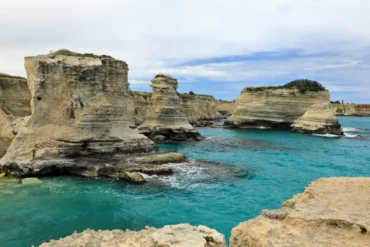
When to choose somewhere else: if you want a famous bay with sea stacks, beach clubs and summer life, head down to Torre dell’Orso, a quarter of an hour away. Read our guide to Torre dell’Orso.
Practical tips
For Le Cesine always book ahead: you cannot enter without the reserve’s guide. Bring comfortable shoes, a hat, water and, if you have them, binoculars; in the hot months choose the morning or late-afternoon visit and protect yourself from mosquitoes, because this is a marsh. If you want to bring your dog, ask the reserve first, and keep quiet near the hides: the birds are easily frightened.
In Acaya leave your car outside the walls and explore on foot: the village is small and flat. For the castle, check opening times and exhibitions first, because they change often; the walk around the outside of the moat can be done at any time. Enter the churches outside service times and in suitable clothing. On the beach use only the boardwalks through the dunes and do not leave any litter: the protected area reaches all the way to the sea.
Useful practical information
| 📍 Where | Vernole (Lecce), 15 km from Lecce; Acaya 6 km, Le Cesine 9 km from the town, on the San Cataldo – San Foca coast road |
|---|---|
| 🚗 Parking | Outside the walls in Acaya; at Masseria Cesine for the reserve; on the coast road only in permitted spaces |
| ♿ Access | Acaya and Vernole are flat; at Le Cesine dirt paths through the pine wood, ask the reserve which routes are easiest |
| 🏖 Beach | Sand and dunes between Campo Verde and Torre Specchia, with a few beach clubs and free stretches |
| 🌊 Sea | Sandy seabed, often shallow near the shore; when the sea is rough, stay within your depth |
| 👟 What to bring | Comfortable shoes, binoculars, water and insect repellent for Le Cesine; an umbrella for the free beach |
| 🍴 Food | Bars and a few restaurants in Vernole and Acaya; more choice in Lecce and San Foca |
| 📅 Best time | April-June and September; October to March for the birds; late July for the feast of Sant’Anna |
Where to stay near Vernole
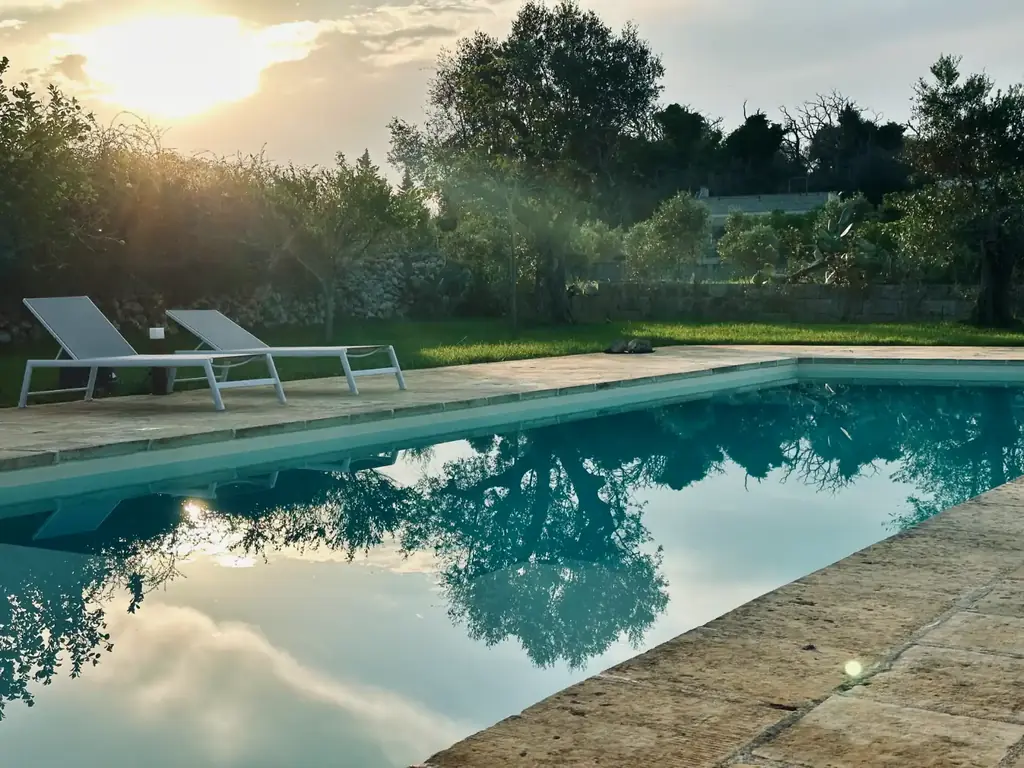
We have no houses near Vernole: our nearest is further south, on the Adriatic coast, in Marittima, about 43 km and around fifty minutes’ drive from Vernole and about an hour from Le Cesine. It is a base for those who mainly want to discover the Salento of the cliffs and take a day trip to Acaya, Le Cesine and Lecce. It is our Villetta Arenosa con piscina: 4 guests, 2 rooms, 3 bathrooms and 80 m² on two levels, with a double bedroom with an extra single bed under the typical star vaults, a bright living room with an equipped kitchenette and a sofa bed, air conditioning, a washing machine and a dishwasher. Outside there is a large private garden with a pool with views of the sea and of Castro, a sun terrace, an outdoor bathroom, changing room and showers, a play area with a volleyball net and five-a-side football goals, a barbecue and private parking. It is a quiet base for the coast between Otranto, Santa Cesarea Terme and Castro.
You will find this and our other houses in the area on the page holiday homes in Marittima. Would you like advice on dates, getting around or other houses in the area? Contact us: we will help you choose the right option.
When to go and how much time to plan
October to February: it is the waterbird season at Le Cesine, with pochards and other ducks on the ponds, and clear days are perfect for Acaya and for cycling. In January Vernole remembers the earthquake of 1833 with the feast of Sant’Anna and Strudà celebrates the Madonna del Terremoto. With the storm surges the coast is spectacular, but it should be watched from a distance.
March, April and May: the ideal time for everything. In the reserve the wild orchids bloom and migrating birds pass through, the countryside is green and walking is pleasant. At the end of April Vernole takes part in the pilgrimage to the Madonna di Roca.
June: the sea is already pleasant and the beaches are quiet: Le Cesine in the morning, a swim in the afternoon.
July and August: it is hot, so visit the reserve and Acaya early in the morning or towards evening and keep the middle of the day for the sea. It is the season of the patron saints’ feasts, from Sant’Anna in Vernole to the Madonna della Neve in Strudà, the Assunta in Vanze and San Gregorio in Acquarica.
September: in our opinion the best month. The sea is still warm, there are fewer people, the autumn migrations begin and at the start of the month Acaya celebrates Sant’Oronzo.
Events and festivals (indicative dates, check them every year on the website of the municipality of Vernole and on SalentoMe):
- Feast of Santa Severina in Pisignano: around 8 January
- Votive feast of Sant’Anna in Vernole: 18 January, in memory of the earthquake of 1833
- Madonna del Terremoto in Strudà: around 19 January, with the lighting of the focara
- Feast of the Madonna di Roca: late April, with the pilgrimage to Roca shared with Melendugno, Borgagne and Calimera
- Patronal feast of Saints Anna and Gioacchino in Vernole: 25-26 July, with illuminations, bands and fireworks
- Feast of the Madonna della Neve in Strudà: 4-5 August
- Feast of the Assunta in Vanze: 15-16 August
- Feast of San Gregorio Nazianzeno in Acquarica di Lecce: around 17-18 August
- Feast of Sant’Oronzo in Acaya: early September, around the first Sunday of the month
- Feast of Santa Maria Mater Domini in Pisignano: around 11-12 September
How much time to allow: half a day is enough for Acaya and the castle; a whole day if you add Le Cesine and the sea. With two days you can also see the centre of Vernole, the hamlets and Pozzo Seccato, perhaps by bike. A typical day, on a Sunday:
- 9:00: Piazza Vittorio Veneto in Vernole, the Chiesa Madre and the column of Sant’Anna
- 10:00: guided visit to Le Cesine, booked ahead, from Masseria Cesine to the hides on the ponds
- 13:00: lunch in Vernole, in Acaya or towards San Foca
- 15:30: a swim on the beach along the coast road, among the dunes
- 18:30: Acaya, the gate of Sant’Oronzo, the streets inside the walls and a walk around the castle moat at sunset
- 20:30: dinner in Acaya or Lecce
Surroundings and extra ideas
Vernole is halfway between Lecce and the sea, in a convenient position for discovering Adriatic Salento and the towns of the Grecìa Salentina. Distances and driving times are approximate.
Melendugno (5 km, 7 minutes): the neighbouring municipality, to which the seaside villages of San Foca, Roca and Torre dell’Orso belong. Read our guide to Melendugno.
Calimera (6 km, 10 minutes): one of the towns of the Grecìa Salentina, the Griko-speaking area.
San Foca (10 km, 11 minutes): the seaside village of Melendugno closest to Vernole, just south of Le Cesine. Read our guide to San Foca.
Roca Vecchia and the Grotta della Poesia (13 km, 17 minutes): the archaeological area by the sea and the famous natural pool among the rocks, in the municipality of Melendugno.
Torre dell’Orso (13 km, 15 minutes): the large sandy bay with the Due Sorelle sea stacks. Read our guide to Torre dell’Orso.
San Cataldo (14 km, 22 minutes): Lecce’s seaside village, with the lighthouse and the seafront, at the northern end of the Vernole coast.
Lecce (15 km, 20 minutes): the capital of Salento Baroque, with Piazza Sant’Oronzo, Santa Croce, the Duomo and the castle of Charles V, on which Gian Giacomo dell’Acaya himself worked. Read our guide to Lecce.
Corigliano d’Otranto (21 km, 30 minutes): another town of the Grecìa Salentina, with its castle. Read our guide to Corigliano d’Otranto.
Otranto (30 km, 40 minutes): the easternmost town in Italy, with the Cathedral and its mosaic and the Aragonese Castle. Read our guide to Otranto.
Local tip
If you can, book the first Sunday-morning visit at Le Cesine: the light is soft, it is still cool and there is more activity on the ponds. Stop quietly in the hides, even for just ten minutes: you will see the herons rise from the reed beds and, in winter, the pochards diving in the middle of Pantano Grande. After the visit, go down to the beach along the coast road for a swim or a walk on the sand.
Keep Acaya for the evening. As the sun goes down, the Lecce stone of the walls turns golden, the village empties and you can walk around the castle moat almost alone. Enter through the gate of Sant’Oronzo, walk one of the parallel streets to the end and you will understand why Gian Giacomo dell’Acaya conceived it as an ideal town.
And if you love cycling, devote a morning to the hamlets: Vanze, Acaya, Acquarica, Pisignano and Strudà are a few kilometres from one another, among olive groves and masserie, and each has its own square where you can stop for a coffee.
FAQ
Where is Vernole?
In Adriatic Salento, in the province of Lecce, about 15 km south-east of Lecce and about ten minutes’ drive from the coast. Its hamlets are Acaya, Acquarica di Lecce, Pisignano, Strudà and Vanze; in dialect the town is called «Èrnule».
What to see in Vernole?
The fortified citadel of Acaya with its castle, the Le Cesine Nature Reserve and WWF Oasis, the Chiesa Madre and the underground olive mill of Vernole, the fortress of Acquarica, the menhir of Pisignano, the Messapian farm of Pozzo Seccato and the beach among the dunes along the coast road.
Is Vernole on the sea?
Yes: the municipality includes a stretch of coast with sand and dunes along the coast road between San Cataldo and San Foca, from Campo Verde to the outskirts of Torre Specchia Ruggeri, with the beach in front of Le Cesine. The town itself, however, is inland: Le Cesine is about 9 km away by road.
Can you visit Le Cesine on your own?
No: by ministerial decree you can only enter the reserve with the guides, and booking is compulsory. It can be visited all year round; on Sundays and public holidays visits usually start at 10:00 and 16:00. Always check times and bookings on the official page of the WWF Oasis.
Who manages the Le Cesine reserve?
WWF Italia, in collaboration with the WWF Foundation and with operational support from the Seges cooperative. It has been a State Nature Reserve since 1980 and is a wetland of international importance under the Ramsar Convention.
When can you see the birds at Le Cesine?
All year round, but the best months run from autumn to spring: in autumn and winter the ducks arrive, such as the pochard, the symbol of the reserve, and in spring and autumn the migrants pass through. In spring the wild orchids also bloom.
Can you visit the castle of Acaya?
The castle belongs to the Province of Lecce and hosts exhibitions and events, with opening times and tickets that change: check before you go. The village of Acaya, with the gate of Sant’Oronzo, the walls and the moat, can be visited freely on foot.
Are San Cataldo and Torre Specchia in the municipality of Vernole?
Only partly. San Cataldo is Lecce’s seaside village, but the Campo Verde area, on its southern edge, is in the municipality of Vernole. Torre Specchia Ruggeri is shared between Vernole and Melendugno: the tower and most of the village are in the municipality of Melendugno.
Where to stay near Vernole?
Salento Prime has no houses in the area: the nearest is the Villetta Arenosa con piscina, in Marittima, further south on the Adriatic coast, about 50 minutes’ drive from Vernole, for 4 guests, with a private pool and a sea view. It is a base for those who mainly want to discover the Salento of the cliffs.
Conclusion
Vernole is the Salento you don’t expect, a quarter of an hour from Lecce: a Renaissance fortress town that has remained almost intact, five villages with their churches and their feasts, countryside of olive groves and menhirs and, on the sea, the last great marsh of the Adriatic coast, with dunes and a beach that is still natural. Book the visit to Le Cesine, keep Acaya for sunset and treat yourself to a swim among the dunes.
If you want to combine this area with the Salento of the cliffs, in Marittima, further south on the Adriatic coast, you will find our Villetta Arenosa con piscina: 4 guests, 2 rooms, 3 bathrooms and a private pool with a sea view. You will find our houses in the area on the page holiday homes in Marittima.
Discover the available accommodations with Salento Prime. To best organize your base and transfers, contact us here or start a chat on WHATSAPP.
Cover photo: Raffaele Martano, CC BY-SA 4.0, via Wikimedia Commons, cropped