Salento or Sardinia 2026? A complete comparison of sea, beaches, culture and accessibility. A practical guide to choosing your ideal holiday in Southern Italy.
Salento vs Sardinia: A Complete Comparison to Choose Your 2026 Holiday
In short
Salento and Sardinia both offer crystal-clear sea but very different experiences: the first is authentic, accessible and rich in Baroque culture, with two seas a short distance apart; the second offers wild landscapes and exclusive coves but involves longer journeys. The choice depends on how many days you have, who you are travelling with and the kind of holiday you are looking for.
Salento or Sardinia: which should you choose? Salento is ideal for an authentic holiday with cultural variety and family-friendly beaches within 90 minutes of Brindisi. Sardinia offers wilder landscapes and exclusive coves, but a car is essential and journeys between its coasts take 1-3 hours. Both offer top-quality turquoise sea.
Choosing between Salento and Sardinia for your summer 2026 holiday is not a question of which destination is better in absolute terms, but of working out which one matches your idea of a seaside holiday in Italy. Both offer turquoise water and sunny days, but the experience you will have is very different.
Salento, at the very tip of Puglia, welcomes you with the authenticity of the South: historic masserie, Baroque squares and trattorias where tradition is still alive. Sardinia wins you over with wild nature, hidden coves reachable only by sea and a strong island identity.
In this detailed comparison you will find the concrete differences between the two destinations: travel times, type of sea, holiday pace and climate. By the end you will have everything you need to decide where to book with no regrets.
Quick comparison table
| Criterion | 🏖️ SALENTO | 🏝️ Sardinia |
|---|---|---|
| Average flight from Milan | 1h 30m | 1h 15m |
| Average flight from Rome | 1h | 1h |
| Ferry needed | No | Yes |
| Car essential | Recommended | Essential |
| Free beaches | ✅ Plenty | ⚠️ Limited and small |
| Airport-to-sea distance | 40-80 km | 30-100 km |
| Travel time within the area | 20-40 minutes | 1-3 hours |
| Minimum recommended days | 5-7 | 10-12 |
| Shallow water for children | ✅ Ionian ideal | ⚠️ Steeper sea floor |
| Culture and villages | ✅ Leuca, Specchia, Otranto, Gallipoli | ⚠️ Mainly sea |
Curiosities and atmosphere
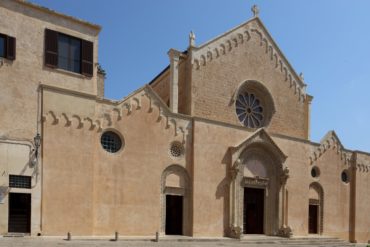
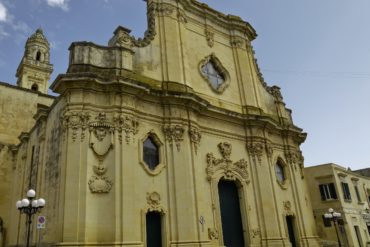
Salento is a land of cultural influences layered over the centuries. In the villages of Grecìa Salentina such as Calimera, Martignano and Soleto, people still speak griko, a dialect of Byzantine Greek origin. In summer the village festivals become a stage for the pizzica, a traditional dance rooted in tarantism. Lecce Baroque decorates churches and palazzi with an ornamental richness unique in Italy, thanks to the soft, easily carved Lecce stone. The atmosphere is warm and convivial, never too polished. In the evening the squares of Leuca, Torre Vado, Gallipoli and Otranto fill with families, groups of friends and international visitors mingling over a warm pasticciotto or a craft beer. Having hosted more than 300 families over five summer seasons, we see that 85% appreciate exactly this social side and how accessible the local culture is.
Sardinia keeps a more reserved and proud identity. Sardinian is spoken every day in many inland villages, with variants that change from area to area. Pastoral traditions are still alive: pecorino cheeses, pane carasau and cork working shape the economy of many communities. The island has developed tourist areas such as the Costa Smeralda, Porto Cervo and Villasimius, alongside corners that mass tourism has not yet reached. The sea is the undisputed star, but the Supramonte, the Gennargentu and the tacchi of Ogliastra reveal a mountainous, wild Sardinia that few people know. In Salento distances are short: in 35-40 minutes you go from the Adriatic to the Ionian, from Torre dell’Orso to Gallipoli, from a cliff to a sandy beach. In Sardinia, getting from Cagliari to the Costa Smeralda takes 3 hours, and from Alghero to Cala Gonone another 2 and a half hours on winding roads.
Where it is and how to reach it
Salento is the peninsula that forms the heel of Italy, set between the Adriatic Sea to the east and the Ionian Sea to the west. It stretches from Brindisi down to Santa Maria di Leuca, the southernmost tip where the two seas meet. Central GPS coordinates: 40.3515° N, 18.1750° E (Lecce-Otranto area). The main airport is Brindisi-Salento (BDS), 5 km from the city, 40 km from Lecce, 65 km from Otranto and 80 km from Gallipoli. In 2026 flights are provided by low-cost and scheduled airlines from all the main Italian and European cities. There is also Bari-Palese airport, larger and with direct international flights, but 150 km from Lecce and 180 km from Gallipoli.
By train, Salento is served by Frecce and Intercity trains: Milan-Lecce in 8 hours with a change in Bologna or Rome, Rome-Lecce in 5 hours direct, Bologna-Lecce in 7 hours. Once in Lecce, regional trains continue to Otranto (50 minutes), Gallipoli (40 minutes) and Santa Maria di Leuca (1 hour 20 minutes). A car is recommended to explore hidden coves and inland villages freely, but the main resorts are served by FSE (Ferrovie del Sud Est) buses.
Sardinia is an island, so you have to take a ferry or a plane. The three main airports are Cagliari-Elmas in the south (39.2515° N, 9.0543° E), Olbia-Costa Smeralda in the north-east (40.8987° N, 9.5176° E) and Alghero-Fertilia in the north-west (40.6321° N, 8.2908° E). There are plenty of summer flights from all the main Italian and European cities. Ferries leave from Civitavecchia (Rome), Genoa, Livorno and Piombino for Olbia, Golfo Aranci, Porto Torres, Arbatax and Cagliari. Crossings take from 4 hours (Piombino-Olbia) to 13 hours (Genoa-Porto Torres), with several operators (Moby, Grimaldi, Tirrenia).
Once on the island, a car is essential. ARST public buses link the towns but do not reach the most beautiful beaches. Scenic roads such as the SS125 Orientale Sarda offer breathtaking views but need careful driving: hairpin bends, ups and downs and average speeds of 50-60 km/h.
Sea and beaches: what really changes
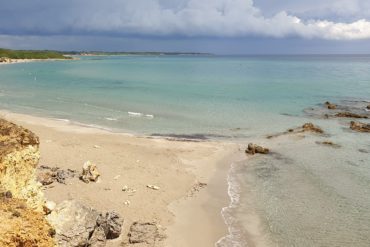
The sea is the main reason people choose either destination, and here the differences are concrete and measurable. Salento offers the rarity of two contrasting seas within a few kilometres: the Adriatic, with cliffs, sea caves and rocky sea beds ideal for snorkelling, and the Ionian, with wide sandy beaches and water that stays shallow for 40-60 metres from the shore. Along the Adriatic coast, from Otranto through Santa Cesarea Terme to Castro and Tricase, the landscape is vertical: white cliffs, natural platforms for diving in, and caves such as the Zinzulusa and the Palombara. The water is crystal clear with cobalt-blue tones, and the rocky bottom is home to sea urchins, octopus and colourful fish.
On the Ionian side, from Torre Lapillo to Porto Cesareo, Punta Prosciutto and Torre Colimena down to Pescoluse and the Maldives of Salento, the sand is very fine and ivory-coloured and the water takes on shades of turquoise and emerald green. The sea stays shallow for dozens of metres, perfect for families with small children. Places such as Baia Verde, Rivabella and Lido Marini have beach clubs alternating with long stretches of free beach reachable straight from the road.
Sardinia has a legendary sea, considered among the most beautiful in the Mediterranean. Its colours range from bright turquoise to deep blue, with shades that change through the day. The iconic beaches are spread all over the island: in the north La Pelosa (Stintino), the Spiaggia Rosa (Budelli, visitable only by sea), Cala Brandinchi and Cala Luna; in the east Cala Goloritzé (reachable by a 1-hour hike or by boat), Cala Mariolu and the natural pools of Baunei; in the south Villasimius, Pula and Chia with dunes of the whitest sand; in the west the beaches of Is Arutas, with quartz grains that look like grains of rice.
Many Sardinian coves can only be reached by sea on dinghy trips, or on demanding hikes down steep paths. That makes them less crowded but also harder to reach than in Salento, where most beaches have parking 50-200 metres away. The Sardinian sea bed tends to drop more quickly: after 10-15 metres you are already out of your depth, something to bear in mind for small children and less confident swimmers.
Beach type table:
| Feature | Adriatic Salento | Ionian Salento | North Sardinia | South Sardinia |
|---|---|---|---|---|
| Beach type | Cliffs, coves | Fine sand | Mix of sand/rock | Very fine sand |
| Sea floor | Rocky, deep | Sandy, shallow | Variable | Sandy |
| Shallow water for children | ⚠️ No | ✅ Yes (50m+) | ⚠️ Variable | ✅ Some are |
| Car access | ✅ Easy | ✅ Very easy | ⚠️ Medium | ✅ Good |
| Free beaches | ✅ Many | ✅ Very many | ⚠️ Few and small | ✅ Some |
| Snorkeling | ✅ Very good | ✅ Excellent | ✅ Excellent | ⚠️ Medium |
Free beaches and services
In Salento more than 60% of the coastline is free beach with no charge. Even in the best-known resorts such as Torre dell’Orso, Baia dei Turchi or Porto Cesareo you will find long stretches without beach clubs. The beach clubs offer full services with loungers, sunshades, showers, bar, restaurant, entertainment and children’s play areas.
In Sardinia free beaches exist but are often reduced to narrow strips at the sides, while the central part is taken up by private concessions. The best-known resorts have beach clubs with full services, while the hidden coves reachable on foot or by boat remain free but you need to bring your own gear (sunshade, cool bag).
Practical tips
The choice between Salento and Sardinia comes down to four deciding factors: who you are travelling with, how many days you have, the kind of experience you are after and the landscapes you prefer. In the data we have collected from 300+ groups we have hosted, 78% of families with children under 6 preferred Ionian Salento for its shallow water and services close at hand. 65% of couples without children chose Sardinia for its seclusion and wild landscapes.
For families with small children (0-6 years): The Salento Ionian coast is objectively better. Beaches such as Punta Prosciutto, Porto Cesareo, Torre Lapillo and Pescoluse have sea beds that stay shallow for 50-80 metres, so children can play safely. The beach clubs offer changing tables, play areas, entertainment and a restaurant, so you don’t have to go back to your accommodation. The short distances make it easy to get back for an afternoon nap. Sardinia has excellent family beaches such as Villasimius, Cala Sinzias and Pula, but they need more planning and the journeys are tiring with small children.
For couples and groups of friends: Both destinations work, but with different atmospheres. Salento offers concentrated nightlife (Gallipoli, Otranto), aperitivos in the piazza, an easy social scene and the chance to mix sea and culture without stress. Sardinia rewards those looking for privacy, deserted coves, hiking and days devoted entirely to the sea. If you love changing scenery every day, Salento is more dynamic. If you prefer to settle in one area and enjoy your surroundings, Sardinia is more immersive.
For travellers over 60: Salento is less tiring thanks to the short journeys and easy access to the beaches. Many coves have wooden walkways and nearby parking. Sardinia calls for more of a spirit of adventure: rough paths, long walks, steps cut into the rock. Some Sardinian resorts solve the mobility problem by offering full services on site.
- 🚗 Car hire: in Salento you can manage without one if you stay in Lecce, Otranto or Gallipoli and use local buses. In Sardinia it is essential, full stop.
- 🏖 Crowds: in Salento the top beaches are packed in August from 10 am to 6 pm, but you only need to go 3 km to find space. In Sardinia iconic coves such as Cala Mariolu are overrun by tourist boats, while others remain secret.
- 🍴 Food break: in Salento, within 500 metres of any beach you will find a bar, a rosticceria or a restaurant. In Sardinia, in remote areas, bring a packed lunch or allow 20-30 minutes by car.
- 🐾 Dog-friendly: both have beaches for dogs. In Salento: Bau Beach (Gallipoli), Lido Zen (Porto Cesareo). In Sardinia: Spiaggia di Rena Majore, Cala Caterina.
Discover the villas and apartments available in Salento for summer 2026, with flexible cancellation up to 30 days before.
When to go and how much time to plan
The best time for Salento runs from mid-May to the end of September. In May and June the water reaches 21-23°C, the beaches are not crowded and conditions are ideal for enjoying the area at a relaxed pace. The villages are pleasant without the summer crush, and you can visit Specchia, Alessano, Otranto and Gallipoli in peace. July and August bring temperatures of 30-35°C, sea at 26-28°C, everything open 24 hours a day and nightlife at its peak, but beaches full from 10 am to 6 pm. September is the golden month: water still warm (24-26°C), fewer tourists, perfect weather for trips inland to Galatina, Nardò, Presicce and the masserie.
In Sardinia the beach season is much the same, but the island has a slightly windier climate thanks to the mistral, the scirocco and the tramontana. This makes summer days more bearable than in Salento during heatwaves, but it can make the sea rough, especially on the west coast (Alghero, Bosa) and the north coast (La Maddalena). May and the first half of June are great for avoiding the crowds, but many beach clubs and restaurants only open in mid-June. September and early October bring still-warm sea (22-24°C) and landscapes less parched than Salento’s, which starts to dry out at the end of September.
Days needed:
- Salento: 5-7 days are enough to see the main coastal resorts and visit Lecce, Otranto and Gallipoli. With 10 days you can also explore the hinterland, masserie and wineries, and go as far as the Gargano or Matera.
- Sardinia: you need at least 10-12 days to enjoy it properly, as journeys around the island are long. With a week you have to pick a single area (north, south, east or west) and give up seeing the rest.
Weekdays vs weekends: In both destinations August sees arrivals concentrated on Saturdays, with queues at motorway toll booths and traffic in the main resorts. In Salento the Ferragosto weekend turns Gallipoli and Otranto into crowded towns, while places like Castro, Tricase and Specchia remain manageable. In Sardinia the impact is better spread because the size of the island disperses the flows. During summer weekends many Italians take short 3-4 day breaks, increasing visitor numbers by 20-30% compared with weekdays.
Weather warning: From mid-July to the end of August Salento can have days with perceived temperatures above 40°C and no wind at all, making it hard to stay on the beach from 12 to 4 pm. Sardinia has lower peaks (32-35°C) thanks to sea breezes, but the mistral can blow hard for days, making the sea unsuitable for swimming on some coasts.


Culture, villages and experiences
Salento is an area where the sea is intertwined with a culture thousands of years old. Lecce, capital of Apulian Baroque, deserves at least a full day: Piazza Duomo with the cathedral and bell tower, the Basilica of Santa Croce with its façade decorated with grotesque masks and fantastic animals, the Roman Amphitheatre in Piazza Sant’Oronzo, and dozens of noble palazzi with flower-filled inner courtyards. In the evening the historic centre comes alive with aperitivos in the historic cafés and live music.
Otranto has its Aragonese castle, the cathedral with its 12th-century floor mosaic depicting the Tree of Life, and the historic centre perched above the harbour. Boat trips to the sea caves leave from here. Gallipoli has a historic centre on an island joined by a 17th-century bridge, a fish market every morning from 7 am to noon, and a wall running round its edge. Castro, Tricase and Santa Cesarea Terme are smaller towns with castles, churches and panoramic viewpoints. Inland, Galatina has the Basilica of Santa Caterina d’Alessandria with Giotto-school frescoes, Nardò has a perfect Baroque square, and Specchia is listed among the Most Beautiful Villages in Italy (Borghi più belli d’Italia).
Salento’s historic masserie, old fortified farms, are now agriturismi, boutique hotels or event venues. Many offer tastings of extra virgin olive oil and Primitivo and Negroamaro wines, visits to underground olive mills and cooking classes for handmade orecchiette. The wineries of Guagnano, Copertino, Leverano and Salice Salentino run tours with tastings.
Sardinia has an archaeological heritage unique in Europe: the nuraghi, tower-shaped megalithic buildings from the Bronze Age (1800-500 BC). The most important site is Su Nuraxi di Barumini, a UNESCO World Heritage Site, where a guided tour is compulsory. Other nuraghi you can visit are Losa, Santu Antine and Palmavera. The giants’ tombs, sacred wells and nuragic villages complete the picture of an advanced civilisation that is still partly mysterious.
The main cities are Cagliari, with the Castello quarter, the Pisan towers, the Bastione di Saint Remy and the San Benedetto market; Alghero, with its Catalan old town, sea walls and Neptune’s Grotto reachable by sea; and Sassari inland, with the Museo Nazionale Sanna. Inland villages such as Orgosolo are famous for murals that tell the island’s social and political history. Craft traditions include rug weaving, Alghero coral, Pattada knives and woven baskets.
Local food:
- Salento: orecchiette with turnip tops, pasticciotto leccese, rustico leccese, puccia, riso patate e cozze (rice, potatoes and mussels), polpo alla pignata, ciceri e tria, frisella with tomato.
- Sardinia: fregola with clams, culurgiones (stuffed ravioli), porceddu (roast suckling pig), mullet bottarga, pane carasau, seadas (fried pastry with honey), Cannonau and Vermentino wines.
Local tip
If you choose Salento, try this mini-experience that 90% of tourists miss: get up at 6:30 am at least once and go to one of the iconic beaches you would normally avoid because they are too crowded. Punta Prosciutto, Baia dei Turchi and Porto Cesareo are deserted at 7 am, the water is a crystal-clear mirror without waves, the low light creates incredible colours and you can swim as the sun rises behind the dunes. Afterwards, stop at a village pastry shop (Galatina has the best) for a warm pasticciotto fresh from the oven and a caffè in ghiaccio with almond milk. By 9 am you will be back at your accommodation while everyone else is just waking up, but you will have experienced the most authentic Salento.
In Sardinia the advice is the opposite: spend at least one whole afternoon getting lost inland, away from the coast. Leave Villasimius, Chia or the Costa Smeralda and drive towards the Supramonte, Orgosolo or the villages of the Gennargentu. Stop at a sheepfold if you find one with a “Vendita formaggi” (cheese for sale) sign, taste pecorino of different ages and homemade pane carasau. Or sit down in a village trattoria where there is no menu and the signora brings you whatever she has cooked. That quiet, pastoral Sardinia, with murals telling of struggles and traditions, is the true soul of the island that never makes it onto glossy Instagram photos.
FAQ
Is the sea in Salento really comparable to Sardinia’s? Yes, Salento’s sea has clarity, colours and cleanliness comparable to many Sardinian beaches. The main difference is the surrounding landscape: Sardinia has granite coasts, narrow coves between rocks and lower Mediterranean scrub; Salento alternates vertical white cliffs on the Adriatic with wide sandy stretches on the Ionian, with dunes and thick scrub. Both offer turquoise and deep-blue tones, but the atmosphere is different.
Which to choose with children under 5? Ionian Salento (Torre Pali, Torre Vado, Pescoluse) is objectively better: water that stays shallow for 50-80 metres, soft sand, beach clubs with full services 100 metres from the car park. Sardinia has excellent family beaches, but the sea bed drops sooner and getting around with small children is more tiring.
Is it better to avoid August in both? It depends. If you can choose, June and September offer warm sea and fewer crowds. But August has the advantage that everything is open, there are events every evening and social life is at its peak. In Salento the top beaches are very busy from 10 am to 6 pm; in Sardinia some coves stay quiet, but the iconic ones fill up with tourist boats.
Which has the better food? Both are excellent but very different. Salento has intense Mediterranean flavours with Greek influences (pittule, friselle), revisited peasant cooking and Baroque pastries. Sardinia has a strong pastoral tradition with pecorino cheeses, roast suckling pig, fregola and bottarga. It is a matter of taste: if you love pasta, vegetables and fish, go for Salento; if you prefer meat, cheese and rustic flavours, choose Sardinia.
Can you combine both in one trip? Technically yes, but it is scattered. You would fly to Brindisi, spend 4-5 days in Salento, fly from Brindisi to Olbia/Cagliari, then spend another 5-6 days in Sardinia. It is better to give 10-12 days to a single destination and come back the following year for the other.
Conclusion
Salento and Sardinia are both top-quality destinations for a seaside holiday in Italy, but they appeal to travellers with different expectations. Salento is the smart choice if you are looking for cultural authenticity and a variety of experiences between crystal-clear sea and Baroque villages, without long journeys. It is a social, convivial holiday, where local culture is as much a part of everyday life as the sea. In a week you get a complete experience with nothing missed, alternating beach days with visits to Specchia, Leuca, Otranto and Gallipoli, winery tastings and evenings of pizzica in a masseria.
Sardinia is the destination for those chasing postcard landscapes, coves reachable only by sea or on foot, and wild nature, and who want to take time to explore. It is a more intimate holiday with the sea, where the sea becomes the undisputed star and everything else takes second place. It needs at least 10-12 days to enjoy without rushing, since journeys between Cagliari, Olbia, Alghero and the coasts in between take up hours of driving on scenic but slow roads.
Who should choose Salento:
- Families with small children looking for shallow water and services nearby
- Couples who don’t want to give up a variety of experiences
- Culture lovers who like to mix sea and art
- Anyone with 5-7 days who wants to see a lot without stress
- Lovers of nightlife and Mediterranean conviviality
Who should choose Sardinia:
- Couples without children with a spirit of adventure
- Lovers of hiking, kayaking and boat trips
- Anyone looking for seclusion, privacy and unspoilt nature
- Travellers with 10-14 days available
- Nature photography enthusiasts and lovers of dramatic landscapes
The best time to plan is between February and April 2026, when there is plenty of availability. Book at least 3-4 months ahead for July and August, especially in Sardinia, where the best places sell out fast. If your dates are flexible, choose June or September: you will have a better experience with fewer crowds.
And if you are still unsure, ask yourself this: do you want to wake up in a masseria among ancient olive trees, have breakfast with a view of the Adriatic 8 km away, visit a Baroque village in the afternoon and have dinner in a trattoria where the nonna tells you the story of the dish? Or would you rather have a villa overlooking a cove reachable only by sea, whole days devoted to the sun and crystal-clear water, and silence broken only by the wind and the waves? The answer will tell you exactly where to book.
Discover the available accommodations with Salento Prime. To best organize your base and transfers, contact us here or start a chat on WHATSAPP.