Working remotely in Salento (in Puglia) means setting up a routine that combines remote work, breaks by the sea, and variety between the Ionian and Adriatic coasts, choosing a base between Lido Marini and Leuca (Torre Pali, Pescoluse, Torre Vado, Felloniche) to maintain stability, budget, and focus.
Working remotely in Salento, Puglia: routine, bases, and mild winters
TL;DR: In Salento you can work remotely at a more sustainable pace, especially in the low season. Choose a base suitable for calls, check the Wi-Fi, set up a simple routine, and use the sea and villages as short breaks, not as “endless trips.”
Featured snippet: Working remotely in Salento is a practical workation: with a well-chosen base, reliable internet connection, and light travel, you can maintain productivity and quality of life, especially between November and March when the atmosphere is calmer and time works in your favor.
Salento is not just a place to “switch off,” but a territory where the workweek can become more fluid. If you set a few right choices, the day flows with well-structured calls, short breaks that recharge you, and returns without the usual sense of rushing.
In this article you will find a complete experience, designed for Italians and internationals: real atmosphere, how to get there, what to do between one focus block and the next, a checklist for choosing accommodation, and how to get around without wasting time.
The point is not to fill your days, but to make them sustainable: a comfortable base, a simple routine, and micro-explorations that do not sabotage productivity.
Table of contents
Curiosities and atmosphere
Compared to many louder “workation” destinations, Salento allows you to build a more linear week, with timing that does not force you to rush. It is ideal for those who work in blocks and want to protect their focus hours, because breaks can stay short and still be satisfying.
Upon arrival, what really changes is the rhythm: full light in the morning, silence that is easier to find in the off-season, and a social life that switches on when you want it to, not when you are “supposed to.” If you wonder how livable it is while working, the answer is simple: with a well-chosen base, even an ordinary day feels lighter.
Salento vs other European destinations
You stay in the CET/CEST time zone, still in Europe, and often avoid the island effect: limited availability and rising prices. In Lower Salento you can switch coasts and return quickly, useful for remote work with fixed calls.
Spain: Mallorca and Ibiza (Balearic Islands)
Mallorca and Ibiza: similar sea, but in summer high demand and little quiet. In Ibiza, a study on summer tourist rental prices indicated it as the most expensive destination in Spain in that segment. In Mallorca, Reuters describes a housing crisis linked to tourism and rising rents, a sign of pressure on accommodation.
Greece: Santorini and Mykonos (Cyclades)
Santorini and Mykonos: top-quality water, but overtourism and extra costs. In Greece, increases in taxes on tourist accommodations have been approved, with higher levies for Santorini and Mykonos in peak season. For remote work, the budget becomes more variable.
Portugal: Lisbon and Madeira
Lisbon is convenient for coworking but has high rents. Madeira offers nature, but it is still an island and availability can tighten during peak periods. Salento is less urban, but often easier for routines between the sea and villages.
| Destination | Strengths | Friction points for remote work | Salento alternative |
|---|---|---|---|
| Mallorca/Ibiza | sea, services | noise + costs | 5 destinations nearby by car |
| Santorini/Mykonos | scenery | overwhelm + unexpected expenses | similar sea, less logistics |
| Lisbona/Madeira | coworking | rentals and distances | sea routine + villages |
Where it is and how to get there
Compared to destinations that require long and complicated transfers, Salento is easy to manage even for stays of one or two weeks, if you plan the journey with few changes. It is perfect for those who want to arrive, settle in, and start working right away, without losing days to logistics.
In practice, you can combine flights and transfers, trains and rental cars, or arrive by car, depending on your departure point and schedules. If you have frequent calls, prioritize options that reduce connections and include some buffer time, because delays weigh more than distance. Once in the area, choosing a base that is “central for you” makes all the difference: close to services if you want to move around less, or more secluded if you are looking for silence => Our properties for mid-term rentals.
Why the Lido Marini → Leuca stretch works
This stretch is like a board of choices: you don’t have to repeat the same route every day or overthink where to go. It is a line of complementary places: wide sandy beaches, shallow water, low rocks, ports, a lighthouse, and villages. You can shape your day based on your “energy level”: if you have demanding calls, you can choose quiet areas like Torre Pali or Pescoluse; if you need to decompress after a presentation, Leuca and the lighthouse give you a different kind of ending.
The nice thing is that these places don’t compete: they cooperate with your pace. Lido Marini and Pescoluse are the “soft entry” of the day; Torre Vado is the easy return; Leuca is the aesthetics, the photo, the sunset. This way remote working doesn’t become a compromise: it is a system of daily micro-choices that makes everything sustainable. If you are a digital nomad, having five scenarios so close avoids changing house every three days: you stay anchored, but you don’t feel stuck.
- Lido Marini: smooth access to the sea, straightforward movements.
- Torre Pali: sand + low rocks, perfect for quick breaks.
- Pescoluse: clear and wide waters, a “soft break” after a call.
- Torre Vado: services, small harbor, and easy returns.
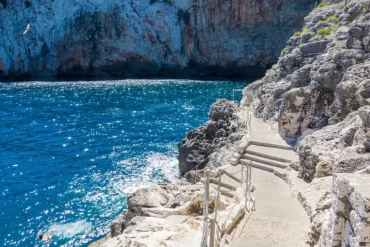
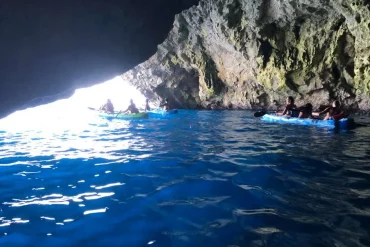
- Leuca: lighthouse, cliffs, caves, photogenic sunsets to decompress.
Remote work checklist
Productivity here doesn’t depend only on Wi-Fi: it depends on how you set yourself up in the first 24 hours. Here is the checklist to do right away, even before unpacking your bags.
Setup Day (arrival):
Controlla scrivania e sedia: se non sono ideali, chiedi al referente o spostale in una stanza con luce frontale;
Testa il Wi-Fi in due orari: subito e in fascia serale; se hai riunioni importanti, individua la stanza più silenziosa;
Fai un “giro perimetrale”: quali bar/negozi sono raggiungibili a piedi per emergenze alimentari o acqua;
Salva su Maps 2 spot mare e 1 borgo: diventa il tuo “piano B” quando il meteo cambia.
Routine:
Morning: tasks that require concentration;
Late morning/early afternoon: calls and follow-ups;
Late afternoon: sea or walk;
Evening: village or port, early return.
Contact us for more information on the available properties in the area.
What to do and see nearby (in 60–90 minutes)
Compared to a large city where you end up stuck in traffic and queues, here you can fit in real breaks between work activities with short, predictable trips. It is a smart choice if you want to “see something” without turning every day into an itinerary that drains your energy.
Between one call and the next, micro-windows work well: a walk through Lecce’s historic center at the end of the day, a seaside stroll toward Otranto, or a photo stop in Santa Maria di Leuca, always with an easy return and without chasing too many stops. If you prefer a more relaxed pace, villages like Specchia or Presicce-Acquarica are well suited to a slow, compact break. The practical rule is to choose just one outing per day, so work stays at the center and the territory becomes a recharge, not a distraction.
This is not a tourist list: it is a menu for those who work. 1 activity per day, short, beautiful, restorative. The trick is to leave the house by 18:30 and return no later than 20:30.
Lido Marini: smooth, sandy, shallow water; perfect when you feel drained.
Torre Pali: low rocks and little confusion; ideal for “unplugging” after heavy calls.
Pescoluse: soft light and clear water; great for rebalancing your mind after mental tasks.
Torre Vado: easy return, ice cream or walk; effortless reset.
Santa Maria di Leuca: cliffs, lighthouse, and sunset; cinematic closure without losing productivity the next day.
@livebyalexa Obsessed with Italy 😍 #remotework #traveltiktok #italy #ostuni #fy #fyp ♬ original sound - anna ❤︎
Practical tips
Compared to improvising and “hoping for Wi-Fi,” in Salento it pays to be methodical: a few checks beforehand, and then the week flows. If you work on video calls, the priority is a stable setup: natural light, a door that closes well, and a desk that does not force uncomfortable posture.
Second point: internet and a Plan B, because stability matters more than peak speed and some areas change during peak hours. Third: light mobility, meaning choosing a base with nearby services and moving only when necessary, avoiding wasting energy on travel. If you are traveling as a couple or with family, separating workspaces even in simple ways reduces friction and makes the days more serene.
This is the routine we see working best for those staying 7-14 days.
Morning (06:30–09:00)
Gentle wake-up, open window, water and natural light;
Main task before messages;
Low music, headphones if needed.
Midday (09:00–14:00)
Call + follow-up, no trips;
Light snack and water: no heavy lunch, otherwise energy crash.
Afternoon (14:00–18:00)
Repetitive or operational tasks;
Short break every 50 minutes;
Decide whether you want sea or a walk before “time slips away”.
Evening (18:30–21:00)
Pescoluse if you want sweetness; Torre Pali if you need calm;
Leuca if you want a “postcard effect” and a mental reset;
Return by 21:00 = you work well tomorrow.
Accommodation checklist for smart working
Before booking, ask for concrete details rather than generic ones: where the router is located, which room you will work in, and whether the door provides good sound isolation. Check that there is a comfortable chair or the possibility to work ergonomically, because after a few days the difference is noticeable.
Make sure you have a Plan B for the connection (hotspot or a dedicated SIM) and a simple solution for power and cables. Finally, clarify the schedule that works best for you: if you have morning calls, a home with predictable noise levels and closable spaces is better.
- 🚗 parking: move during off-peak hours and save an alternative in case your first option falls through
- 🍴 food break: choose simple, quick lunches so your afternoon stays clear
- 🏖 beach spot/best area: use a convenient spot for frequent breaks, not the most famous one
- ♿ accessibility: if you have specific needs, check in advance because it varies a lot from area to area
@isaasevilla Remote working internationally requires a lot of flexibility from both parties! I’m so lucky my company let me do this and it’s been a great experience so far ☺️ #movingabroad #movingtoitaly #digitalnomadvisa #remotework ♬ Reverse Clock - yutaka hirasaka
When to go and how much time to plan
Compared to the peak season months, between November and March Salento is more predictable and often better suited to working well, because the environment is less crowded and time feels more flexible. If you are wondering what climate to expect in the off season, during the central hours it is common to find temperatures between 12 and 20 degrees, with cooler mornings and evenings and more wind along the coast.
This makes outdoor breaks ideal: you walk, breathe, and return without feeling drained by the heat, especially on weekdays. To truly test the routine, a stay of 7–14 days is often enough to understand connectivity, noise, and habits, while with 2–4 weeks you start living the workation more naturally. The difference between weekdays and weekends remains, but at this time of year it is easier to plan without stress.
Surroundings and extra ideas
Compared to taking long trips that break up the week, here it is better to choose two extra ideas that fit well within a workday. If you want an “urban” but manageable outing, Lecce offers a compact, scenic center that is perfect for an evening walk or a slow lunch once your calls are done.
If you prefer the sea as a mental recharge, areas like Porto Cesareo or the coast toward Torre dell’Orso can become short, repeatable breaks, without having to build a full plan each time. The goal is simple: return to work with more energy than you had before going out.
Local tip
Compared to chasing famous spots at the worst times, the most effective solution is to create a repeatable micro-ritual, so the week organizes itself. A sequence that works well is: two hours of focus as soon as you start the day, then a short break always in the same place, and back for calls when your mind is already “warm.”
Between November and March, with 12–20 degrees during the central hours, even 20–40 minutes in the sun are a perfect break: they reactivate you without stealing time. If you want to end the day without stress, leave the longer outing to just one day of the week and keep the other days more stable.
@fontananicolas_ Lavorando da remoto, va decisamente meglio qui. #smartworking #puglia #mare #estate2025 ♬ Sundays - Ryan Harris
@fontananicolas_ A volte mi chiedono perché ho scelto di fare il freelance da remoto. La verità? Non l’ho fatto per diventare ricco di soldi. L’ho fatto per essere libero. Libero di scegliere quando lavorare, da dove farlo, e come organizzare le mie giornate senza dover chiedere permesso a nessuno. Perché alla fine il vero lusso non è il conto in banca, è il tempo. Il tempo di vivere, di creare, di muoverti, di prenderti una pausa quando ne hai bisogno e di spingere forte quando senti l’energia. Fare il freelance da remoto non è facile, non è perfetto, e non è per tutti. Ma se lo scegli davvero, lo fai per una ragione semplice: la libertà. E la libertà, almeno per me, vale più di qualsiasi stipendio fisso. #smartworking #remoteworking #liberta ♬ suono originale - Nicolas | iltuosmartworking
FAQ
Is it really a good idea to work remotely in Salento during winter?
Yes, especially if you want tranquility and more regular rhythms. Between November and March the atmosphere is calmer and during the central hours you often find 12–20 degrees, so you can take outdoor breaks without the summer heat. You just need a well-organized base for calls and a stable connection, plus a Plan B.
Which areas are best suited for smart working?
It depends on what you prioritize: nearby services, quiet, or the sea. A practical setup is to use Lecce if you want urban life and convenience, choose villages like Specchia or Presicce-Acquarica if you are looking for peace, and opt for the coast (Leuca, Torre Vado, Pescoluse) if you want quick sea breaks. The ideal base minimizes daily travel.
Do you really need a car?
Not always, but it helps if you want to alternate between villages and the coast frequently. If you prefer a linear week, you can choose a walkable base and move only on certain days, planning outings during times without calls. A car becomes important when you want to change scenery often or if you are traveling in the off season with more limited schedules.
How long should I stay to really “feel” the workation?
To test your routine and connection, 7–14 days are often a good starting point. If you want to settle into the rhythm and stop thinking about logistics, 2–4 weeks allow you to stabilize habits and reduce daily decisions. The difference depends on how much you will work on video calls and how much you plan to move around.
What do I need in the house to work well?
A workspace with good light, a comfortable chair, a door that closes well, and a stable desk makes more difference than any aesthetic detail. You also need a power strip and simple cable management, plus a Plan B for internet. If you are traveling as a couple, the ability to separate spaces helps avoid noise and micro-stress.
Conclusion
Working remotely in Salento can become a concrete choice if you want a more sustainable rhythm without giving up quality free time. The key is to design the week as a simple system: a base suitable for calls, a verified connection with a Plan B, and a way of moving around that does not drain your energy. It is an ideal experience for those who work in blocks, for those seeking tranquility without isolation, and for those who want to turn breaks into real recharges, not distractions.
Between November and March, the advantage increases: during the central hours you often find 12–20 degrees, so you can take short walks, breathe in the sea air, and return clear-headed, while the environment remains more orderly and predictable than in the peak season. If you organize yourself with repeatable micro-rituals and a few selected outings, work stays at the center and the territory becomes an ally.
If you are considering a solution with spaces suitable for smart working, take a look at /ville/ to see which setups best fit your calls and your routine.