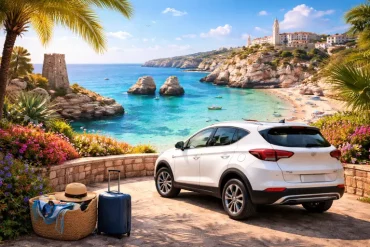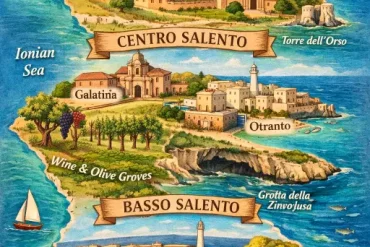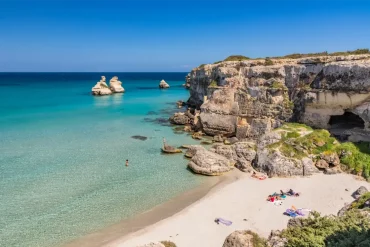
The Maldives of Salento offer Caribbean-style beaches just 2 hours from Rome, with turquoise waters and white sand. The real Maldives require 12+ hours of flight time and a budget ten times higher. This guide compares atmosphere, costs, and logistics, and helps you choose based on your time, budget, and preferred type of vacation.
Maldives vs Salento Maldives: what really changes
TL;DR: Two photos may look identical, but the holiday changes a lot when distances, rules, and freedom of movement matter. In this guide you will find a practical comparison between the Maldives and the “Salento Maldives”, with a focus on sea, indicative costs, culture, and timing. The goal is to help you choose the right destination for you, even before booking.
Featured snippet: The Maldives of Salento are coastal stretches between Pescoluse and Torre Lapillo (southern Puglia, Italy) with very fine sand and turquoise water, reachable by car from all over Italy. The Maldives in the Indian Ocean are coral atolls a 12-hour flight from Europe, featuring overwater resorts and a tropical climate year-round.
Two images may look the same, but the trip changes as soon as timing, transfers, and life beyond the beach come into play. Here you will find a concrete comparison between the Maldives and the Salento Maldives: sea and beaches, daily pace, culture, indicative costs, and what to expect upon arrival.
The goal is to help you choose thoughtfully, especially if you have limited days or a budget to optimize, without giving up a premium experience that is easy to enjoy.
Curiosities and atmosphere
The Maldives of Salento take their name from local fishermen who, in the 1980s, noticed the resemblance between the sea of Pescoluse and Caribbean postcards, according to the Salento Hoteliers Association. The sandy seabed that slopes gently for about 80 to 100 meters, the clarity of the water, and that almost unreal shade of turquoise have always evoked the tropics more than the Mediterranean. The atmosphere here is family-oriented and Mediterranean, made up of sunset aperitifs in beach bars, children playing at the shoreline, and groups of friends gathered under beach umbrellas. In the evening, the pace slows down, people head to nearby villages for a dinner of fresh seafood, and stroll through white alleyways lit by street lamps scented with jasmine.
The real Maldives are another planet. Arriving by seaplane at an isolated resort, surrounded only by the ocean, gives a feeling of complete detachment from the world. The atmosphere is rarefied, almost surreal: palm trees, overwater bungalows, silence broken only by the waves. Everything here is curated, flawless, designed for total immersion in relaxation. There are no squares, markets, or roads. Each resort is a self-contained microcosm. The rhythm is set by the tides, by meal times served on the edge of the ocean, and by boat excursions booked through the concierge.
Where it is and how to reach it
The Maldives of Salento are located on the Ionian coast of southern Puglia, between Gallipoli and Santa Maria di Leuca. Pescoluse (coordinates: 39.8538°N, 18.1513°E), Torre Lapillo (40.2645°N, 17.8442°E), and Punta Prosciutto (40.3789°N, 17.8156°E) are hamlets of municipalities such as Salve, Porto Cesareo, and Nardò. Distances are manageable: from Lecce you arrive in 45 to 60 minutes by car, from Brindisi in 90 minutes, from Bari in about two and a half hours. If you are coming from Rome, Milan, or Naples, driving is the most flexible option. Brindisi Salento Airport (BDS) receives low-cost flights from all over Europe with airlines such as Ryanair, easyJet, and Wizz Air; from there you can rent a car and explore freely. By train, you can reach Lecce and continue with local buses (STP Lecce lines) or private transfers, but public connections are not very frequent in the low season.
The Maldives are an archipelago of 26 atolls in the Indian Ocean, about 700 km southwest of Sri Lanka (central coordinates: 3.2028°N, 73.2207°E). The only way to get there is by plane: from Rome Fiumicino it takes 11 to 14 hours with one stop, often in Doha (Qatar Airways), Dubai (Emirates), or Istanbul (Turkish Airlines). From Velana International Airport in Malé, you reach your resort by speedboat (30 to 90 minutes, average cost €150 to €300 one way) or by Trans Maldivian Airways seaplane (20 to 40 minutes, average cost €350 to €600 one way, according to TripAdvisor 2024 data). There is no possibility of moving around independently: each resort is its own island, and visiting other atolls requires organized excursions.
What to do and what to see
If you want a beautiful sea without having to rely every day on organized excursions, Salento offers immediate variety compared to the Maldives. In the Maldives, the main highlight is the coral reef: snorkeling and diving with tropical marine life, and often few alternatives outside the island if you stay on a resort-based plan.
In Salento: sea, culture, and food and wine
In Salento, the sea is only the beginning. You can alternate mornings at the beach with visits to white inland villages, tastings in historic wineries, and strolls through Baroque town centers. Here are the 10 must-see highlights:
Pescoluse and Torre Vado
Very fine white sand, shallow seabeds ideal for families with young children, beach clubs with full services (sunbeds €15–25 per day), and wide stretches of free beach. The seabed slopes gently for about 80 meters, allowing you to walk in the water without losing your footing.
Punta Prosciutto
Crystal-clear turquoise water, sand dunes protected by the Puglia Region, and a wild atmosphere with fewer services but maximum authenticity. It is best to arrive by 9:00 am in July and August to find space in the unguarded parking areas (free but limited).
Torre Lapillo e Porto Cesareo
Spiagge attrezzate con lidi moderni, centro abitato a 500 metri con supermercati e farmacie, possibilità di escursioni in barca verso l’Area Marina Protetta di Porto Cesareo (costo medio 35-50€ per tour di 3 ore, secondo tariffario 2024).
Gallipoli historic center
A fortified town on an island connected by a 17th-century bridge, a morning fish market (open from 6:00 am to 1:00 pm), lively nightlife concentrated along Riviera Armando Diaz, and seafront restaurants specializing in raw seafood (average budget €35–50 per person).
Santa Maria di Leuca
The geographic meeting point between the Adriatic Sea and the Ionian Sea, with a monumental lighthouse open to visitors (entrance €3), Liberty-style villas built between the late 19th and early 20th centuries, and sea caves reachable by boat with organized tours (€25–40, 2 hours).
Otranto
11th-century Norman cathedral with a floor mosaic depicting the Tree of Life (free entry), the Aragonese castle with temporary exhibitions (€6), and a medieval seaside town with artisan workshops.
Lecce: the Florence of the South
Located 50 km from the beaches, it is considered the capital of Apulian Baroque. Basilica of Santa Croce, Piazza del Duomo, the Roman Amphitheatre, and traditional papier-mâché workshops. Day budget: €15 for entrance fees + €30–40 for lunch + €8–12 at a historic pastry shop (pasticciotto leccese).
Wineries and tastings
Guided visits through Primitivo di Manduria DOCG and Negroamaro IGP Salento vineyards, extra virgin olive oil tastings of DOP Terra d’Otranto, and traditional lunches in fortified masserie. Average cost: €25–45 for a wine tasting, €50–80 for a full lunch (Movimento Turismo del Vino Puglia 2024 data).
Coastal caves and marine speleology
Boat excursions to Grotta della Poesia (a natural pool carved into karst rock, free entry), Grotta Zinzulusa in Castro (guided visit €12, 30 minutes), and Grotta Verde with underwater light effects. Organized tours cost €30 to €50 for 2 to 3 hours.
Educational masserie and rural experiences
Traditional cooking classes (handmade orecchiette, focaccia barese), olive harvesting in October–November, visits to underground olive oil mills carved into tuff rock. Cooking class: €60–90 per person for 3 hours with lunch included.
From the Maldives: limited but authentic exploration
In the Maldives, the offering is focused on the sea, relaxation, and tropical nature. Resorts organize everything internally with five-star standards:
PADI-certified snorkeling and diving
Coral reefs located 10 to 50 meters from the shore with over 200 catalogued species of tropical fish, giant manta rays (wingspan up to 7 meters), harmless white-tip reef sharks, and green and hawksbill turtles. Dive cost: €80–150 for a single dive, €400–600 for a 5-dive package with a certified instructor.
Excursions on traditional dhoni boats
Desert islands reachable in 20 to 40 minutes, picnics on sandbanks that emerge at low tide, and sunset cruises with Dom Pérignon champagne. Average cost: €150–300 for a private couple’s tour, €80–120 for a group tour (6–12 people).
Tropical spa and wellness
Wellness centers floating on stilts, Balinese and Ayurvedic massages (90 minutes, €180–280), rituals with local essential oils, and facial treatments with marine algae. Five-star plus resorts often include one or two treatments in their all-inclusive packages.
Motorized and non-motorized water sports
Transparent kayaking to observe the seabed, stand-up paddleboarding, windsurfing with an instructor, kitesurfing in exposed atolls such as Laamu and Gaafu Dhaalu (lessons €100–150 per hour), jet skiing (€80–120 for 30 minutes), and parasailing (€150–200).
Exclusive dining experiences
Private dinners by the ocean with a table for two on the sand, a private chef preparing personalized menus, and dedicated butler service. Cost: €300–800 for a complete romantic dinner with champagne and a live musician.
Authentic Maldivian culture
Guided visits to Malé (the capital with 150,000 inhabitants): the Friday Mosque built in 1656, the local fish market open from 4:00 pm to 8:00 pm, and the National Museum with pre-Islamic Buddhist artifacts. Half-day tour: €60–100 with an Italian-speaking guide.
Seasonal wildlife watching
Snorkeling with whale sharks (May–November, 70% guaranteed sightings according to Maldives Whale Shark Research Programme statistics), diving with giant manta rays (December–April in the Baa and Addu atolls), and sunset dolphin watching (80–90% sighting probability).
Unique nighttime experiences
Bioluminescent snorkeling with plankton that lights up when disturbed (a phenomenon visible from July to February), stargazing and Milky Way observation with no light pollution, and open-air beach cinema with screenings on a floating screen.
Practical tips
Planning the perfect day in Salento
In Salento, flexibility is your best ally. Aim to reach the beaches by 9:00 to 9:30 am in July and August: after 10:00 am, free parking within 300 meters of the shore fills up completely, and you may have to walk 15 to 20 minutes in the sun. Bring your own beach umbrella, water (at least 2 liters per person), and snacks if you choose free beaches, or book sunbeds at beach clubs by phone or app to enjoy hot showers, bars with WiFi, and on-site restaurants. An easterly wind (Scirocco) brings humidity and makes the Ionian Sea murkier, while a northwesterly wind (Maestrale) makes it crystal clear but cooler. Check WindGuru or iLMeteo.it the day before to choose the right coast. In the evening, avoid leaving valuables visible in your car in isolated parking areas: according to data from the Salve Local Police, car break-ins account for 3 to 5 percent of summer crimes, mainly concentrated in unmonitored areas after sunset.
Maximizing luxury in the Maldives
In the Maldives, everything is organized by the resort. Book excursions, spa treatments, and à la carte restaurants within 24 hours of arrival, as availability fills up quickly, especially during high season (December to March). Bring reef-safe sunscreen with mineral filters (chemical filters damage coral and have been banned in many atolls since 2023), personal medications with prescriptions translated into English (local pharmacies have limited supplies), natural mosquito repellent, and light but modest clothing to respect local customs outside the resorts (shoulders and knees covered in inhabited villages). Internal transfers between atolls are expensive: if you visit multiple islands, budget at least €250 to €500 extra per person for speedboats or seaplanes. Bottled water costs €8 to €15 at resorts; most provide free reusable bottles and refill stations with filtered desalinated water.
🚗 Salento parking: look for free white-line parking in nearby towns (Salve, Torre Vado center), then walk 10 to 12 minutes. Paid guarded parking costs €5 to €8 per day.
🐾 Dog-friendly: Salento allows dogs on free beaches in May–June and September (not July–August); the Maldives prohibit pets in about 95% of resorts.
🏖 Best sea spot: Salento, southern side of Pescoluse for sand and shallow seabeds; Maldives, inner lagoon side for snorkeling and water clarity.
🍴 Food breaks: Salento has bars and restaurants every 400 to 600 meters along the coast; in the Maldives, only resort restaurants are available, included in all-inclusive plans or à la carte with a €40 to €80 surcharge.
When to go and how much time to plan
Salento: an extended Mediterranean summer
Salento offers its best from June to September. July and August are the hottest and most crowded months: temperatures reach 30–35°C (with peaks up to 38–40°C during heatwaves), the Ionian Sea is consistently calm with water temperatures of 26–28°C, parking queues build up after 10:00 am, and prices are at their seasonal peak (villas +40–60% compared to low season). June and September offer the same turquoise sea, with air temperatures of 25–29°C and water at 23–26°C, 40–50% fewer visitors, and rates reduced by 30–40% according to Federalberghi Lecce data. May and October are ideal if you want to combine beach time and culture: the sea is still swimmable (20–23°C), villages are enjoyable without tourist crowds, and you can dine outdoors without sweating (evening temperatures 18–22°C). On summer weekends, the most popular beaches (Pescoluse, Punta Prosciutto, Torre Lapillo) reach saturation with over 8,000 visitors per day. If possible, plan your beach days on weekdays from Tuesday to Thursday. To truly enjoy Salento, allow at least 5 to 7 days: enough time to explore 4 to 5 different beaches, visit 2 to 3 historic towns, take a boat trip to the sea caves, and relax at an unhurried pace.
Maldives: stable tropics all year round
The Maldives enjoy a stable equatorial tropical climate all year round, with constant temperatures of 28–32°C and humidity levels between 70 and 85%. The dry season runs from November to April, with clear skies 85–90% of the time, calm seas ideal for snorkeling, relatively tolerable humidity (70–75%), and light northeasterly winds. This is the most expensive and in-demand period, especially December–January (Christmas holidays, +60–80% on prices) and Easter (+40–50%). From May to October, the southwest monsoon arrives: short but intense rain showers (average 150–200 mm per month), rougher seas on west-facing atolls, and higher humidity (80–90%), but prices are 25–35% lower and resorts are less crowded. Many luxury resorts close in September–October for annual renovations, so availability should be checked well in advance. For a stay in the Maldives, plan at least 7 to 10 days. The journey is long and tiring (11–14 hours of flight plus transfers), and it takes 2–3 days to overcome the 3–4 hour jet lag and adapt to the tropical rhythm. If you have fewer than 6 days in total, the cost-benefit ratio likely does not justify an intercontinental trip.
Surroundings and extra ideas
From Salento: UNESCO experiences and authentic villages
Matera – European Capital of Culture 2019
90 km from Lecce (1 hour 15 minutes by car). The Sassi, a UNESCO World Heritage Site since 1993, rock churches carved into tuff between the 8th and 13th centuries, Michelin-starred restaurants (Vitantonio Lombardo, 1 star, tasting menu €90–130), and charming hotels set in ancient caves (Casa di Lucio, Le Grotte della Civita, from €120 per night). Guided Sassi tour: €15–25 for 2 hours. An overnight stay is recommended to experience the evening atmosphere.
Alberobello – The iconic trulli of Puglia
100 km from Lecce (1 hour 20 minutes). Over 1,500 trulli listed as a UNESCO World Heritage Site, mainly concentrated in the Rione Monti and Aia Piccola districts. Wine tastings in cellars beneath the trulli (Cantina Albea, €20 for 5 local wines plus taralli), traditional ceramic handicrafts, and the Trullo Sovrano, the only two-story trullo (entrance €1.50). A half-day visit is sufficient, or you can stay overnight in a converted trullo (€80–150 per night).
Polignano a Mare – The pearl of the Adriatic
120 km from Lecce (1 hour 30 minutes). A village perched on limestone cliffs up to 20 meters high, Grotta Palazzese with a Michelin-starred restaurant carved into the rock (tasting menu €180–250), a pedestrian historic center with flower-filled balconies, and stand-up paddle excursions among sea caves (€25–35 for 2 hours). Lama Monachile beach is small but iconic. The Red Bull Cliff Diving World Series takes place here every July.
Castellana Caves – An underground karst wonder
130 km from Lecce (1 hour 40 minutes). A 3 km-long karst complex with millennia-old stalactites, stalagmites up to 4 meters high, and the White Cave, considered one of the brightest caves in the world. Short tour: 1 km in 50 minutes (€18). Full tour: 3 km in 2 hours (€25). Constant temperature of 16–18°C (bring a light jacket even in summer). Online booking recommended in July–August.
Taranto – Two seas and Magna Graecia archaeology
80 km from Lecce (1 hour by car). The National Archaeological Museum MArTA with the Gold of Taranto (Magna Graecia jewelry from the 4th–3rd century BC, entrance €8), the Aragonese Castle on an island connected by a swing bridge, the Cathedral of San Cataldo, the oldest in Puglia (11th century), and the morning fish market in the old town (open 7:00 am–1:00 pm). A half-day visit is recommended.
Valle d’Itria – Among trulli, vineyards, and masserie
70–90 km from Lecce. White towns such as Cisternino (one of *I Borghi più Belli d’Italia*), Locorotondo (white wine DOC town), and Martina Franca (Apulian Baroque and *bombette* grilled at butcher shops). Cooking classes in historic masserie (Masseria Moroseta, €90–150 for 4 hours with lunch), wine tastings in modern wineries (Cantina Due Palme, €25 with 6 wines plus olive oil). Recommended itinerary: 1 day with an overnight stay in a masseria.
Porto Selvaggio Regional Natural Park
50 km from Lecce (45 minutes). A protected centuries-old Aleppo pine forest (578 hectares), rocky coves with crystal-clear water, marked CAI hiking trails (difficulty T–E, 3–8 km), the medieval Torre dell’Alto open to visitors, and wild beaches reachable with a 20–30 minute downhill walk. Free entry, parking €5 in summer. No services available (bring water and food).
Food and wine experiences in wineries
Primitivo di Manduria DOP, Negroamaro IGP Salento, Salice Salentino DOC. Recommended wineries: Cantina San Marzano (visits €25 with tasting of 4 wines plus DOP olive oil), Tenute Rubino (€35 with vineyard tour by e-bike), Leone de Castris, founded in 1665 (€20 classic tasting). Traditional lunches in masserie: €40–70 including appetizers, first course, main course, wine, and dessert.
From the Maldives: limited but authentic exploration
Malé – The smallest capital city in the world
2.5 km², 150,000 inhabitants. The Friday Mosque (Hukuru Miskiy), built of coral stone in 1656 and a UNESCO World Heritage Site; the local fish market open from 4:00 pm to 8:00 pm (tuna sold by auction); the National Museum with a collection of pre-Islamic Buddhist artifacts (9th century, entrance fee $10); Sultan Park botanical garden. Half-day guided tour: €60 to €100 with speedboat transfer from the resort. Chaotic atmosphere, heavy motorcycle traffic.
Inhabited local islands – Real Maldivian culture
Fishing villages such as Maafushi, Thulusdhoo, and Gulhi. Affordable guesthouses (€40–80 per night versus €300–800 at resorts), authentic Maldivian cuisine (garudhiya fish soup, mas huni breakfast with tuna and coconut), and local handicrafts (woven mats, model dhonis). Rules: modest clothing outside designated bikini beaches, no alcohol (importation prohibited). Organized excursions from resorts: €100–180 for a full-day trip with lunch included.
Atolls for advanced snorkeling and diving
Baa Atoll (UNESCO Biosphere Reserve since 2011): giant manta rays in Hanifaru Bay from May to November, whale sharks. South Ari Atoll: night dives with nurse sharks and shipwrecks. Addu Atoll: strong currents and megafauna (eagle rays, barracuda). Day tours cost €200 to €450 and include equipment, a PADI guide, and lunch on a deserted island.
Sandbank picnic – Ephemeral islands
Sandbanks that emerge at low tide and disappear again at high tide. A private lunch with gazebo, champagne, snorkeling in the surrounding lagoon, and return at sunset with dolphins (75% sighting probability). A romantic experience for couples: €350 to €600 all inclusive. Available only under optimal weather conditions.
Traditional night fishing
An outing on a wooden dhoni with local fishermen at sunset, fishing with traditional hand lines (no modern rods), followed by dinner with the catch cooked on board or on the beach upon return, accompanied by stories of Maldivian life. An authentic cultural experience: €150 to €280 per person. Typical catch includes skipjack tuna, barracuda, and grouper.
Multi-atoll dhoni cruises
Refurbished traditional wooden boats with 4 to 8 cabins, offering 3 to 7 day itineraries sailing between atolls, visits to 5 to 10 different islands, unlimited snorkeling, and onboard meals featuring fresh fish. A more affordable alternative to luxury resorts: from €1,200 per week for an all-inclusive double cabin. A convivial atmosphere, ideal for divers and luxury backpackers.
@salentoofficialpage Il percorso che porta al paradiso 💙 📍 Maldive del Salento Salva il video per non perderti questo posto! #salento #puglia #italia #apulianstyle #apulia #summer #travel #weareinpuglia #fyp #perte #neiperte ♬ Me gustas tu x Missili - Tio
FAQ
Are the Maldives of Salento really comparable to the real Maldives?
Visually, yes, especially on days with Maestrale winds (northwesterly winds) that make the water crystal clear: the turquoise hues of the Ionian coast, the fine white sand (grain size 0.2 to 0.5 mm, similar to tropical beaches), and the shallow sandy seabed evoke the Caribbean. According to the Touring Club Italiano, Pescoluse has been listed among the top 10 Italian beaches since 2018. However, the context is completely different.
In Salento, you experience Mediterranean culture, DOP-certified food and wine, UNESCO-listed villages within 30 km, historic masserie, and Baroque cities. In the Maldives, you find total oceanic isolation, coral reefs with over 1,000 catalogued marine species, tropical wildlife (manta rays, whale sharks), and a luxury experience centered entirely on all-inclusive resorts.
The choice depends on what you are looking for: Mediterranean versatility with a strong cultural base, or pure tropical immersion.
How much does a week in the Maldives of Salento cost compared to the Maldives?
In Salento, a one-week stay for two people costs €1,200 to €2,200 total (verified January 2025): villa or B&B accommodation €60 to €150 per night = €420 to €1,050; mid-to-high range restaurant meals €50 to €90 per day = €350 to €630; car rental €35 to €55 per day = €245 to €385; entrance fees and activities €100 to €200.
In the Maldives, the minimum budget is €4,500 to €7,500 for two people: intercontinental flights €1,600 to €2,800 (Skyscanner annual average 2024), 4–5 star all-inclusive resorts €300 to €800 per night = €2,100 to €5,600, internal transfers by speedboat or seaplane €300 to €1,200, excursions and extras €500 to €900. Ultra-luxury 5-star resorts such as Soneva Fushi or Conrad Maldives reach €1,500 to €3,500 per night.
In Salento, you can find charming villas with private pools at €120 to €250 per night (Masseria Don Luigi, Villa Galatea), offering comparable aesthetic quality but without dedicated all-inclusive services.
What is the best period to avoid the crowds?
In Salento: the first half of June (June 1–20) and the entire month of September (September 1–30) offer perfect sea conditions (water temperature 23–26°C) with attendance 50–60% lower than in July and August. Absolutely avoid Ferragosto (August 10–20, peak period with +150% visitors) and summer weekends in July and August if you are seeking tranquility. According to data from the Puglia Regional Tourism Observatory 2024, on weekdays in June beaches reach 40–50% occupancy versus 90–100% on August weekends.
In the Maldives: May (end of the winter monsoon, start of the transition season) and November (end of the summer monsoon) are shoulder months with prices 25–35% lower and resort occupancy around 60–70%. Expect a risk of 3–5 rainy days out of 10, alternating with sunny days. April and February offer excellent weather conditions (daily rain probability below 5%) with moderate crowds and prices 15–20% lower than peak season. December 20 to January 10 are the most crowded (95–100% occupancy) and expensive months (+60–80% rates).
Can I go snorkeling in both destinations?
Yes, but the experience is incomparable in terms of biodiversity. In Salento, you find sandy seabeds at depths of 3 to 8 meters, with some low limestone reefs in Torre dell’Orso and Castro hosting Mediterranean moray eels (Muraena helena), common octopus (Octopus vulgaris), striped seabream, gilt-head bream, red starfish, and purple sea urchins. The water is clear (visibility 8 to 15 meters in optimal conditions), but biodiversity is limited to about 50 to 80 fish species typical of the Mediterranean. Recommended spots include Grotta della Poesia for its unique setting and Porto Cesareo Marine Protected Area for Posidonia seagrass and damselfish.
In the Maldives, coral reefs are located just 5 to 50 meters from the shore (house reefs), with colorful tropical fish such as clownfish, angelfish, and parrotfish (over 200 catalogued species), green and hawksbill turtles (60 to 80% sighting probability), eagle rays, and harmless reef white-tip sharks (1 to 2 meters long). In season, you may also encounter giant manta rays and whale sharks. Water visibility is consistently 25 to 40 meters. Snorkeling equipment (mask, snorkel, fins) is usually included free of charge at resorts, while in Salento you need to bring your own or rent it from local diving centers (€15 to €25 per day for a full set).
Is Salento suitable for families with young children?
Absolutely yes, it is one of the most family-friendly destinations in Italy. The shallow seabeds of Pescoluse, Torre Lapillo, and Punta Prosciutto slope gently: you can walk 60 to 100 meters into the water with a maximum depth of 80 to 100 cm, ideal for children aged 2 to 8 who are learning to swim. Many equipped beach clubs offer family services: daily entertainment from 10:00 to 12:00 and 15:00 to 17:00, inflatable pools on the sand, playground areas with slides, mini clubs for children aged 3 to 10, and kids’ menus in on-site restaurants (€8 to €12).
Nearby towns (Salve, Torre Vado, Porto Cesareo) have pharmacies open from 8:00 to 20:00, Coop and Conad supermarkets, and general pediatricians offering summer tourist services. According to Federalberghi Lecce, 45% of summer tourists travel with children under 12.
In the Maldives, not all resorts accept children: about 30 to 40% are adults-only (18+), while others offer kids’ clubs for ages 4 to 12 (such as Soneva Fushi and Conrad Maldives Rangali) and family bungalows with two bedrooms. However, costs are prohibitive for families of 4 to 5 people, with one-week stays totaling €8,000 to €15,000.
Which destination is more environmentally sustainable?
Salento has a significantly lower environmental impact: no intercontinental flights (a round-trip Rome–Malé flight emits about 2.5 tons of CO₂ per person according to the ICAO Carbon Calculator), accommodation spread across restored historic buildings (16th to 18th century masserie and noble palaces), and a local economy directly supported by agriturismi, family-run restaurants, wineries, and artisans. You can get around using rented electric or hybrid cars, local FSE and STP Lecce buses, reduce single-use plastic with reusable water bottles, and choose zero-kilometer DOP products (Terra d’Otranto olive oil, Primitivo wine, cheeses from local dairies). Waste is managed through municipal separate collection (Salento average 65–70% recycling according to ARPA Puglia).
In the Maldives, the carbon footprint is very high: long-haul flights generate about 2.5 tons of CO₂, resorts import 80–90% of goods by air and sea cargo, drinking water is produced via energy-intensive desalination (average consumption 4–6 kWh per cubic meter), and waste must be managed on each individual island through incinerators or transported to Malé (the landfill island of Thilafushi). Some virtuous resorts invest in solar panels (Soneva Fushi has been powered 100% by renewable energy since 2020), reverse osmosis desalination with energy recovery, and coral protection programs such as biorock and coral farming, but the overall balance remains unfavorable. If sustainability is a priority, Salento clearly wins.
Conclusion
The Maldives and the Salento Maldives may look similar in photos, but in real life they tell two different ideas of a holiday. The Maldives are perfect if you want a world focused on the reef: days spent between lagoon and snorkeling, silence, a simple routine, and services often integrated into a single resort. In return, you accept long flight times, often with a stopover, and internal transfers that affect time and budget, especially if they are not included or if the package is unclear. It is the most coherent choice when the goal is tropical sea, and you do not need anything else.
The Salento Maldives, between Marina di Pescoluse and Torre Vado, perform extremely well when you want to optimize days and freedom. Here you can enjoy clear water and shallow seabeds, but also villages, cuisine, and evenings in the main square, with a quick plan B if the wind changes: moving a few kilometers or switching coasts. The practical difference is huge if you have a short window, because you reduce downtime and increase the “good” hours between sea time and local life. It is also a smart choice for families and groups, because it balances relaxation and variety.
In summary: if you have 3–5 days and want a complete experience, Salento is often more efficient and satisfying. If you have time and want to experience the tropical reef as an absolute priority, the Maldives can be the right trip, as long as you carefully plan what is included and what is extra.
Discover the available accommodations with Salento Prime. To best organize your base and transfers, contact us here or start a chat on WHATSAPP.